Please note that this is a compressed PDF file – you may have to adjust it for reading and for printing out.
We report that arts-rich primary schools are highly diverse. There is no one way to be arts-rich. However, there are patterns across the schools that can inform other schools and the school system more generally.
Arts-rich schools offer art and music to all children every week and every year. They also offer other expressive arts subjects. Arts-rich schools offer a wide range of extra-curricular arts activities and special events; these are complementary to the regular arts programme
The expressive arts are integral to the schools’ identities and their philosophies. They all see the expressive arts as integral to a broad and balanced curriculum.
Commitment to the expressive arts does not come at the expense of other subject learning. The majority of the arts-rich schools we studied did at least as well as, if not better, than equivalent schools and schools in their local authority. Children’s success across the full range of subjects was recognised in their inspection ratings.
Key to the schools’ arts-richness was the commitment of senior leaders, and the appointment of specialist staff with expertise. Specialist staff taught an arts subject, planned the arts curriculum and supported classroom teachers. Arts-rich schools go against the grain of research evidence that most primary classroom teachers do not feel confident teaching expressive arts subjects: generalist classroom teachers in arts-rich schools felt confident in teaching a range of expressive arts subjects.
Arts-rich schools are notable for the depth and density of their arts leadership. Children and governors contribute to this depth and density by working with arts specialists.
Arts-rich schools have strong, ongoing relationships and partnerships with artists and cultural organisations. These add to the specialist expertise within the school and enhance children’s learning.
The powerpoint shown at the launch can be accessed here:
Part of the RAPS study was to investigate the provision of arts in initial teacher education. Our survey showed a depressing picture, with many future primary teachers getting around four hours in total in their university course, and little more in their placement schools. This result really does suggest that many primary children may be missing out on a good arts education.
Arts are an entitlement and part of a good well balanced curriculum. And this is why they are part of the national curriculum. Schools really do have an obligation to teach them. However, in order to do this, schools need well trained teachers. The arts seem not to have featured in the recent review of teacher education. ITE providers all told us they would provide more arts if they could. The onus is on government to provide an ITE framework that would make arts subjects a reality in all schools.
Our report is still in draft form, and more will be added to it, but you can read the headline findings here.
The RAPS project has moved into a new phase. We are now analysing the interviews and other data gathered from our schools over the past two years.
Keen readers will know that from the 78 respondents to our Jisc ‘initial mapping of arts rich schools’ survey, we selected 40 primaries. These school represented a diversity of sizes, from just over 50 pupils to well over 700, and types – state schools, free schools, faith schools, through schools, and schools in academies large and small.
We were also keen to select a spread of locations in England. Our 40 schools were in cities, towns, villages, rural and seaside locations that ranged from Newlyn to Newcastle; from Liverpool to Lowestoft; from Bradford to Birmingham, and from London to Leicester.
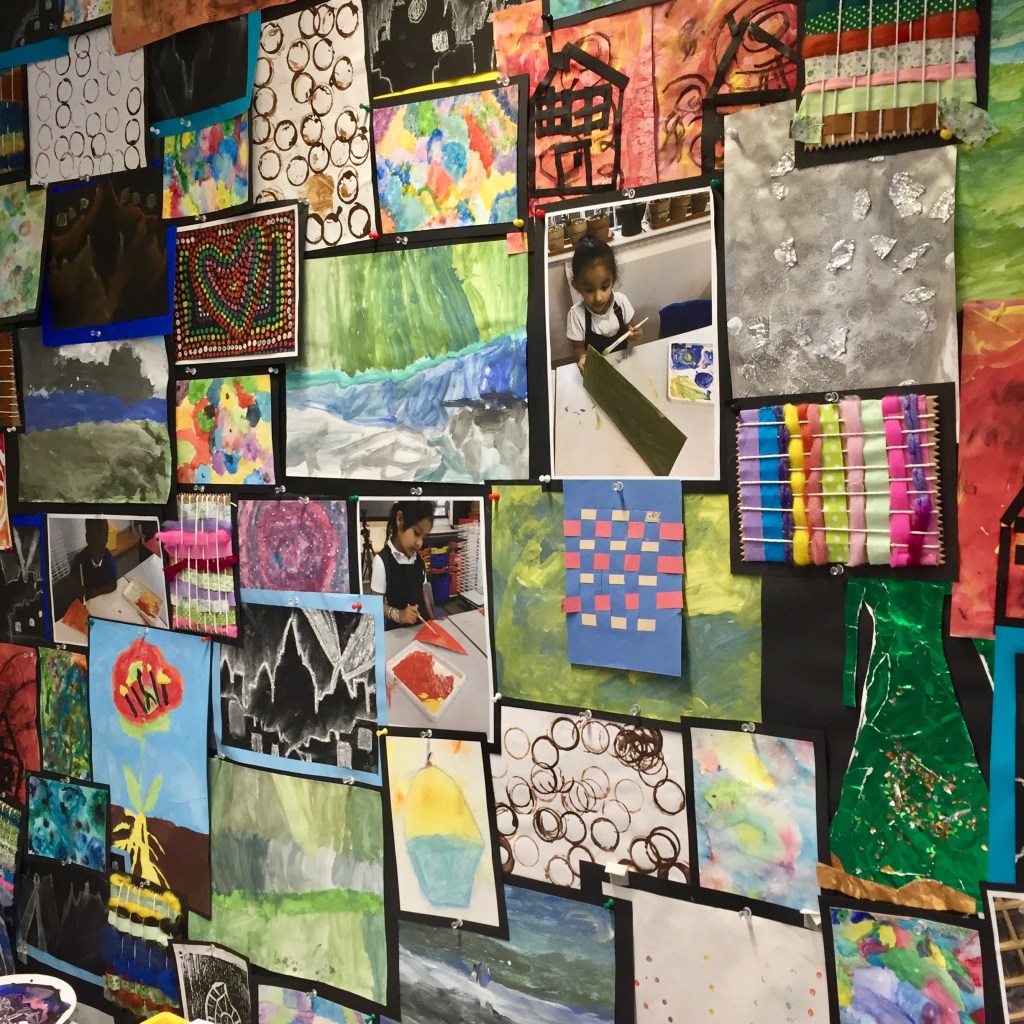
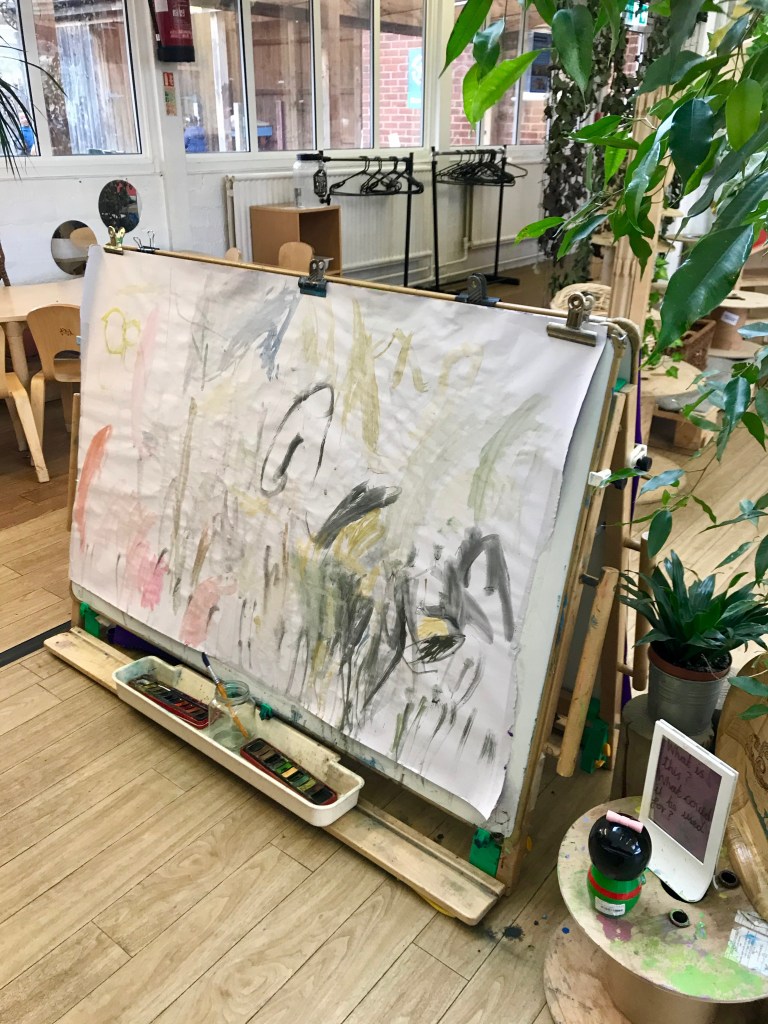
In 2021-2022, we conducted whole-day visits to our 40 schools. We had guided tours of art rooms, arts spaces and art works, sometimes by the children. We looked at sketchbooks, installations, murals, outdoor arts spaces, legacy pieces, artworks that were Grade II listed, artworks loaned from galleries, exhibitions, festivals, arts assemblies, rehearsals, performances and more.
We interviewed staff – head teachers, arts leads, teachers of music, dance and drama, specialist external arts teachers, and class teachers who taught art. We learned about the arts that are done in the school, as well as how and why they do their arts-richness. We also interviewed focus groups of students from Years 4 to 6, students who were members of Art Clubs of all kinds, students who were Arts Councillors/Ambassadors/Stars, and students who attended arts-related extra-curricular clubs.
In the first half of this current school year, we selected 20 of our original 40 arts-rich schools to revisit. This time, we dug deeper, asking heads and arts staff exactly how they built and maintained their arts-richness, as well as the challenges and opportunities that have come with the Covid pandemic, rising energy bills, academisation, changes of key staff, and a host of other circumstances.
Our sincere thanks go out to all of the schools who hosted us on these 60 day-long visits. Your insights, knowledge and opinions are essential for our project and the picture we are starting to build about arts-rich primary schools. We have loved hearing from your students about the arts they do at school, at home and elsewhere.
We have emersed ourselves in arts and music rooms, dance and drama studios, and specialist spaces that house resident artists, kilns, and film-making and photographic equipment. We have been moved by the rehearsals and performances of dance, music, drama, and choral signing. We very much appreciate you arranging those and for allowing us access to all of your creative work.
We have now moved into our next phase which involves analysing the transcriptions of the student and staff interviews, coding and categorising them for themes. This will take us into the Spring.
Other aspects of the project have taken place alongside the survey, the visits and the analysis of the interviews. We have identified ‘comparator’ schools – schools that are similar in size, achievement, pupil premium, SEND and other markers to our arts rich schools but were not initially recommended to us for their arts-richness. We have also presented our work to the University of Sydney on two occasions.
In summary:
60 whole-day visits to 40 arts-rich primary schools in England
240 staff interviews
Over 200 focus group interviews with well over 1000 children
The vast majority of the visits done on public transport (train, bike, one bus).
12,000 miles of travel, if we had visited them one by one back and forth from Nottingham = more than the distance from Nottingham to Sydney!
Six schools in London
Four in Birmingham
Two each in Newcastle, Plymouth, Bradford, Ipswich, Liverpool, the Kent coast (Margate and Ramsgate) and the Cornwall peninsular (Newlyn and Nancledra).
You can catch up on our previous blog posts about each of the forty RAPS schools to get a sense of the diversity of their arts-richness.
Pat was recently invited to give the Radford Lecture at the Australian Association for Research in Education annual conference. Afterwards she wrote a post about her main points. Here it is.
One way or another, my research always concerns a “wicked” problem. I simply want to know how schooling can be made better and fairer for many more children and young people than is the case at present. I’ve taken this question into research projects on public policy and education systems, schools and school leaders work, and curriculum and pedagogy. The Covid postponed Radford lecture offered an opportunity to take one more step towards bringing some of these research strands together. So I chose social justice and arts education – or cultural education as it is called in England where I am currently based – as my topic.
Educators and researchers concerned with social justice and the arts often focus on questions of access. The broad and balanced curriculum that policymakers promise ought to include the arts. But it often doesn’t. The arts can get very short shrift compared to other curriculum areas. Or educators and researchers concentrate on how young people find their way into careers in the arts, a real social justice issue given that the creative industries are dominated by people from relatively advantaged backgrounds . And of course educators and researchers investigate how the arts can be taught well.
I wanted to add to the social justice and cultural education conversation. In the lecture I suggested that educational researchers concerned with social justice should be concerned about arts education for three additional reasons:
My own research on arts rich secondary and primary ecologies explains how the odds are changed. Arts rich school ecologies include committed senior and middle leaders who support the arts symbolically and in resource allocations. Expert teachers with capacious signature pedagogies offer children and young people a variety of ways of knowing, being, doing and relating in, to and with the world. Schools are engaged with a range of cultural organisations. Arts richness is integral to the school identity and improvement plans.
3. Students from arts rich schools are more engaged in the arts outside of school and are more civically engaged. In Catterall’s longitudinal study former arts rich school students also voted in far greater numbers than the national average. And the research that my colleague Chris Hall and I have done strongly suggests that children and young people from arts rich schools are appreciative, critical audiences and active cultural producers with the knowhow and experiences to use a range of media, platforms, genres and practices to have a say in the public conversations that matter to them. We call this cultural citizenship. Being able to “have a say” is a social justice issue and crucially important for those children and young people whose life experiences, interpretations and individual and collective views are often ignored. The arts support children to have a say.
This Radford lecture will eventually become a journal article for the Australian Educational Researcher. However, I am interested in whether there is any appetite from policy makers who say that social justice matters for a new arts based disadvantaged school programme. I reckon, as a once used political slogan said, “Its time”.
Liam and Pat recently did a web presentation for the CREATE centre postgraduates. We talked about the RAPS research and focused on the ways in which we developed the research, the research design and what we do during field work. This is the first of two presentations about the research.
University of Cambridge Primary School (UCPS) is built in the shape of a circle, a ring, a doughnut. To get to another room, you have to walk around and around. The green space in the middle has a raked amphitheatre-style seating area and a stage for performances, presentations and the occasional assembly.
On our RAPS visits, we have seen at least one comparable unusual primary school building. New Bewerley is a spiral, a giant snail shell. USPC is a giant eye looking up at the sky!
This iconic building was erected in 2015 on mud flats in the Eddington area, about a mile or so north-east of the centre of Cambridge. The school is now surrounded by European-style apartments and extensive cycle lanes. We were impressed at how many of the 650 children arrived on their bikes.
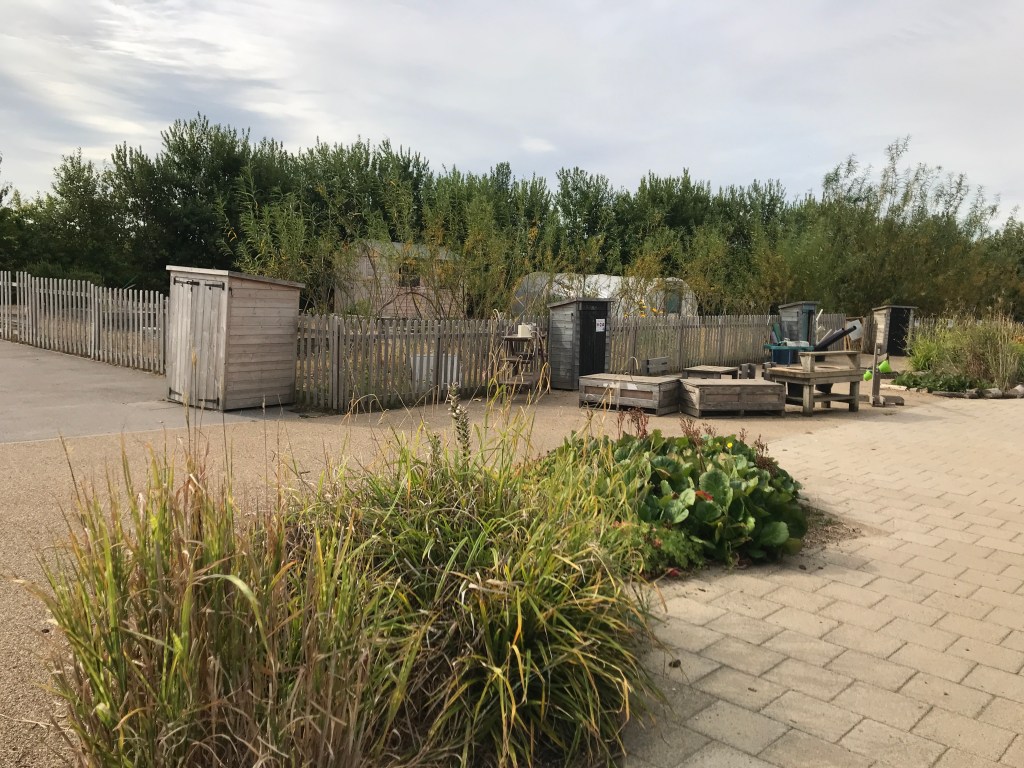
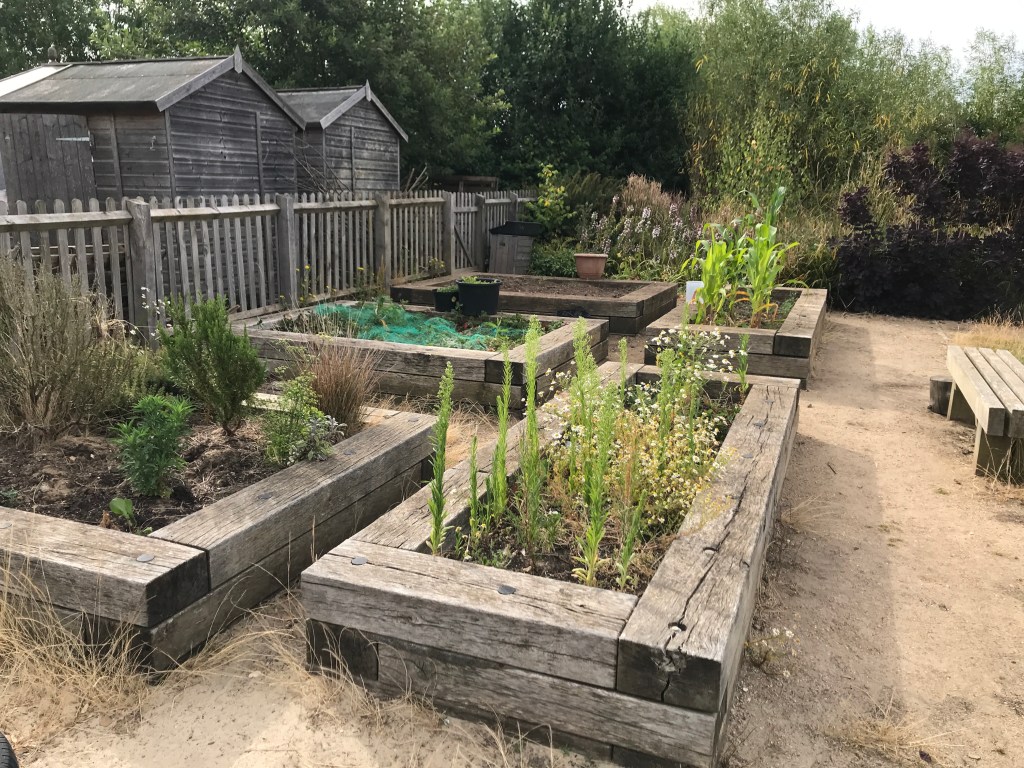
Outside the building, we enjoyed visiting UCPS’s allotment facilities – polytunnel, raised beds and sheds. There is also a forest school area which is rapidly growing out of what was until recently waste ground.
Inside, the looping corridors are flanked on each side with door-less classrooms and are filled with displays of books, other learning resources, the students’ artwork as well as these funky reading booths and stylish high-sided bench seats.
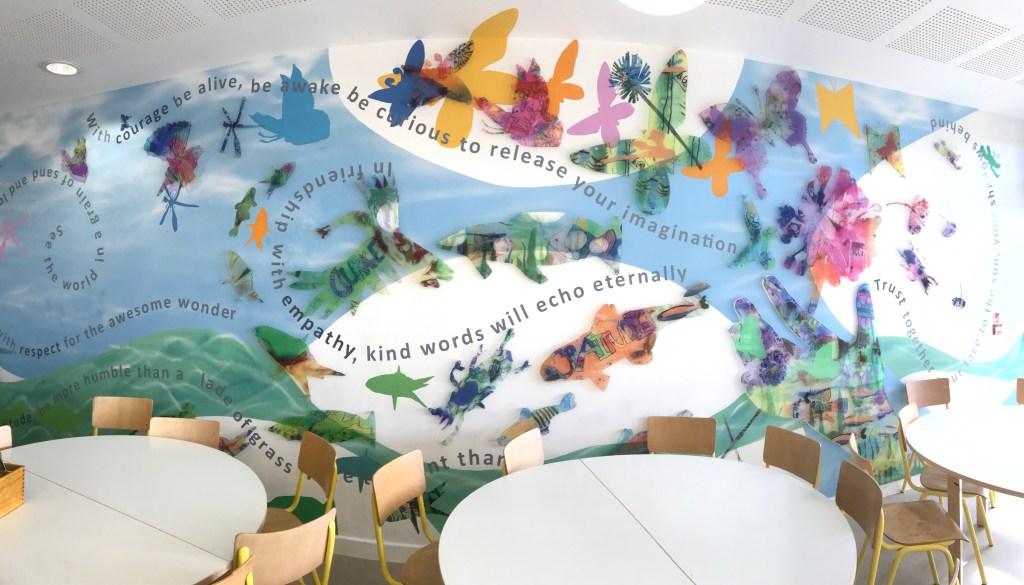
One wall of the reception area consists of these Perspex birds, fish and flowers around which weave the school’s mission statements and inspirational sentiments.
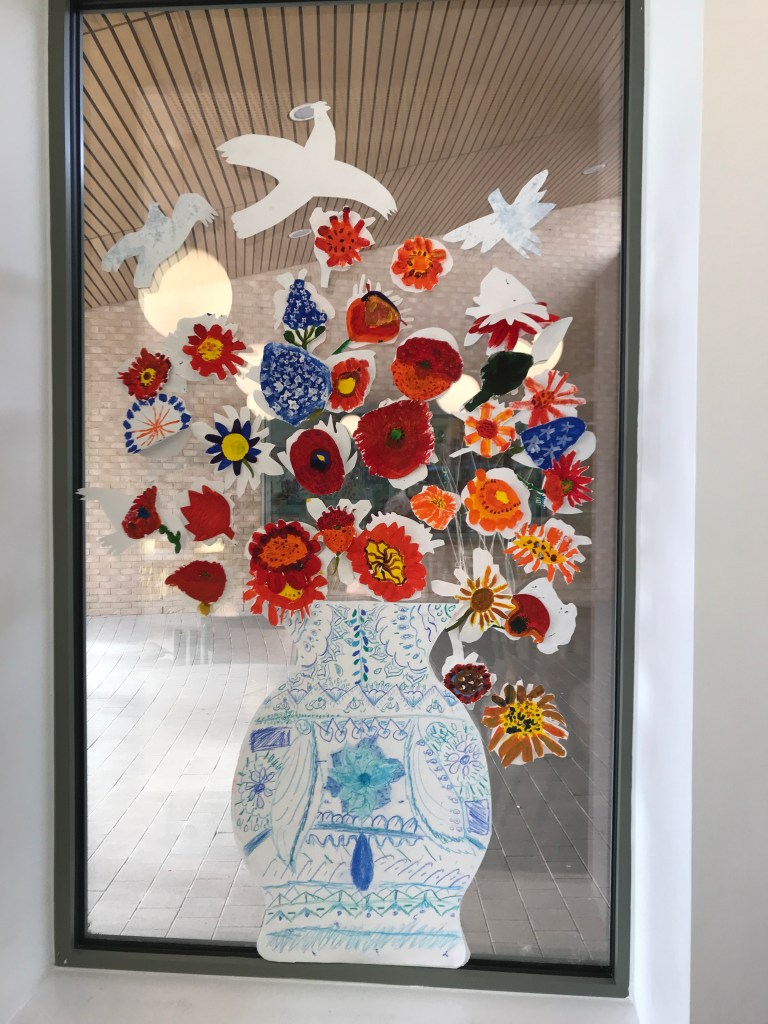
Students had also created this window display of flowers as a specific welcome to Ukrainian students:
One of the school’s values – courage – was neatly portrayed in these Modroc pieces:
We spoke with Executive Headteacher Dr James Biddulph (MA in Music Education, PhD in creative learning), arts team leader Harriet Lang and focus groups of Year 4, 5 and 6 students all of whom were getting excited about the school’s carnival in two-days’ time.
Students in all year groups had learned a dance to be performed en masse. They had also created head-dresses and hats, costumes, flags and banners which were to be paraded around the local streets and back into school to join 200 parents and guests who would watch the performances (including the school’s samba band), check out the Mexican-style chalked artwork that adorned the tiled playground, try their luck on stalls and games, and enjoy the fun fair atmosphere.
As well as this end-of-year Art Week, the school has weeks and special days for Shakespeare, STEAM and World Book Week. UCPS is partnered with Cambridge’s grand Fitzwilliam Museum, the art-filled house and gallery that is Kettle’s Yard, and Festival Bridge East.
It goes without saying that UCPS is centred around creativity and the arts.
James told us about the development of the school, their ethos and goals:
‘Because we were in new school, we had to create an enabling space that in which creativity and the arts could arise’
‘Creativity is integral, but we need to make it explicit’
‘At UCPS, we are trying to nurture compassionate citizenship, develop children’s agency and foster democratic voices for children through playful inquiry, habits of mind and the arts.’
If you’ve not had the privilege of visiting this inspiring and fascinating primary school, this video will give you a glimpse both inside and out:
Click the picture to watch ‘Release the Imagination’
Our sincere thanks go to Executive Headteacher James Biddulph, arts team lead Harriet Lang and to all of the Year 4, 5 and 6 students who gave us their insights on their creative education at our focus groups.
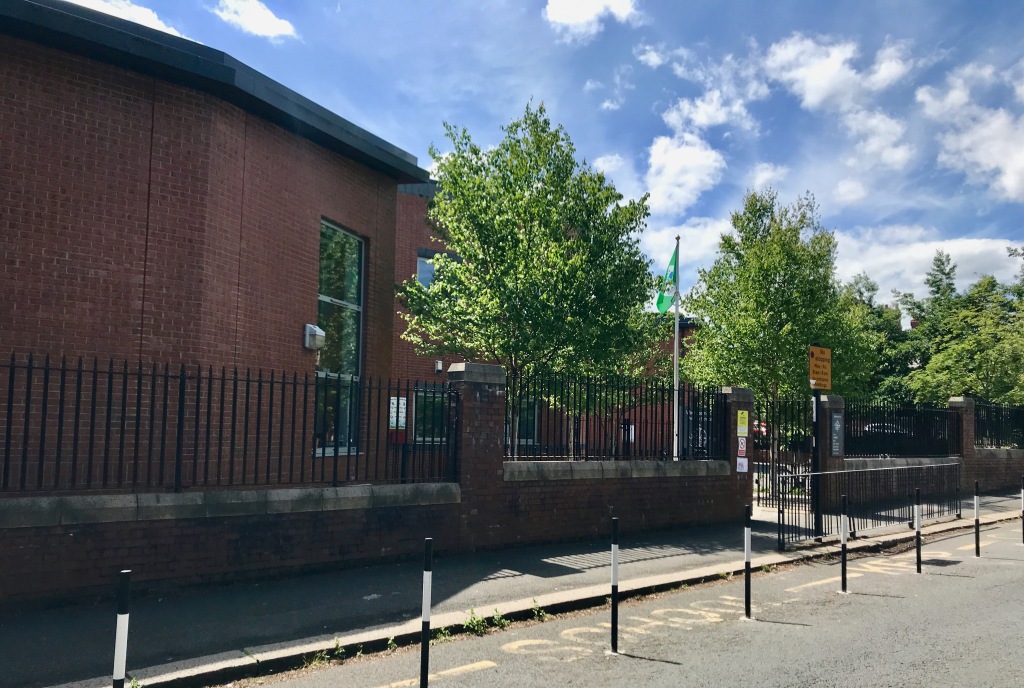
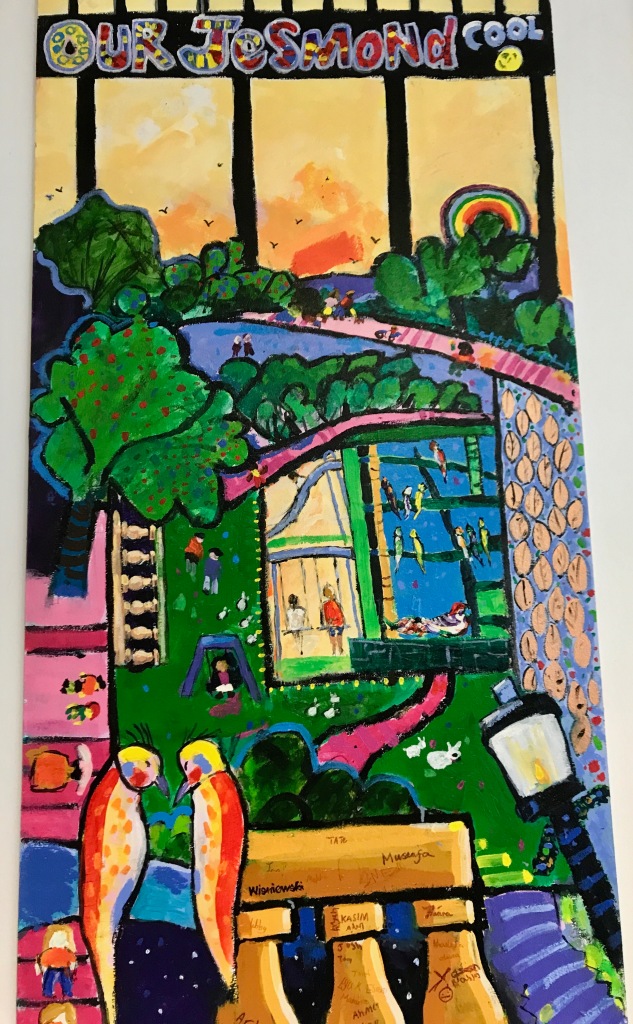
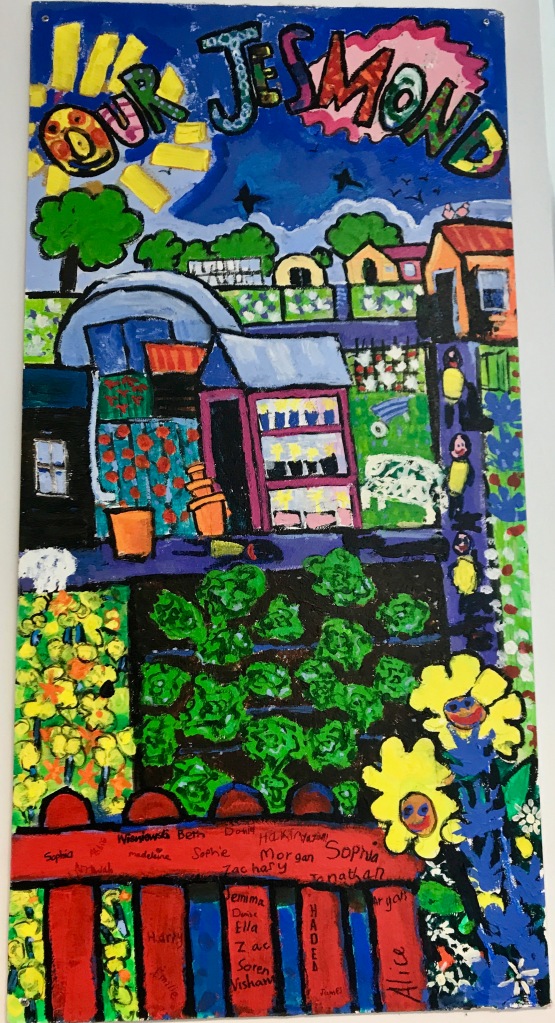
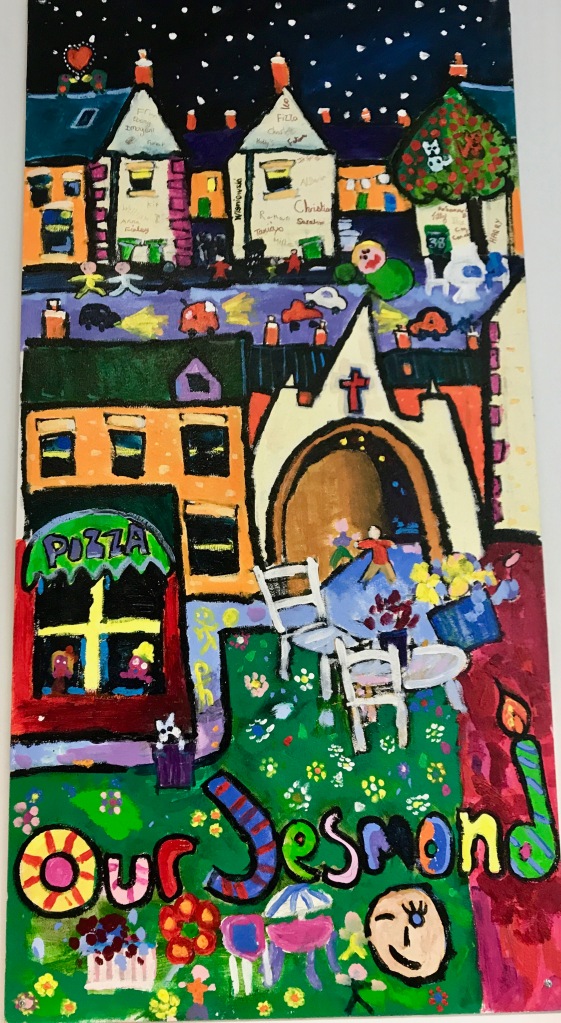
West Jesmond is a vibrant arts-rich primary in Newcastle upon Tyne. During our visit in Jun where we interviewed staff and students and had an arts-focussed guided tour, we learned about the many creative arts-based activities taking place there.
We also learned that the school has a long history of arts-richness. There has been a school on this site since the days of Queen Victoria. The existing school was built in 2009. It is now part of the charitable Ouseburn Learning Trust. West Jesmond has over 600 students, over 50% of whom have English as an Additional Language.
We saw artworks that focussed on the local community. KS2 students had produced these large and colourful ‘Our Jesmond’ canvasses, all signed by the students:
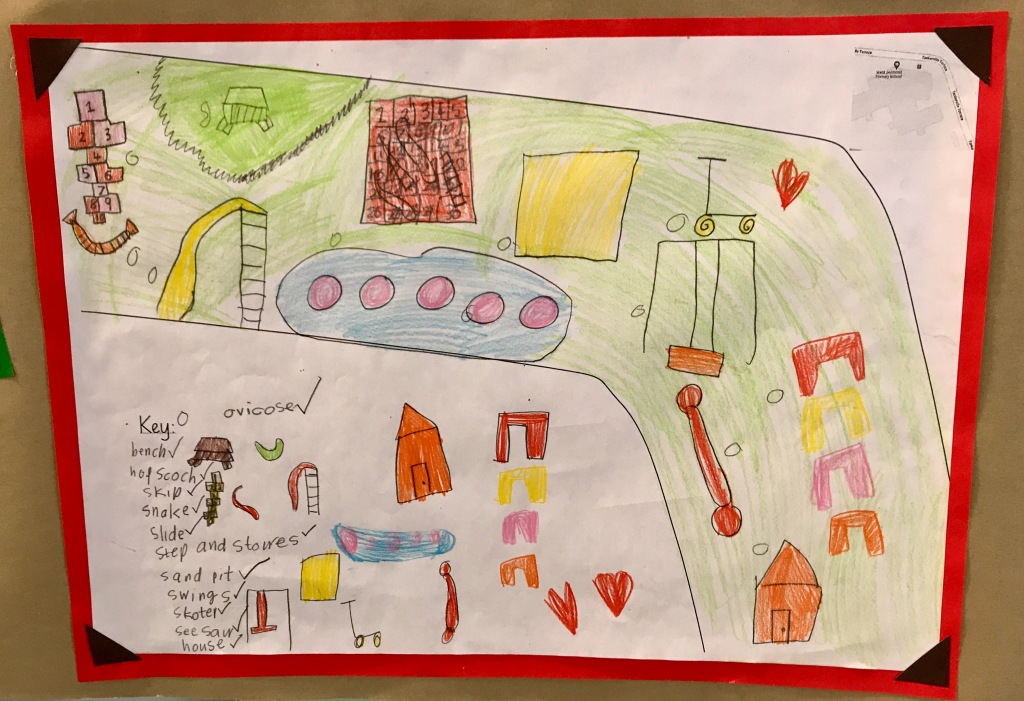
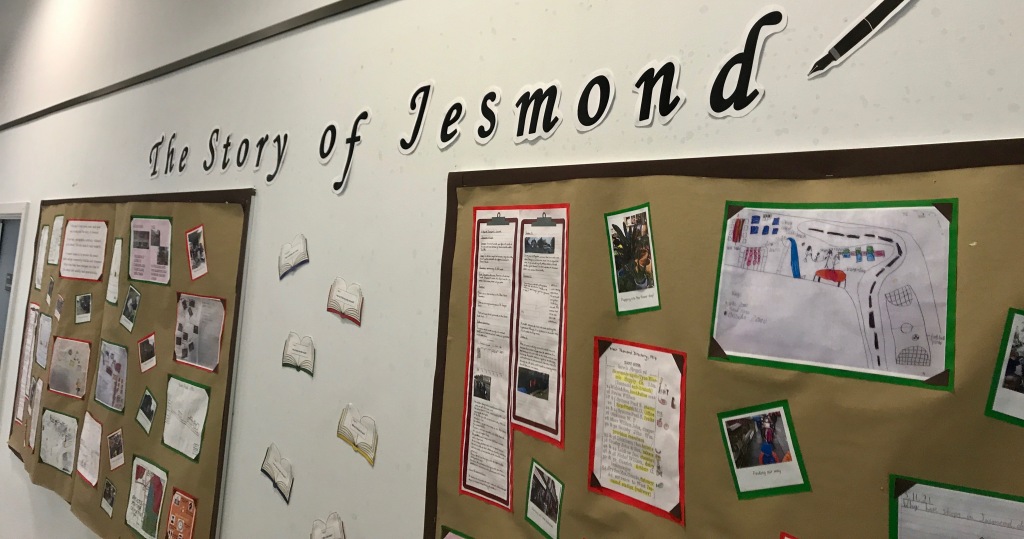
KS1 had mapped their school grounds and the local area to tell ‘The Story of Jesmond’:
Now in his second year as Art curriculum lead, Glen Hopkins told us about his mission to foster individual expression and creativity, and to get children to consider themselves as artists. Glen also talked about how he has expanded the use of sketchbooks to Years 1 and 2 with an aim ‘to make them as realistic to what an actual artist sketchbook would look like … personal and lived in.’There was arenewed focus on process rather than outcome.
Glen also spoke about how he and the students work closely with the outreach programme at the BALTIC, a contemporary art gallery space on the Tyne. He takes inspiration from Access Arts and the school’s membership of Culture Bridge North East. West Jesmond is also partnered with Scottish Opera who work in intensive sessions with the students and staff to pull together productions in a single day.
The KS2 choir has around 50 members. They had three performances in June which included pop up events around the city. Student artwork fills some big bords at the Jesmond Metro Centre.
Every class this year has visited the four-story Hatton Gallerywhich is basedat the university. Year 5s were preparing for a trip to the final year art degree show that week. Students also visit the Laing Art Gallery in the city centre and participate in workshops there.
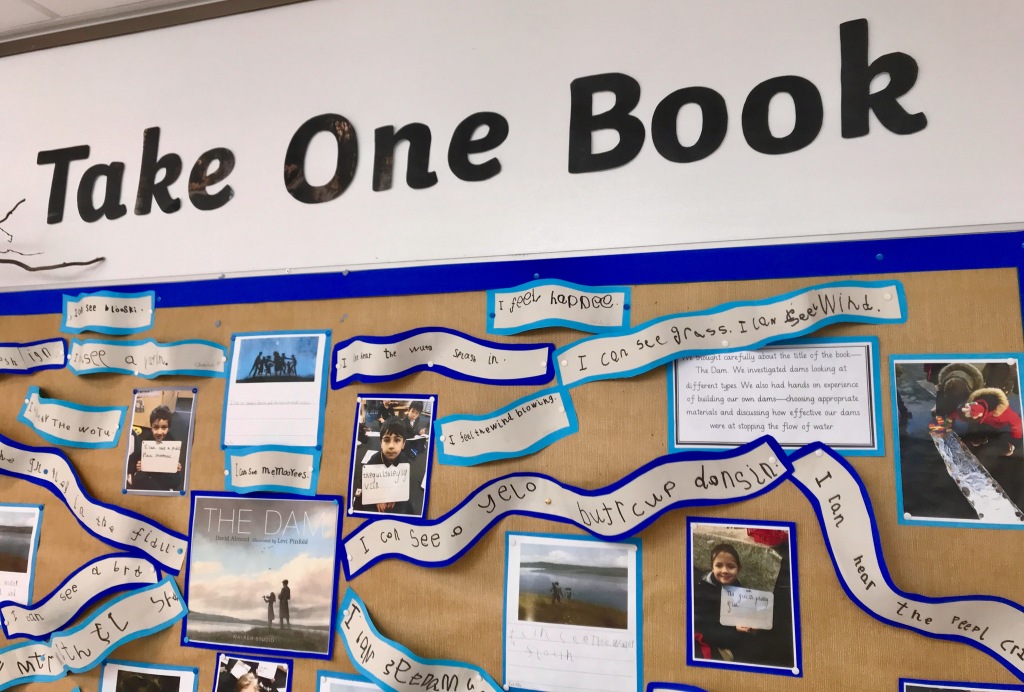
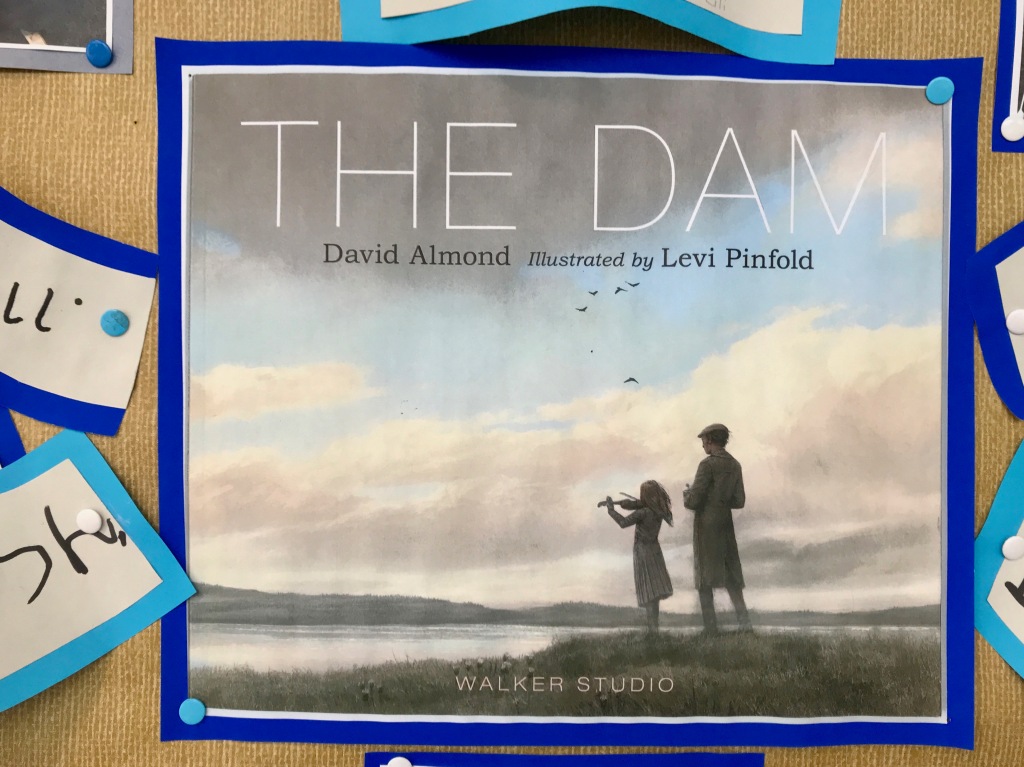
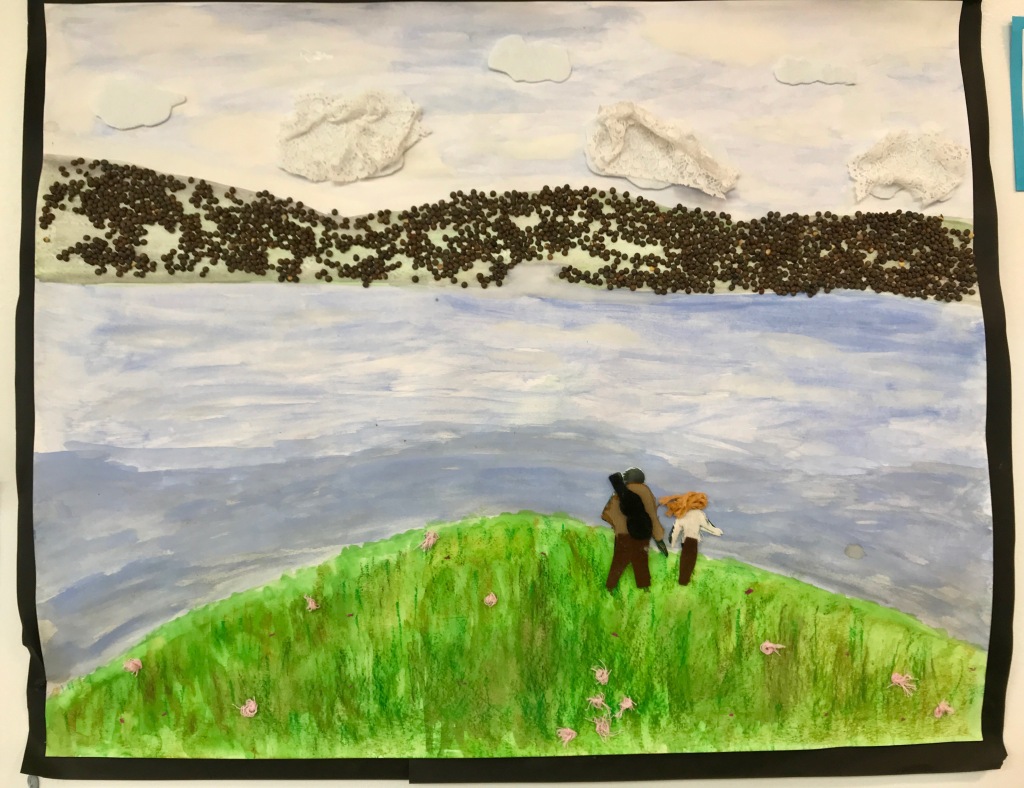
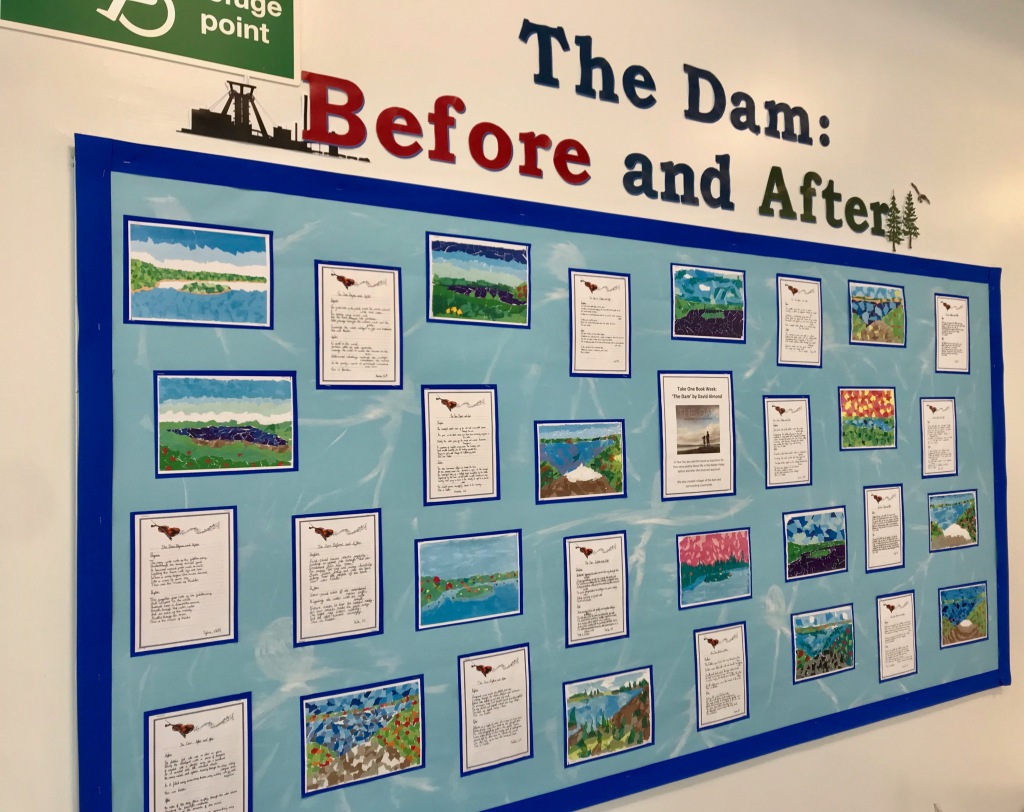
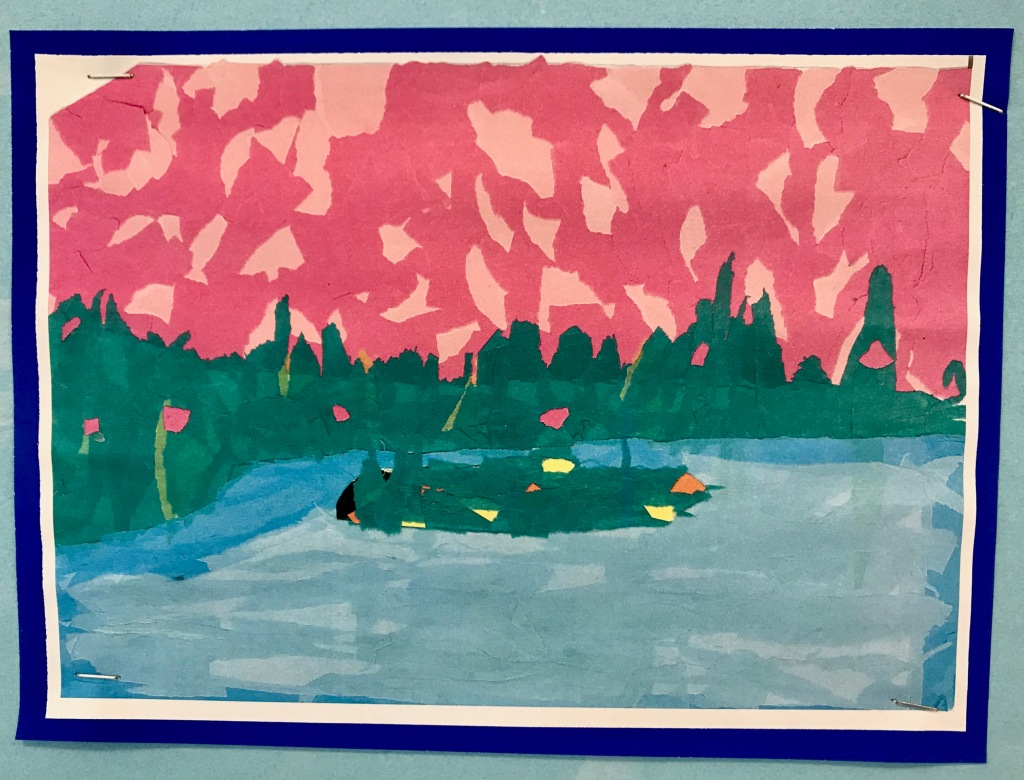
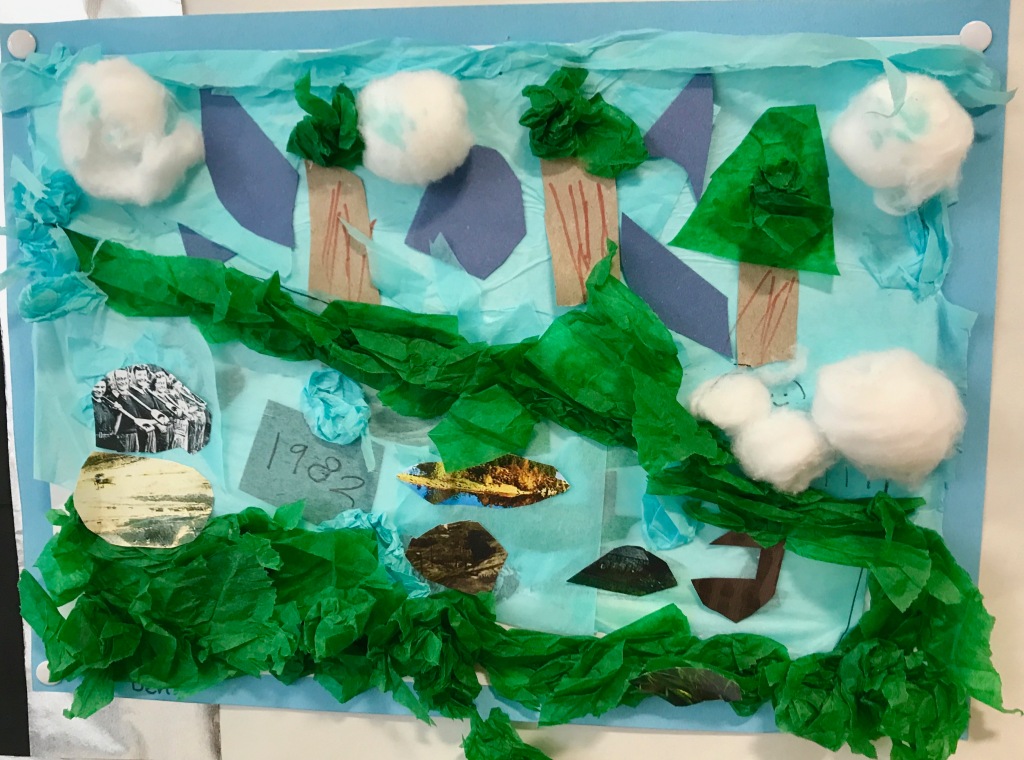
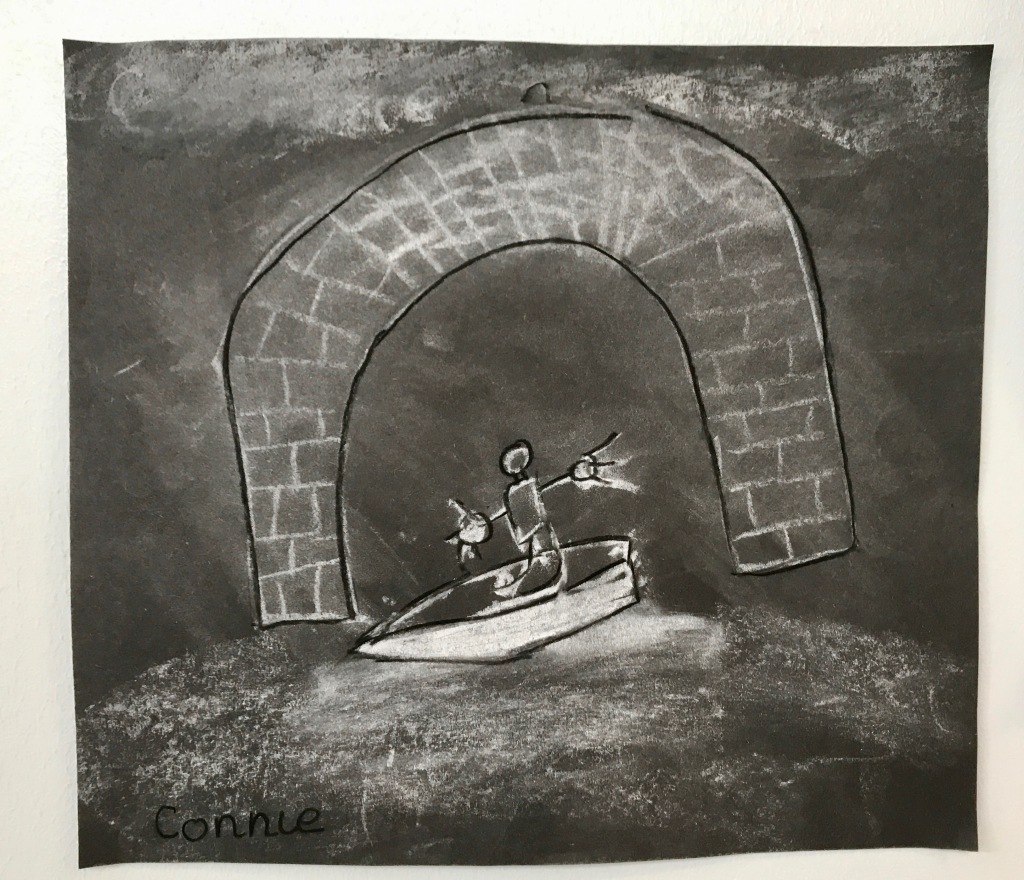
Within the school, there were two arts projects that caught our attention. Firstly, the whole-school ‘Take One Book’ project dominated the display boards around the school. The book was The Dam which had provoked a range of responses in different media. Some included a combination of creative writing and art.
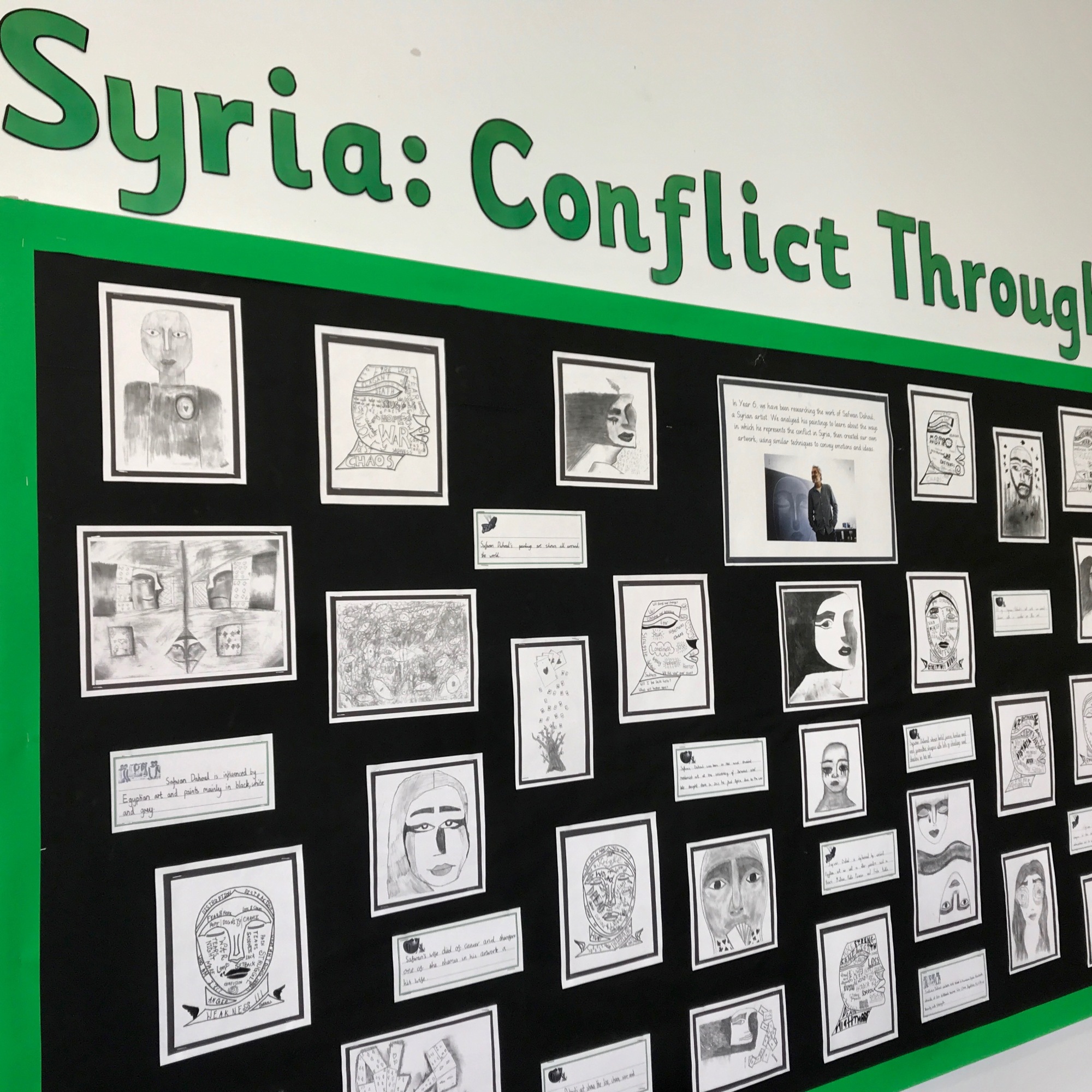
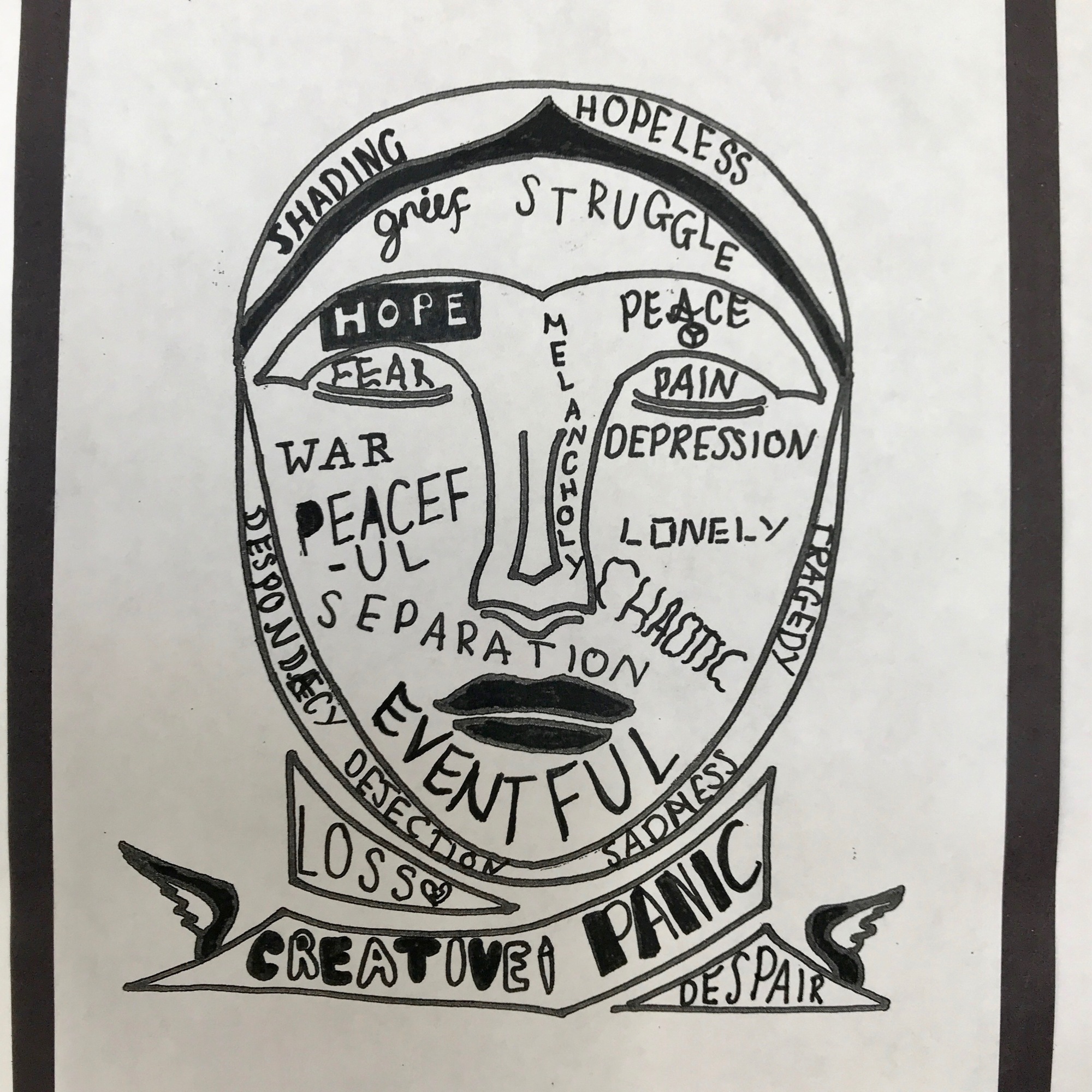
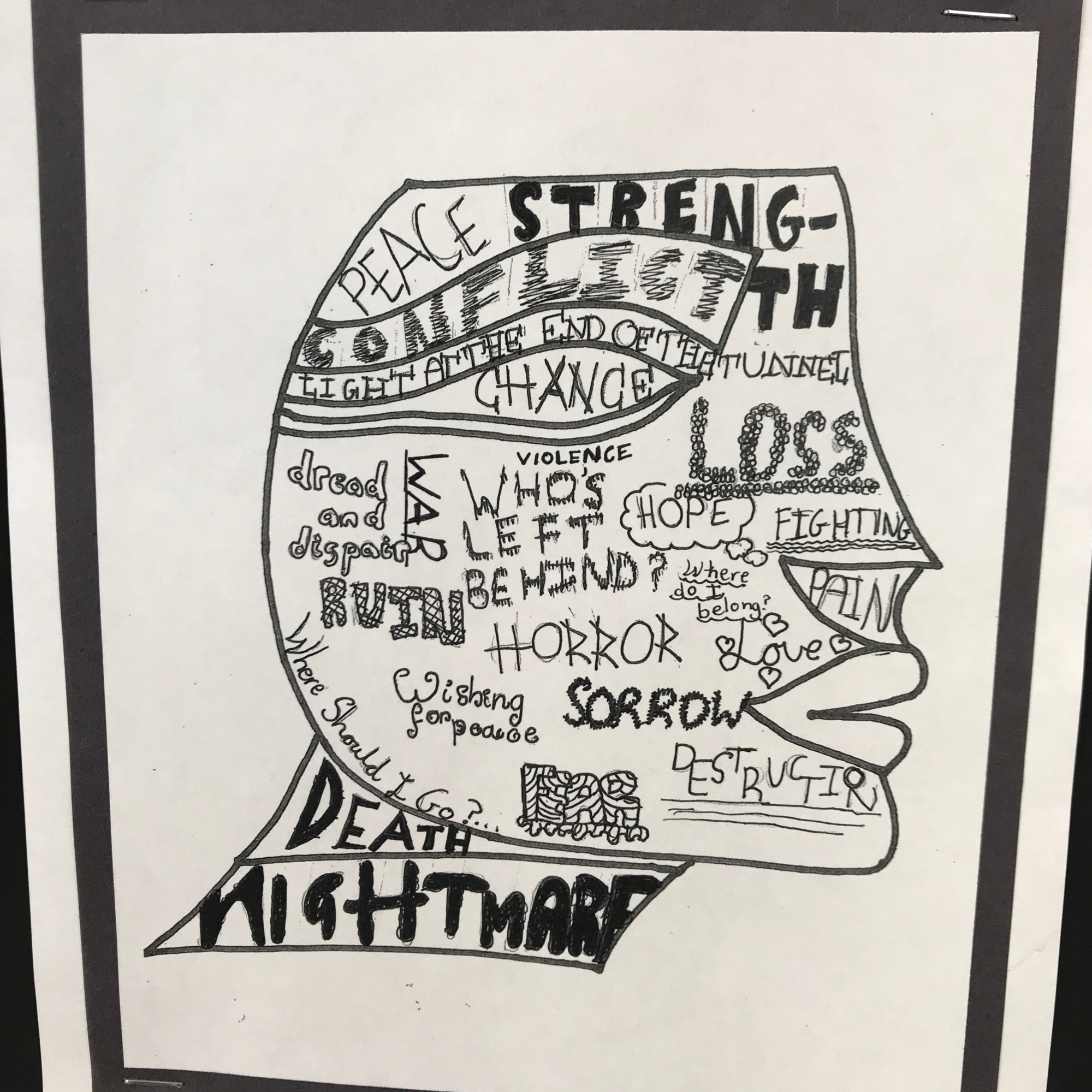
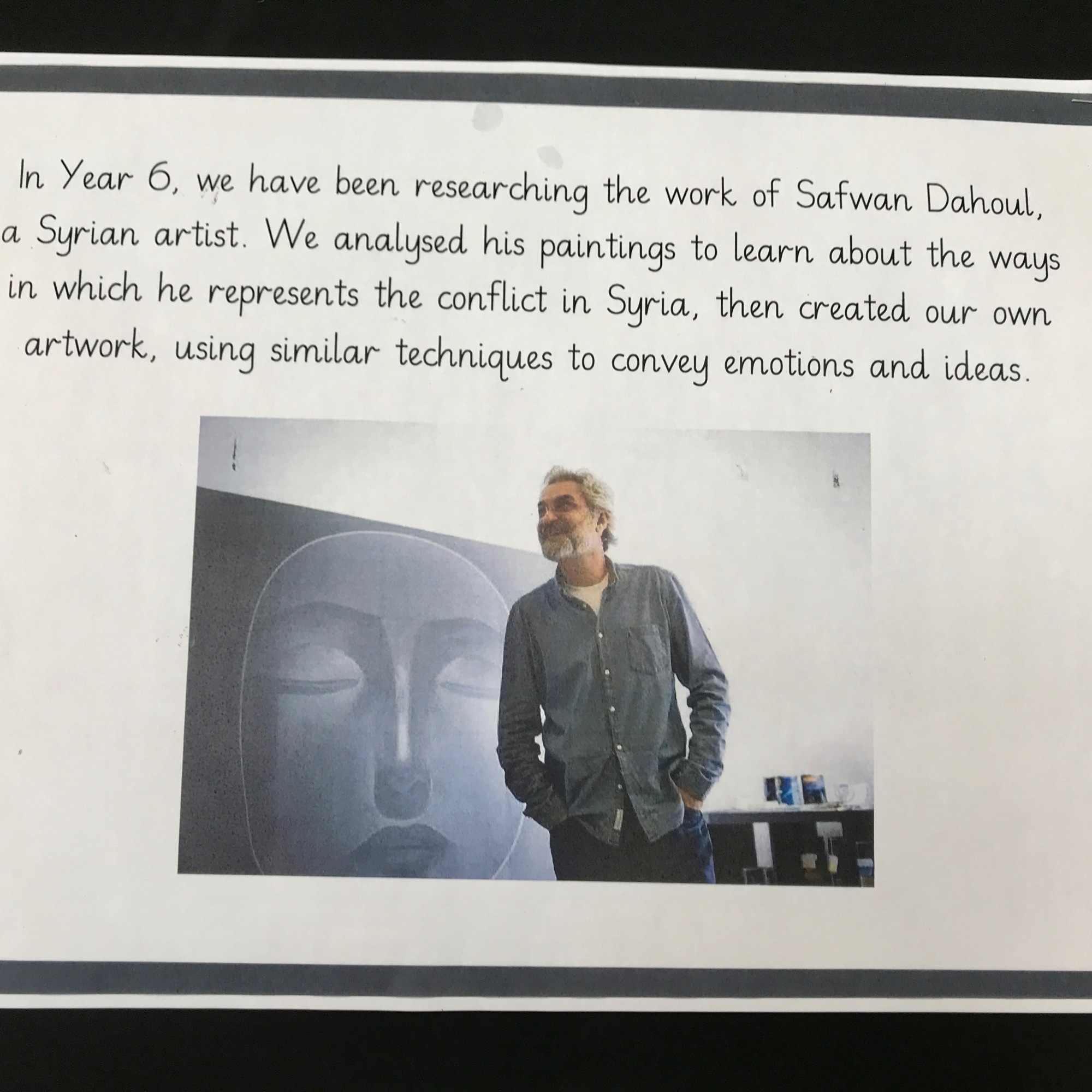
In another major display, Year 6 students had been using art to explore the conflict in Syria and been inspired by the work of Syrian artist Safwan Dahoul. The students told us how they had learned that art can be about ‘struggles and challenges’ and how art can have many deeper meanings.
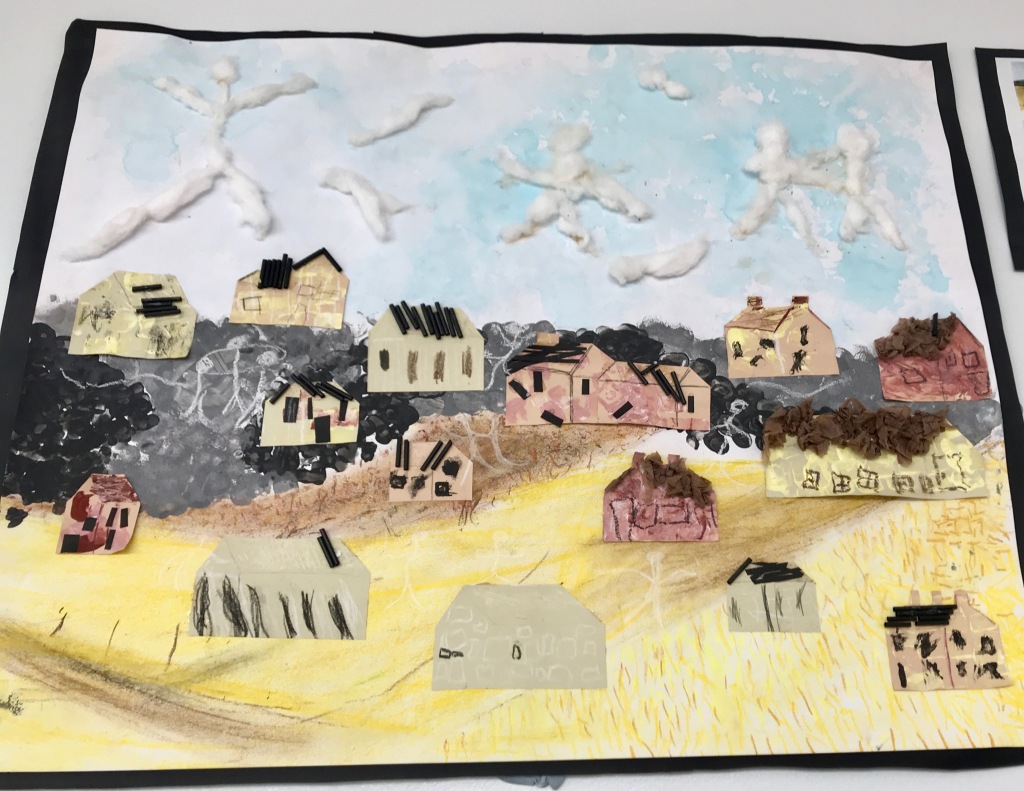
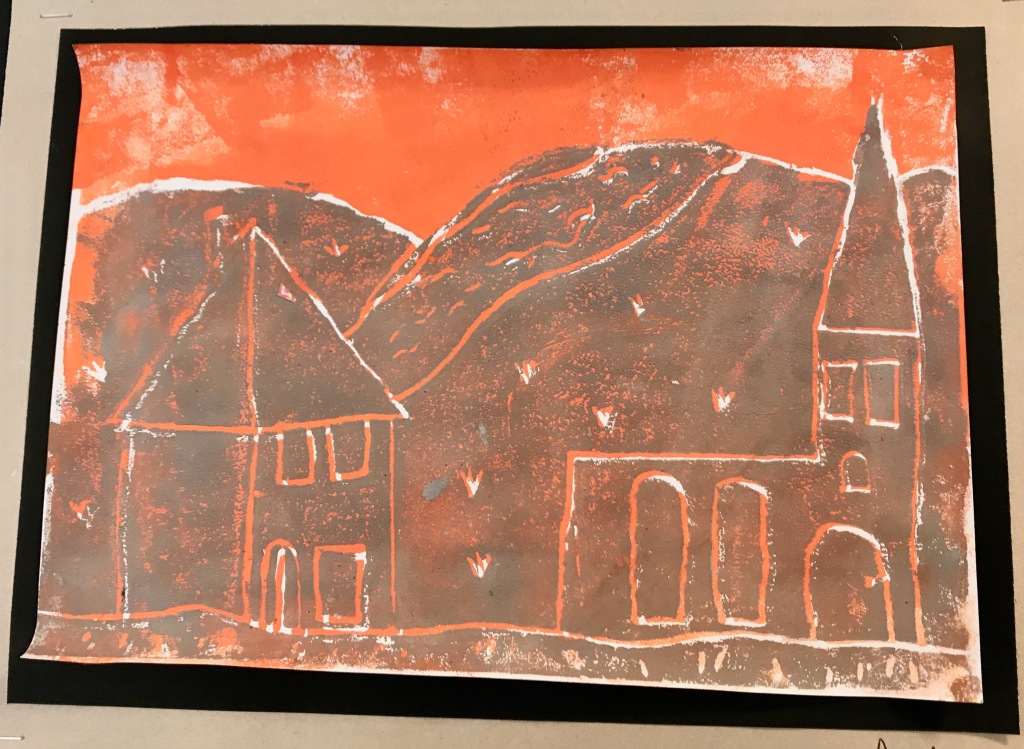
They had also created art works on the subject of the shipbuilding industry in Jarrow. They told us how they had learned about workers’ rights and how women were not included in the industry.
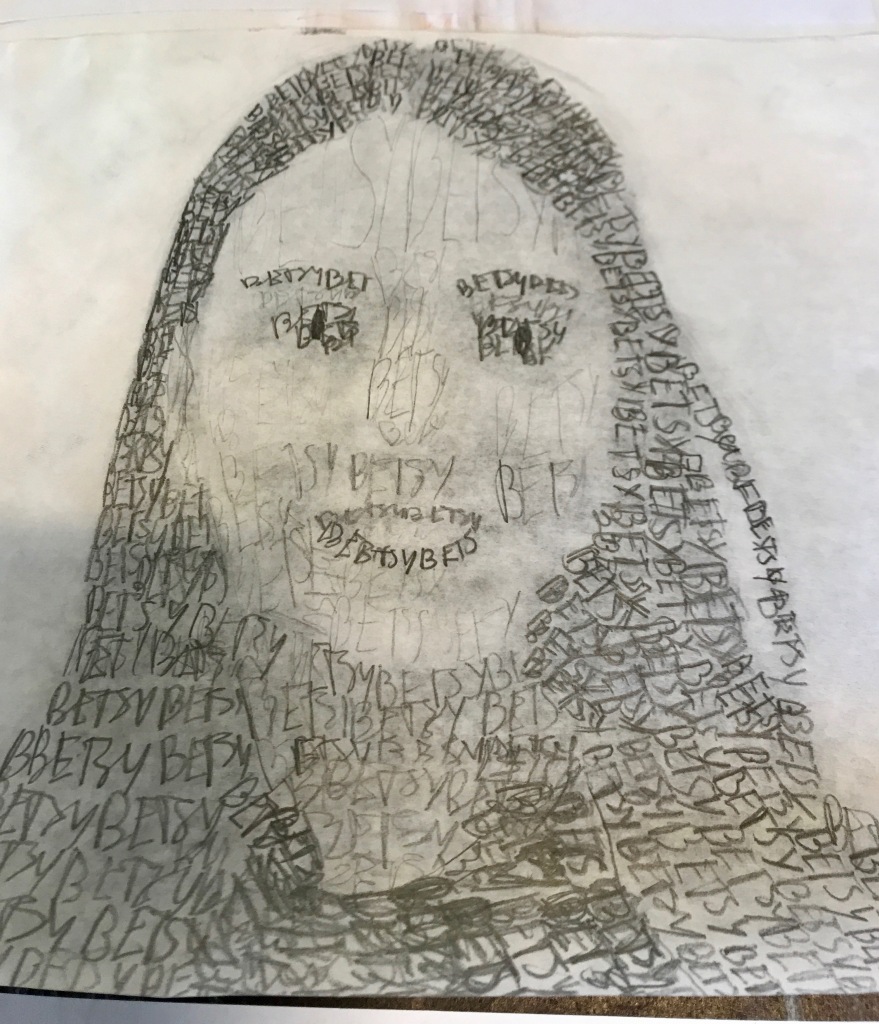
We saw a drawing project inspired by the work of Michael Volpicelli which included interesting use of tones and shading created through the use of written text.
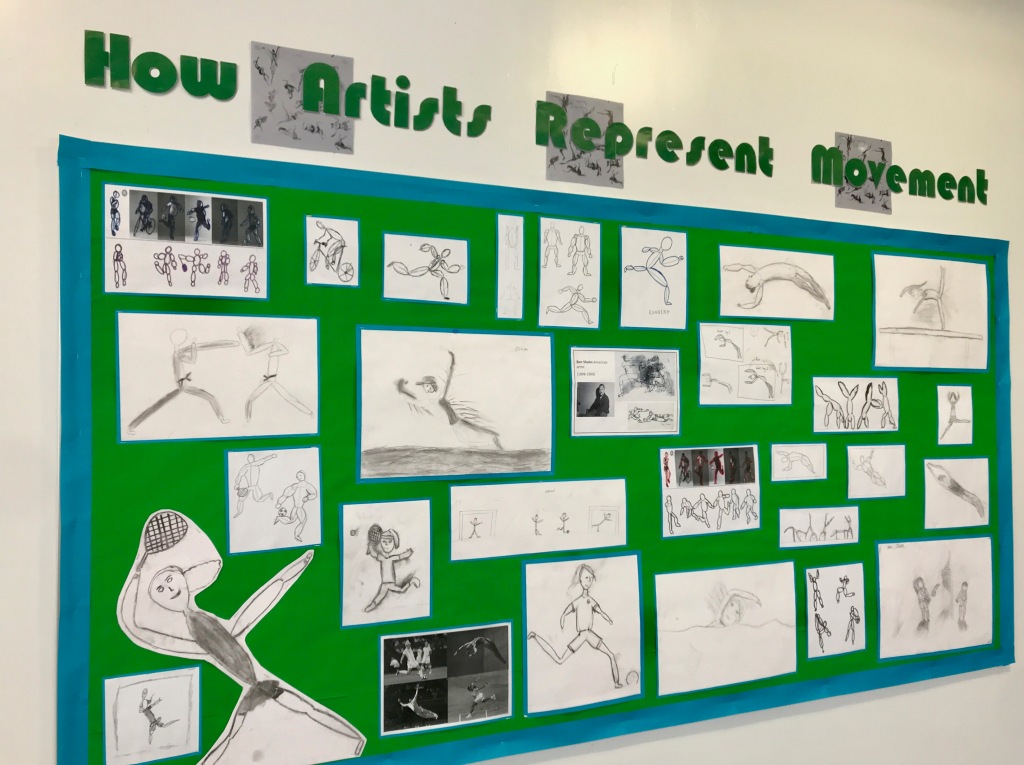
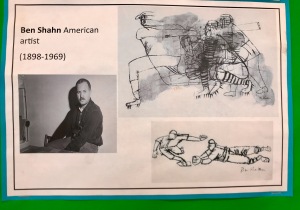
There were also these movement drawings based on the work of Ben Shahn:
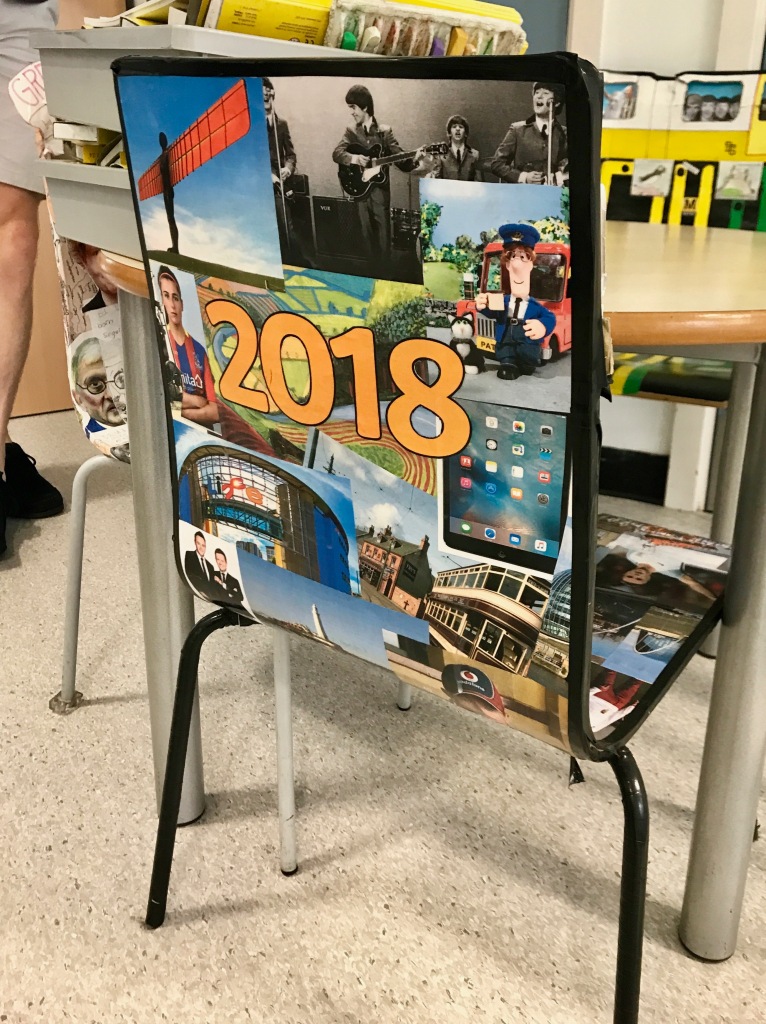
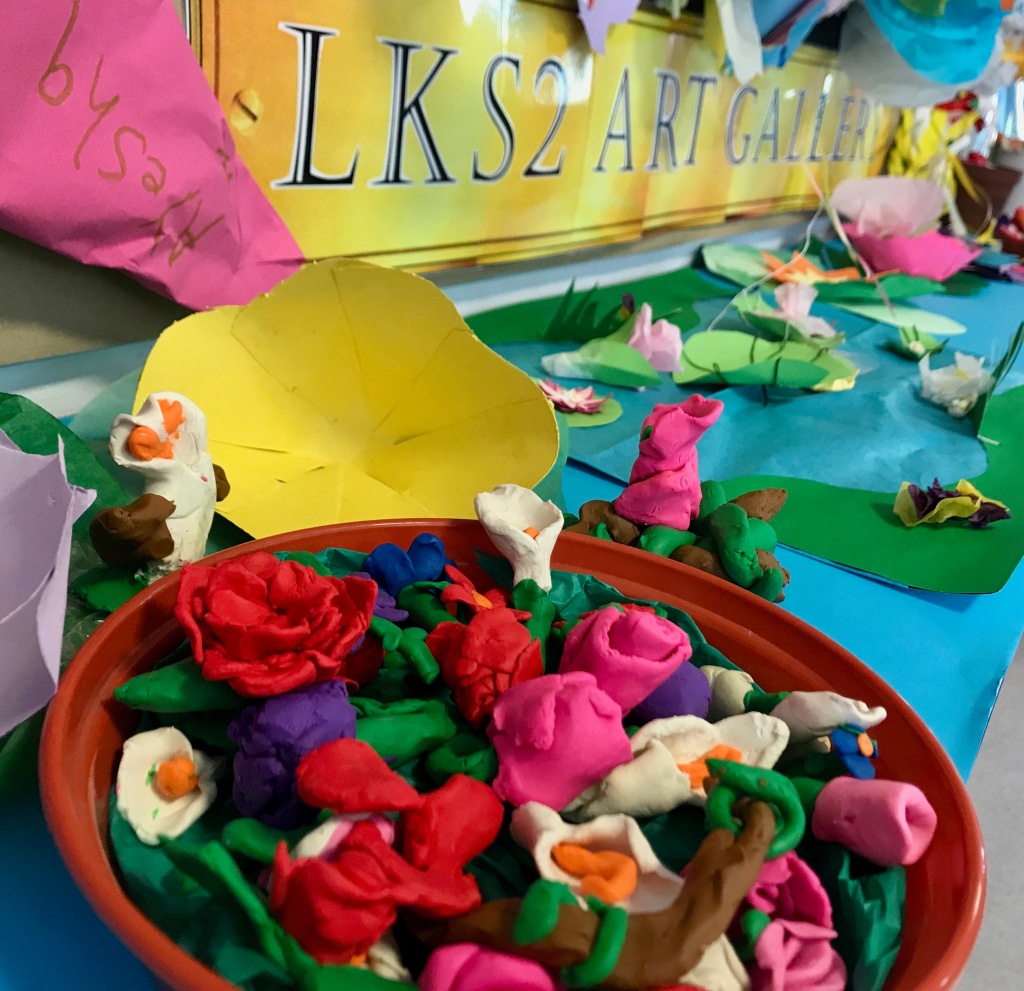
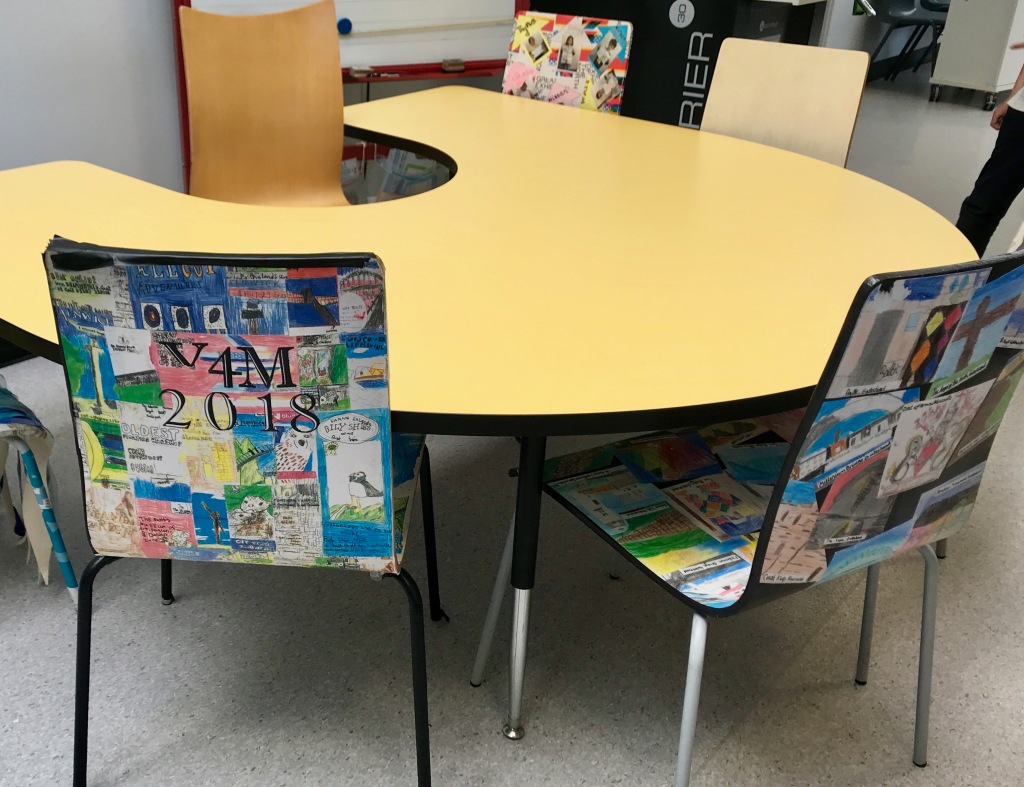
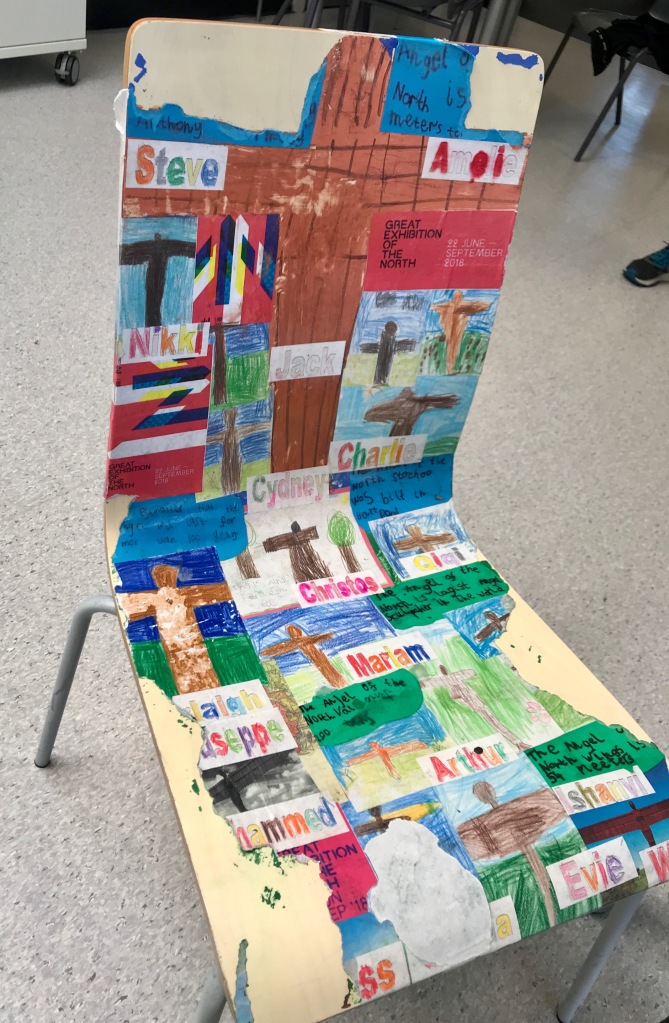
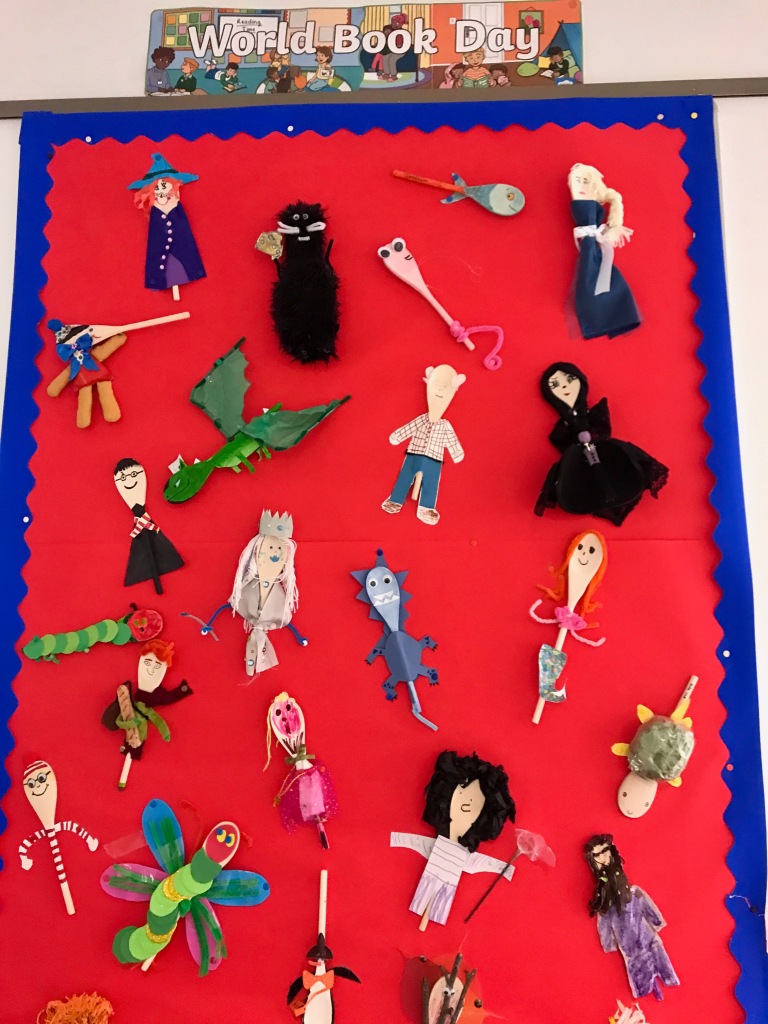
Other contributions to the wide range of media and techniques included spoon-based art for World Book Day, artistic chairs as part of a Great Exhibition of the North project and plasticine flowers.
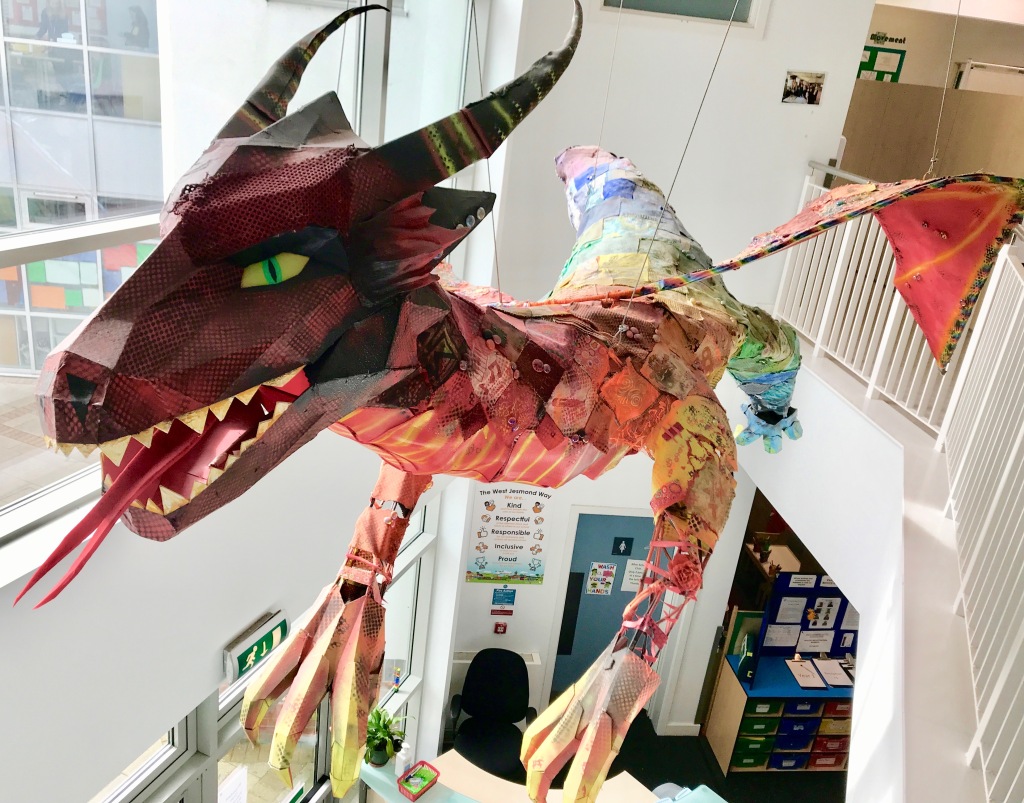
Finally, a large papier mache dragon sculpture hangs over the reception area. This dynamic and flaming collaborative art project keeps everyone at their creative best!
Papier mache dragon
Many thanks to Art curriculum lead Glen Hopkins, deputy head Tom Jones, and to the Year 4, 5 and 6 students and the two art groups to whom we spoke.
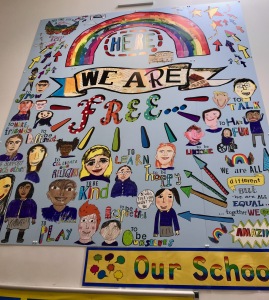
Here we are free
You may also be interested in reading our recently-published Art, Craft and Design Rapid Evidence Review – a survey of published scholarly literature on art, craft and design in education.
We visited Bourne Westfield, an Arts Mark Platinum school in the small historical market town of Bourne, Linconshire, during their Art Week.
Needless to say, it was a lively colourful day with an abundance of visual arts, music and performing arts.
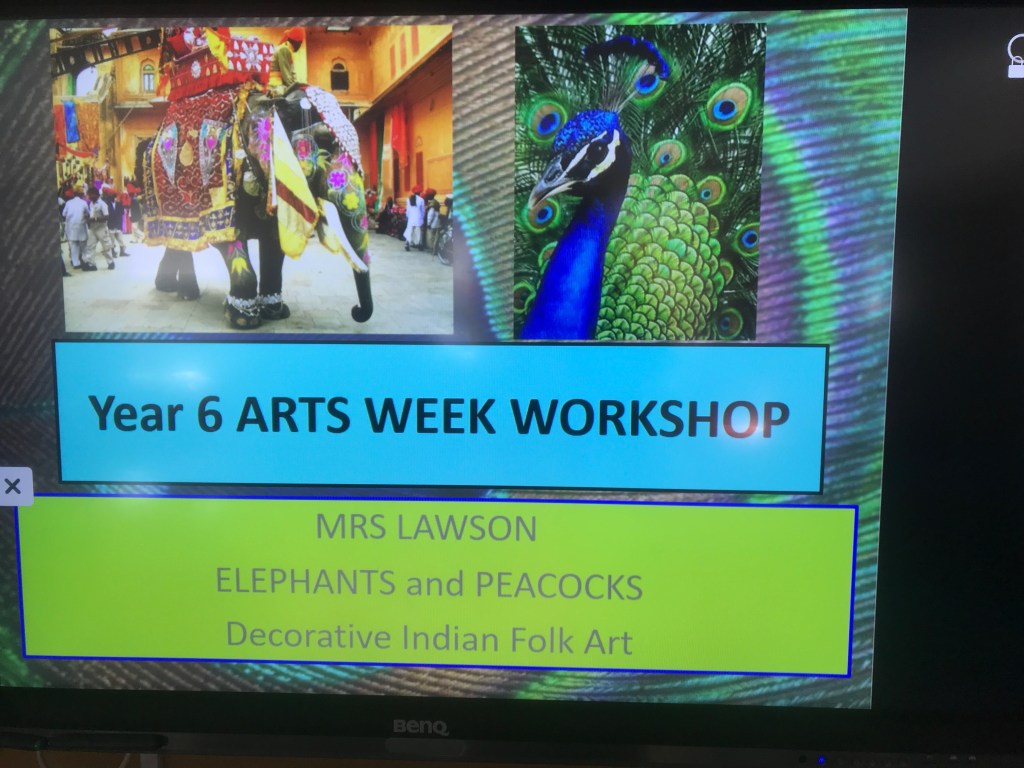
This year, the Art Week had a geography theme – specifically India. Staff were wearing saris. The students were getting excited about dressing in bright clothes and throwing coloured powder over each other.
Two dancers were visiting to train each year group on a Bollywood dance. The following day, the students combined to perform a coordinated dance in front of the parents, who were also there to enjoy the many other arts activities. The students had also participated in beatboxing workshops and Maypole dancing during Arts Week.
The school is linked to the Sajoni school in India. Three staff visited Bourne from India for three weeks before Covid. From our interviews with students and staff, we learned about the nature and value of this partnership. As well as being exposed to the Indian regional artwork that was gifted to the school, Bourne Westfield children and staff were taught Tamil and had yoga workshops. Year 6 teacher and oracy lead Katie Knott describes it as ‘such a spiritual time. They bought such calm and wisdom into school’. A return visit to India fell foul of Covid restrictions. However, the students told us how they meet with the Sajoni students on Teams, and exchange bits of school uniform, art works and other items.
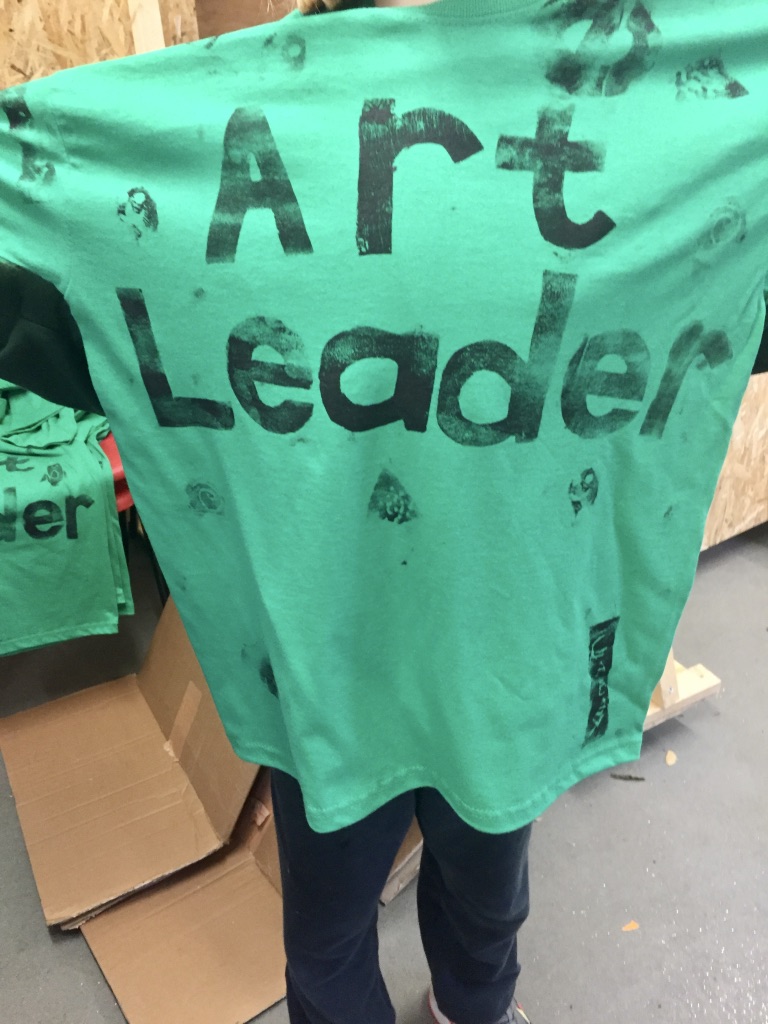
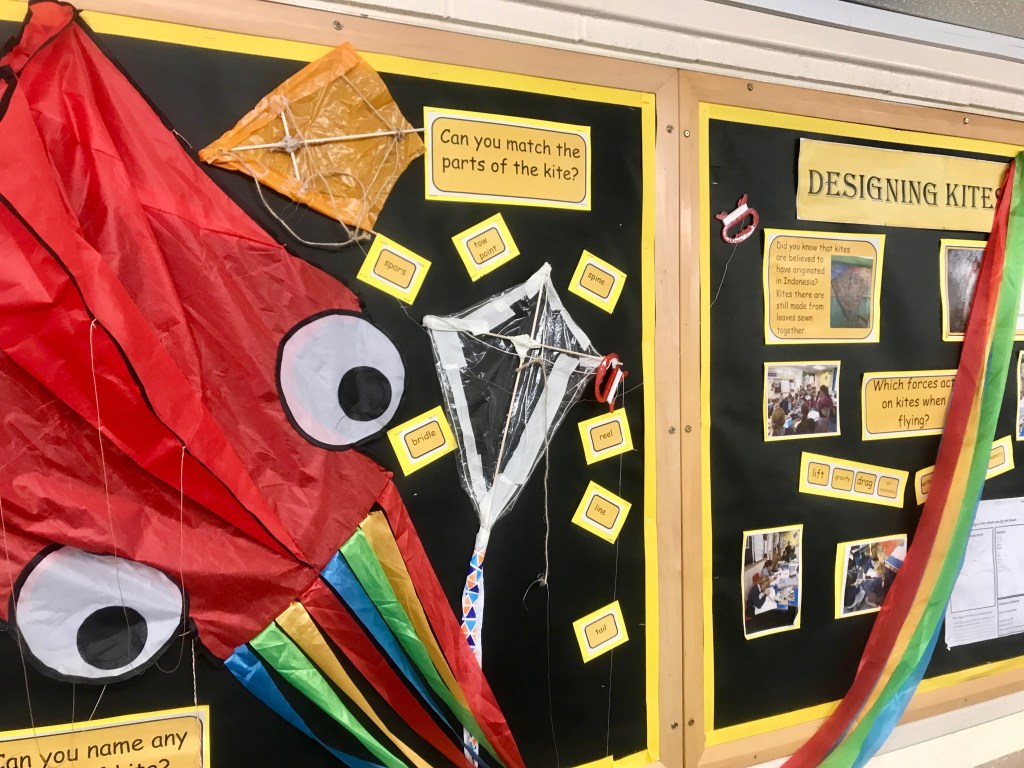
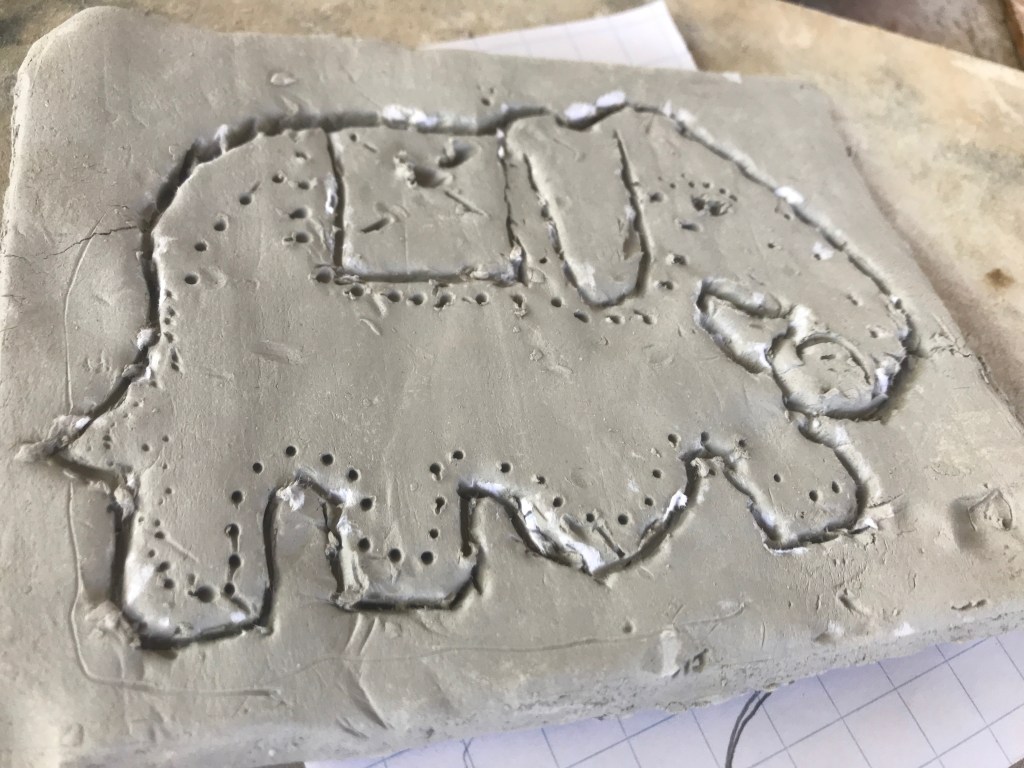
Students across the school had produced a range of art works for the week including these kites, elephants and tie-dye t-shirts:
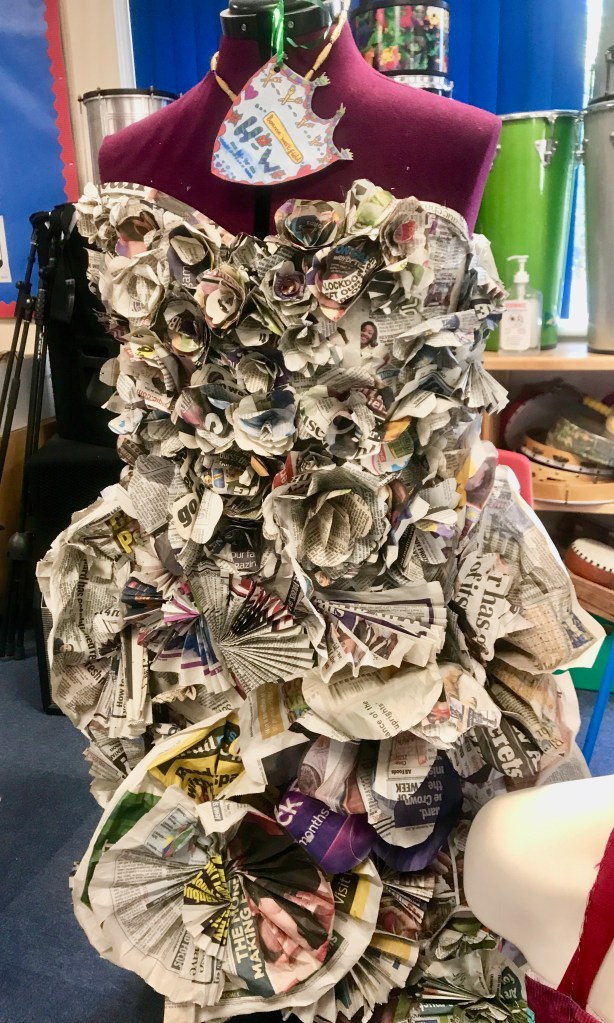
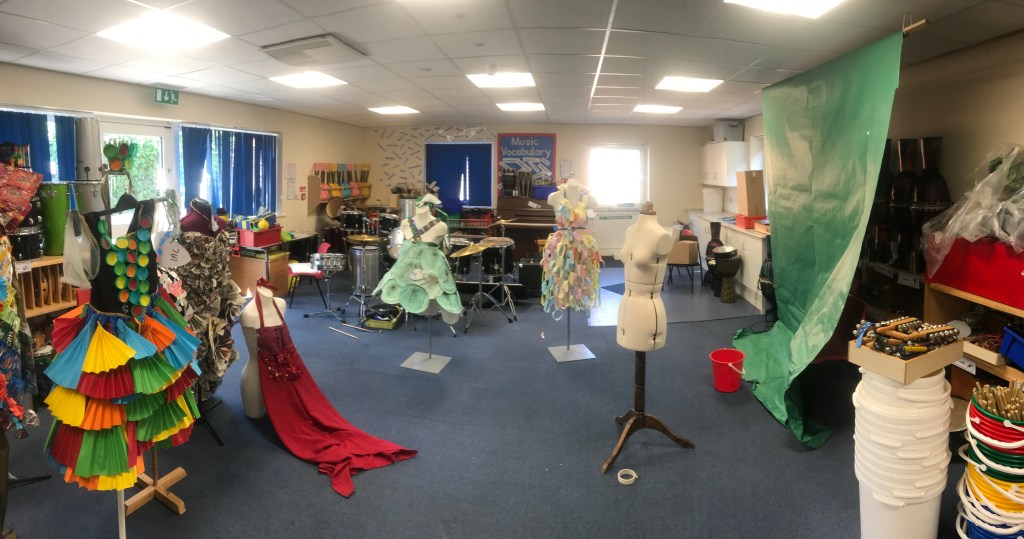
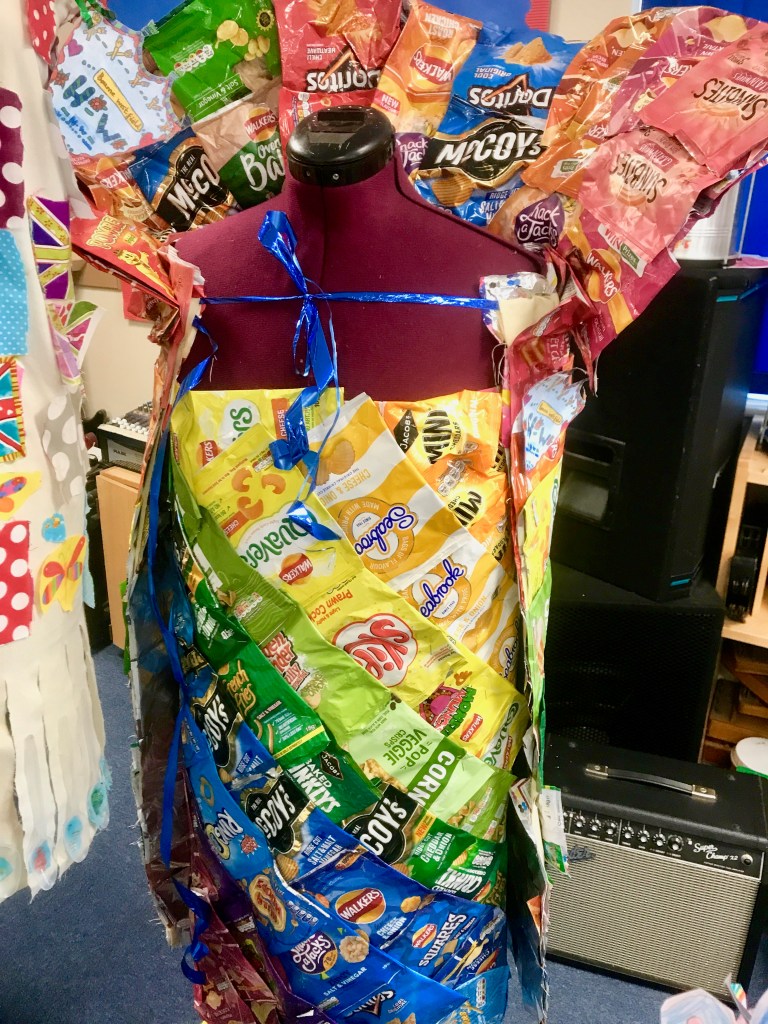
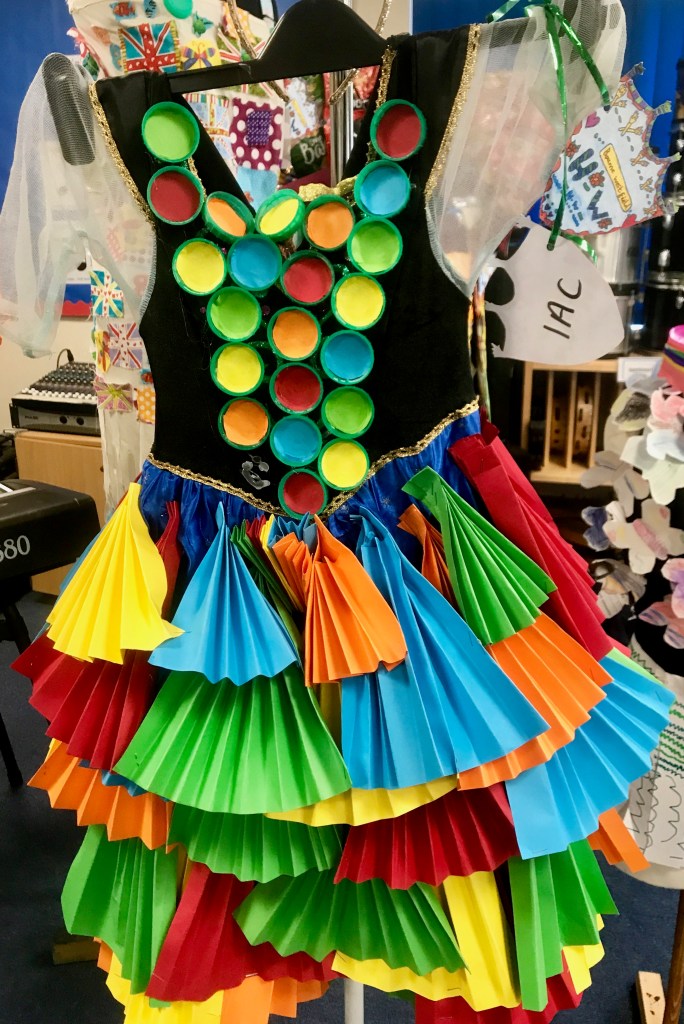
Year 5 had created dresses out of recycled items (crisp packets, newspaper, bottle tops, etc). The project was inspired by a study of local history, cultural and creative heritage, and the fact that ‘godfather of haute couture’ Charles Worth was born at Wake house in Bourne.
The extensive planning work and sketches were also on display, evidence of an extended project that looked at the fashion industry and Bourne’s influential role in it.
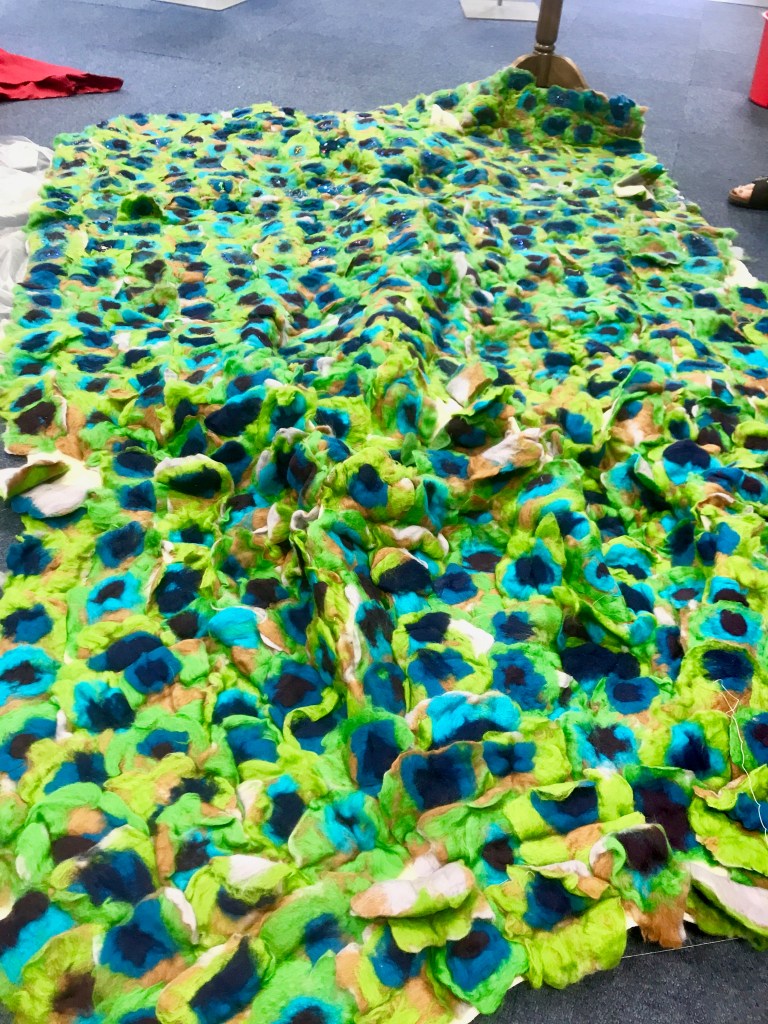
Also on display during Art Week was this large quilt inspired by Charles Worth’s famous peacock dress. Each student had made a felt piece which had been sewn together:
We learned how Bourne Westfield has been arts rich (and specifically music rich) for many years.
We met members of the school’s Rock Band. Music lead and Arts supervisor Becky Beavis (Degree in Music; background as an orchestral musician) told us how, a few years ago, she instigated the project to inspire some Year 6 boys who were struggling in other subjects but showed an interest in music.
‘For those boys’, Becky explained, ‘it was a cool thing that they wanted to do. It gave them a positive image.’ Over time, Becky worked with the boys to build their instrumental skills (drums, bass, guitars) and repertoire. Commitment to lunchtime rehearsals was insisted upon. The Band then started to perform in community settings.
Becky talked about the transformation she saw in the boys:
‘These boys were a group who were really struggling to engage with school on every level and desperately needed something to give them an identity and some self-belief. The first time I put them on a big stage, they were terrified.To see them in that position of vulnerability was quite a moment for them. But they came off the stage saying, “Can we do it again?”. And they loved it and that became their identity in school.’
When we asked a Year 6 focus group to tell us about some of the creative things that they do at school, the Rock Band was the first thing they mentioned. They mentioned that the band had performed alongside bands from other schools at the Old Town hall two days before. We spoke directly to the (now mixed-gender) six-piece Rock Band who told us about their specially designed jackets and how they have performed alongside secondary school students at external gigs. Other students attested to the band’s popularity around the school – ‘Everybody really likes them. They will listen to them, and they will sing loads of their songs.’
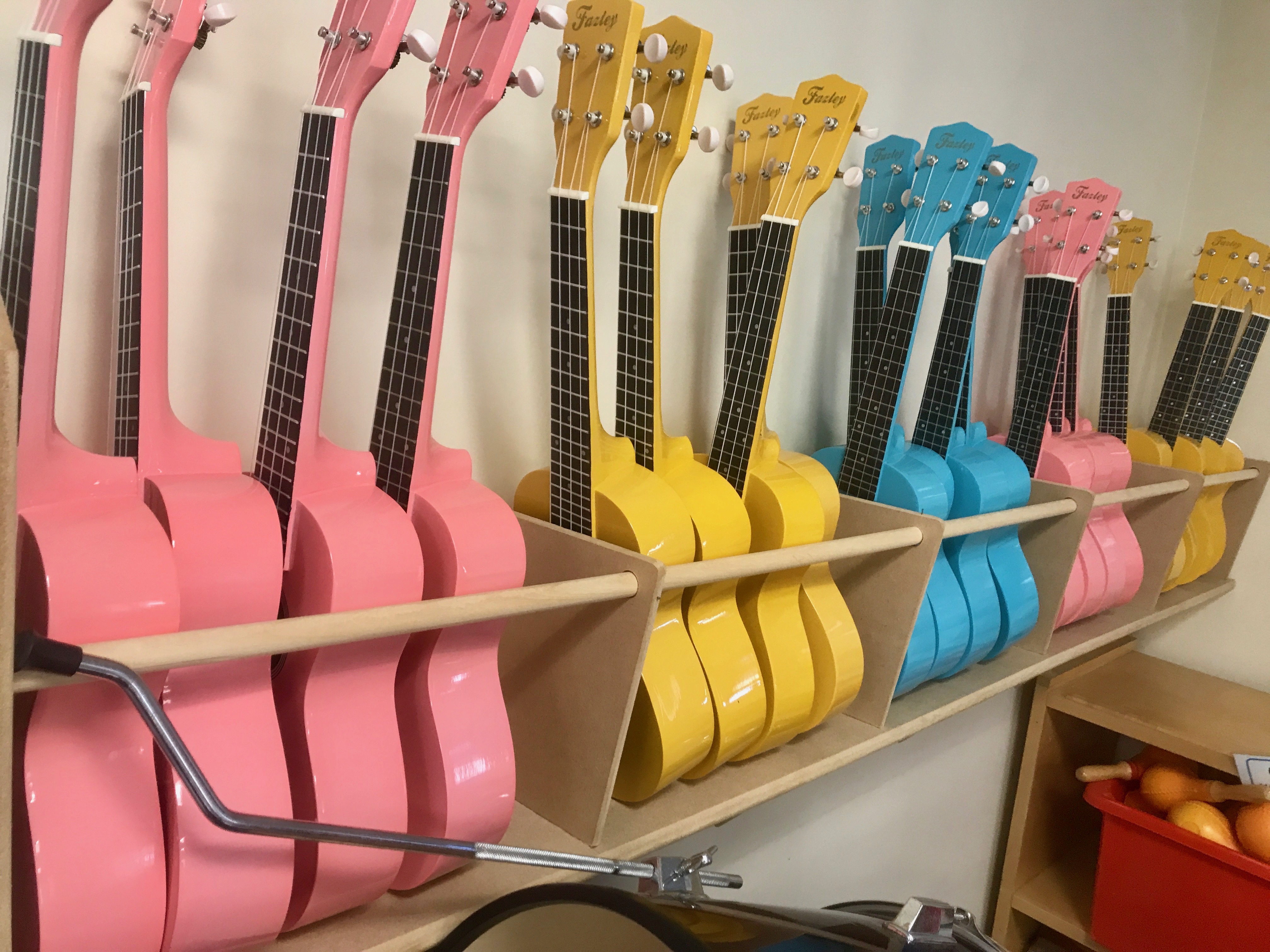
As well as the Rock Band, Bourne Westfield also has clubs for the Young Voices choir who had performed at Sheffield Arena, and Bucket Drumming which had been developed as an ingenious wipe-clean Covid-defying way to make music and teach rhythm. Years 3 and 4 had recently switched from recorder to ukuleles for the same reason. Members of the Bucket Drumming club told us about the three sizes of drum (soprano, alto and bass), performing ‘Seven Nation Army’ alongside the Rock Band to 100 people in a secondary school in Boston, and how physical it is (‘it really hurts your arms!)’. One of the players told us that they had broken their bin during an out-of-school performance and had valiantly kept on playing!
Assistant head teacher Gillian Goodwin also talked about the transformational power of the arts:
‘We’ve seen it work for lots of different children’ she explained. ‘I’ve just gone down to see a little girl who has major neurological difficulties and has just spent the whole week doing Bollywood dancing. She’s just in her element!’.
Like Becky’s Rock Band lads, Gillian explained how this girl had ‘found her thing’.
‘The world is bigger than just here. And that’s so important particularly when you’re a rural school. I don’t want these children’s minds, cultural visions, creative aptitude and passion to be limited by the opportunities within the area that they live in. So it’s really important that they learn that what we do links to a wider thing.’
Long may Bourne Westfield reach out, connect and inspire through the arts!
RAPS would like to thank Music lead and Arts supervisor Becky Beavis for her time, insights and organisation of the day; Assistant head teacher Gillian Goodwin; Year 6 and oracy lead Katie Knott; and all of the many students who contributed to our focus group interviews – the Arts Ambassadors, the members of the Young Voices choir, the Rock Band and the Bucket Drumming club, and the students from Years 4, 5 and 6.
We visited Beecroft Garden on a special day – their end of year Arts Exhibition where parents and invited guests could sample the school’s curated creativity. The exhibition was themed around ‘Take One Picture’ – every artwork was produced as a response to Claude-Joseph Vernet’s A Shipwreck in Stormy Seas (1773):
Firstly, let us guide you through this impressive range of paintings, drawings, sculptures and installations, a flood of media, techniques, approaches and ideas.
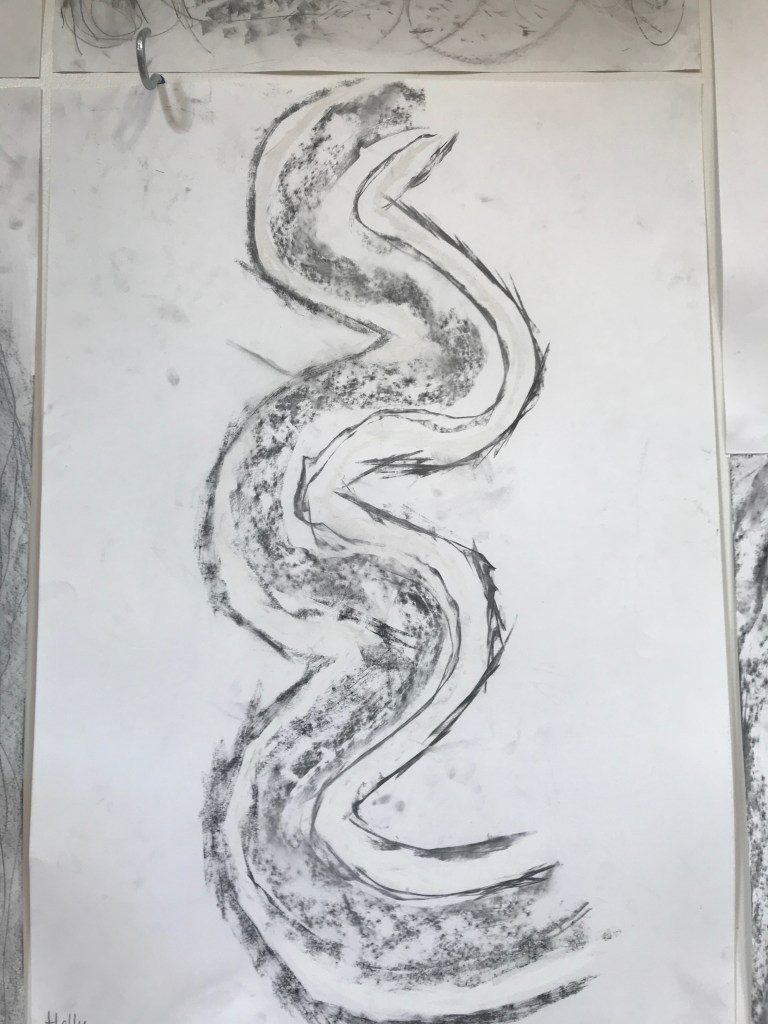
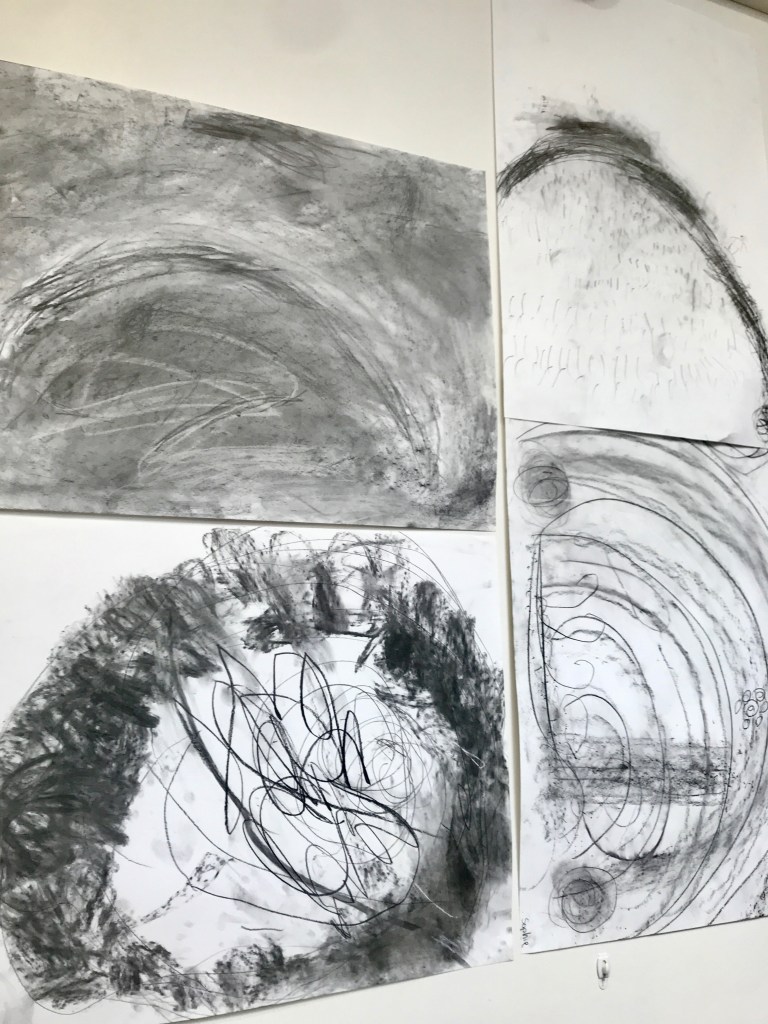
Reception students has produced these huge gestural drawings – expressive waves and foamy patterns that filled a large portion of one wall:
Reception had also created these ‘Baby Waves’ out of silver acrylic paint, clay, wire, plaster of Paris and … (wait for it) … silver leaf!
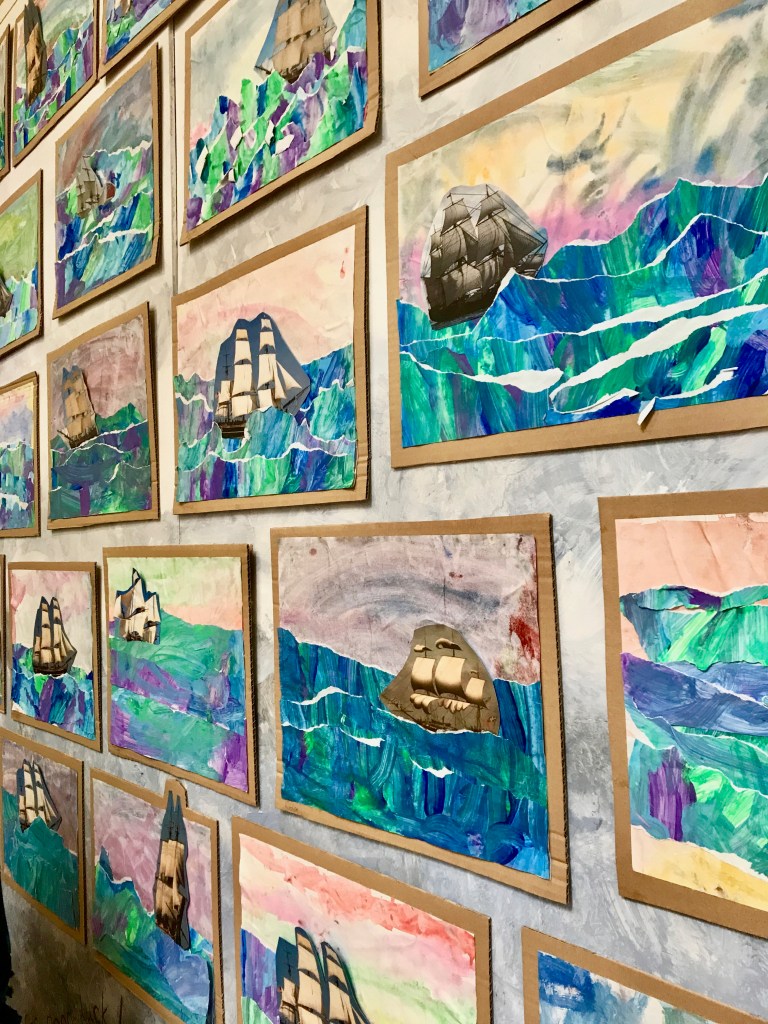
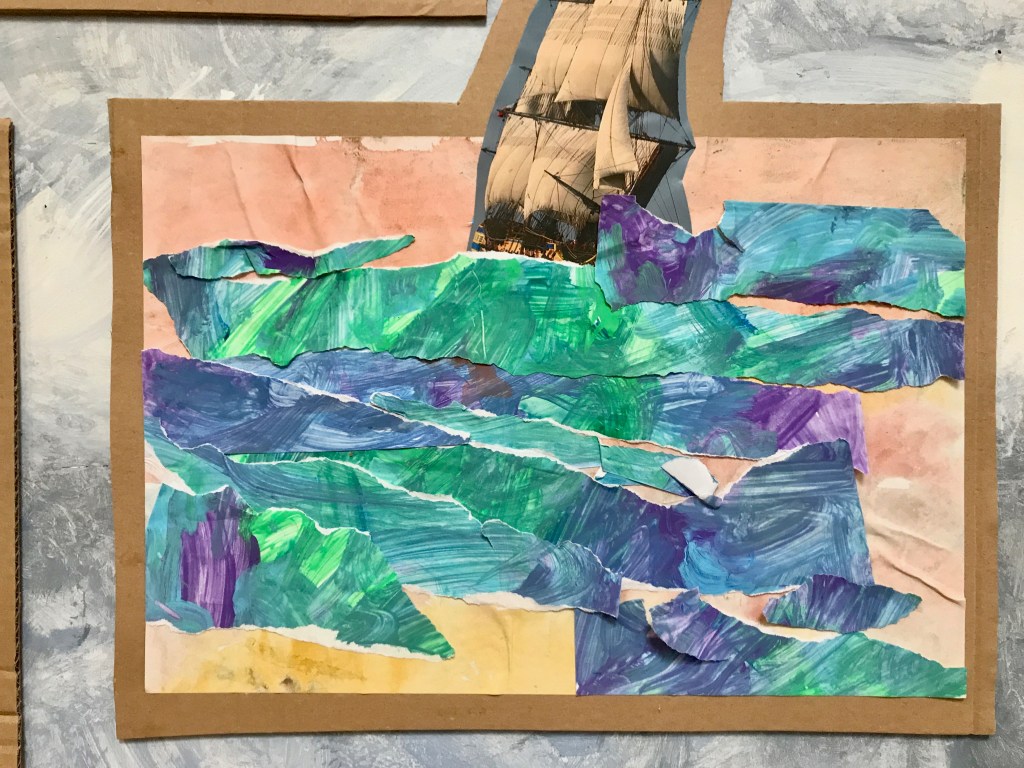
Year 1 were exhibiting these ships on a stormy sea. They had worked on creating a 3D effect in the waves and used cut-up and college to place them on their backgrounds with the ships:
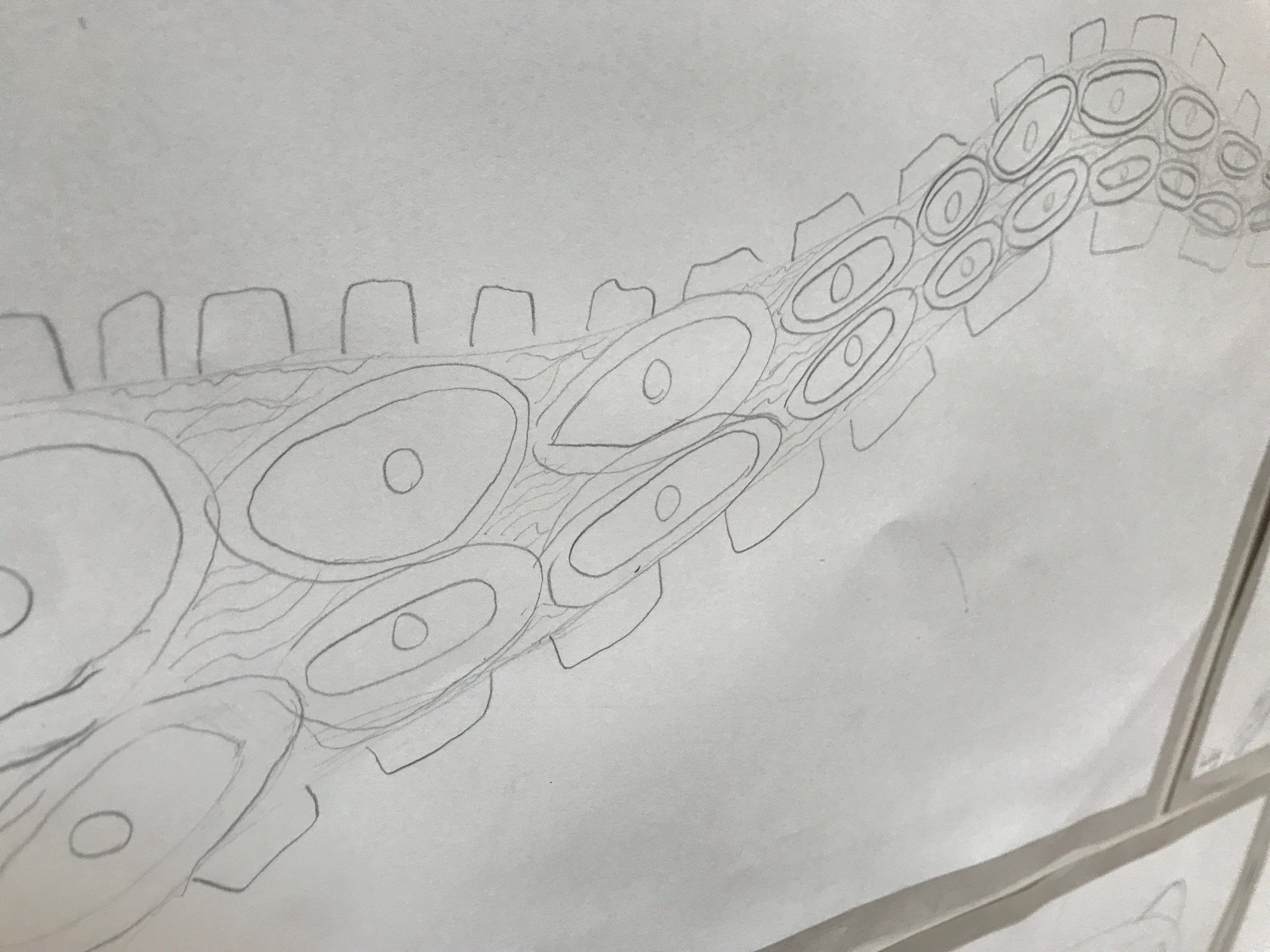
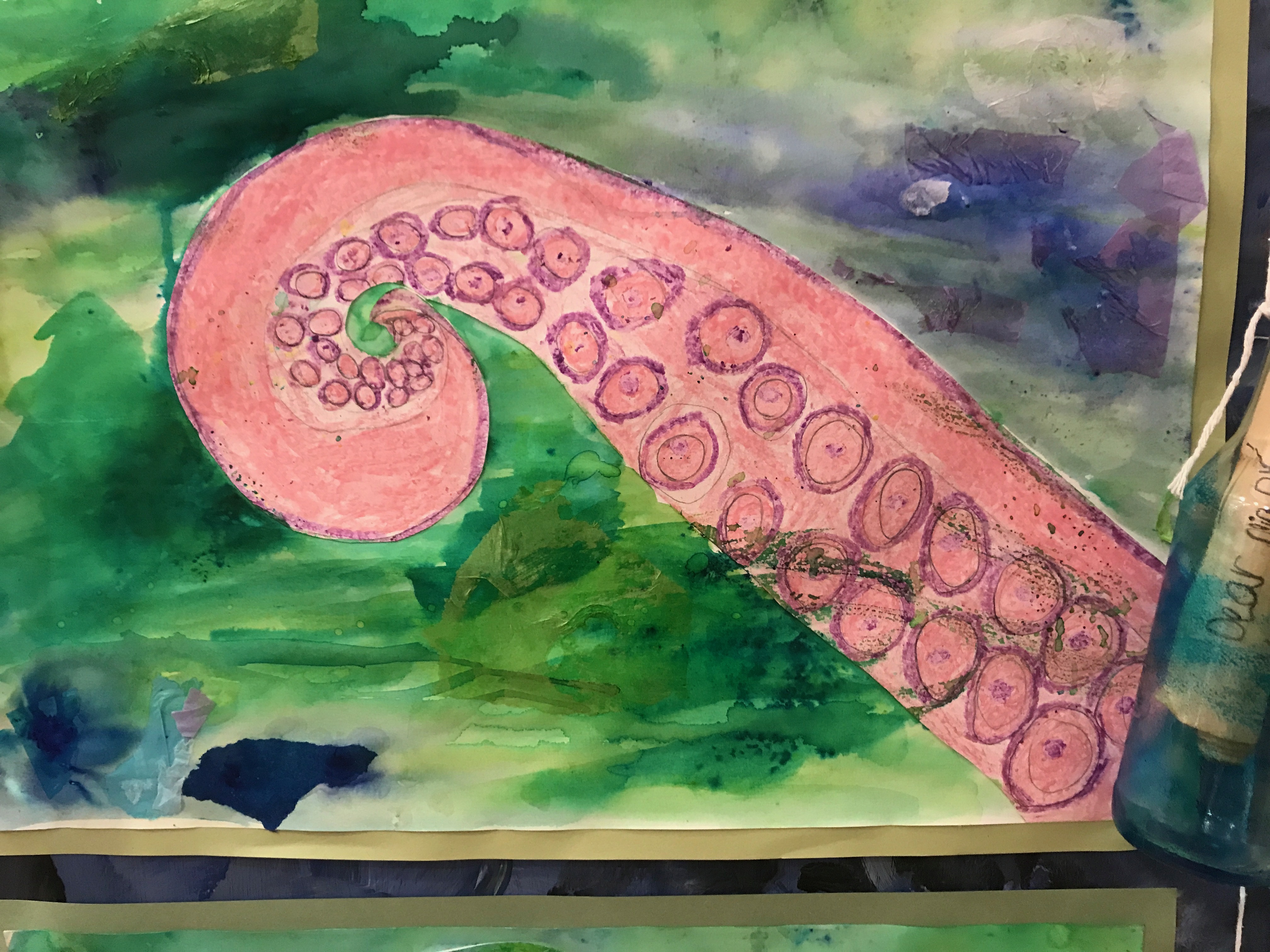
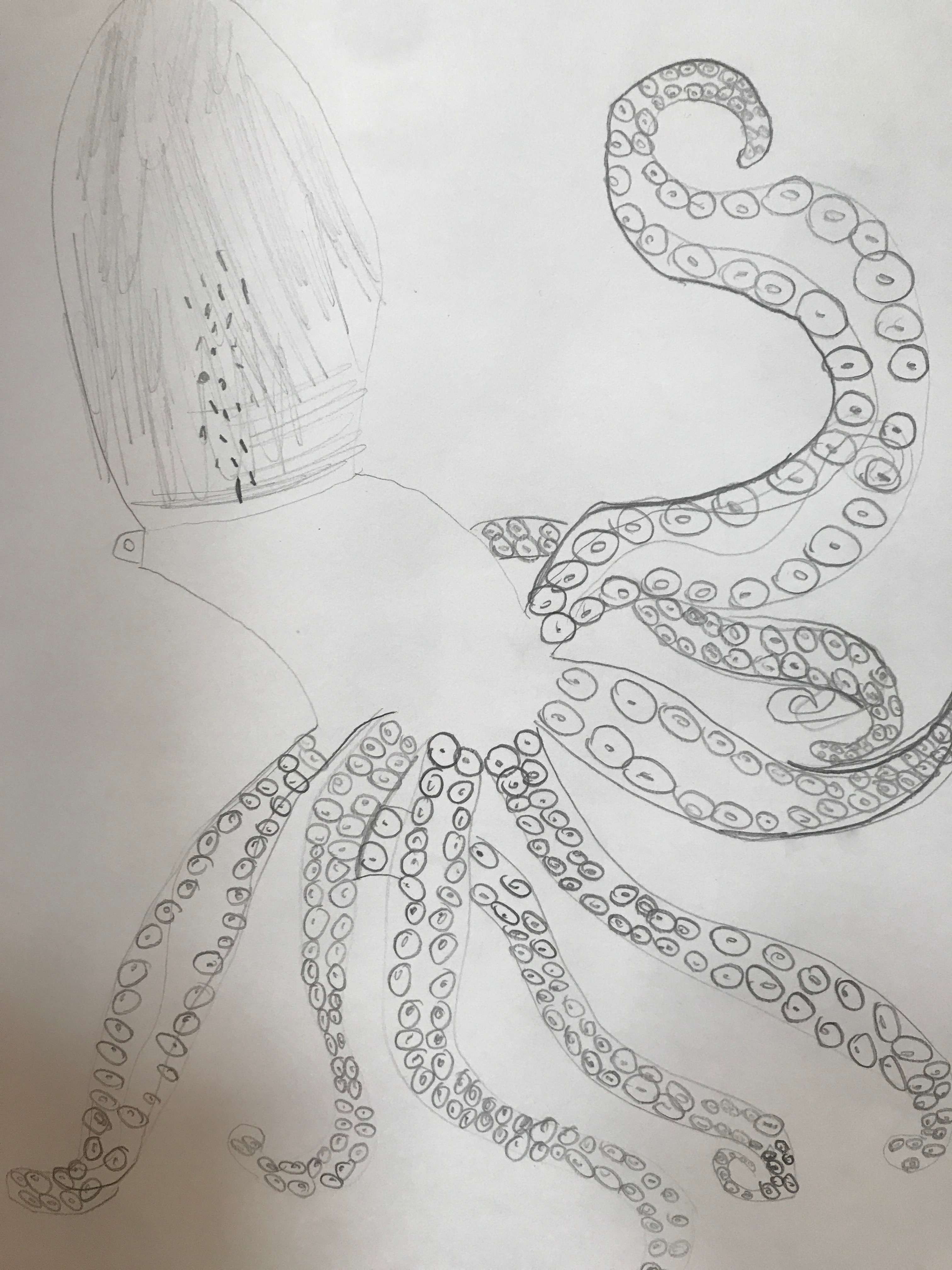
Year 2 had looked closely (very closely!) at tentacles. Inspired by the story of the Kraken, they had created observational sketches before they chose and blended colours. Can you spot the messages in bottles?
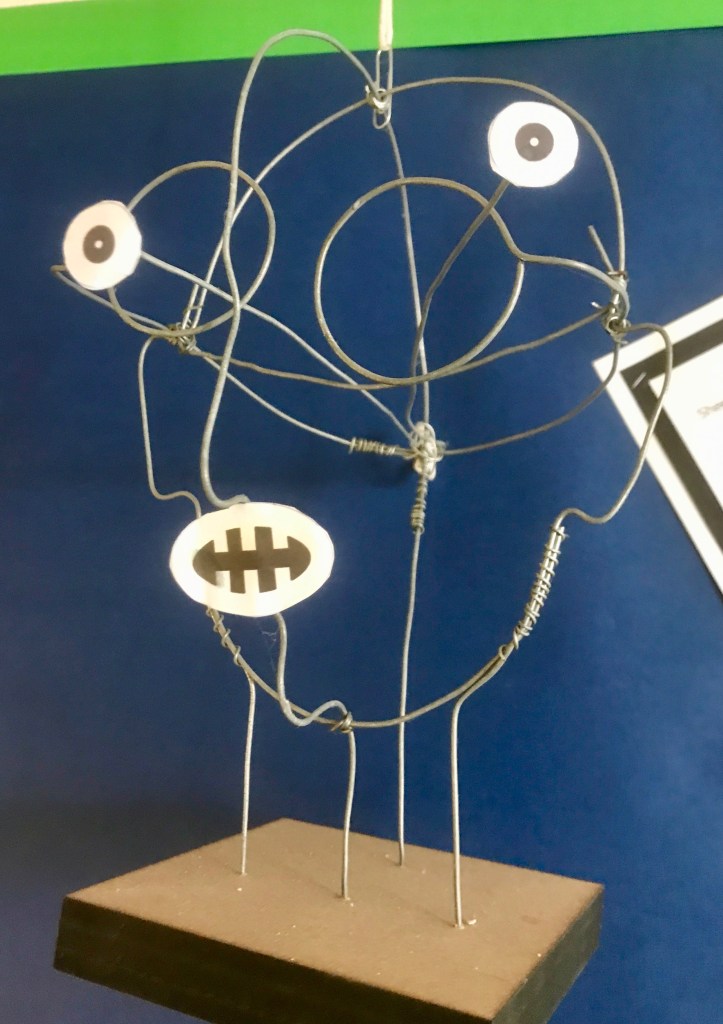
Year 2 had also been busy creating this ‘Colossal Octopus’ out of wire, newspaper, Modroc and bottle tops. The felt fishes swimming by were made by Year 1 students.
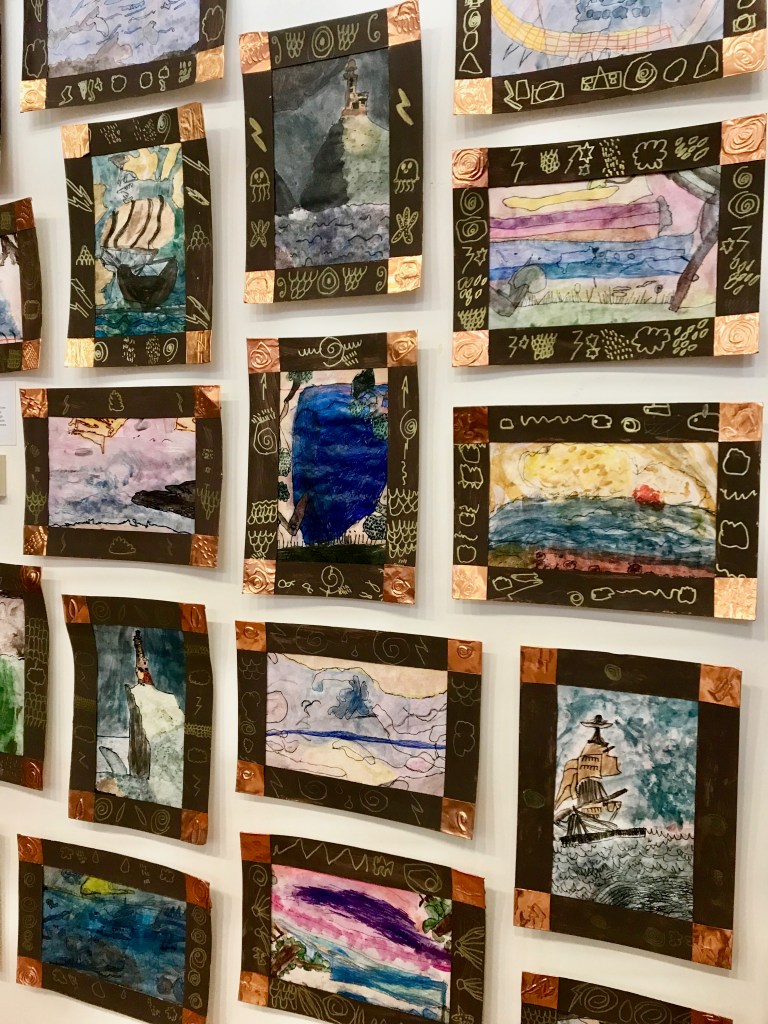
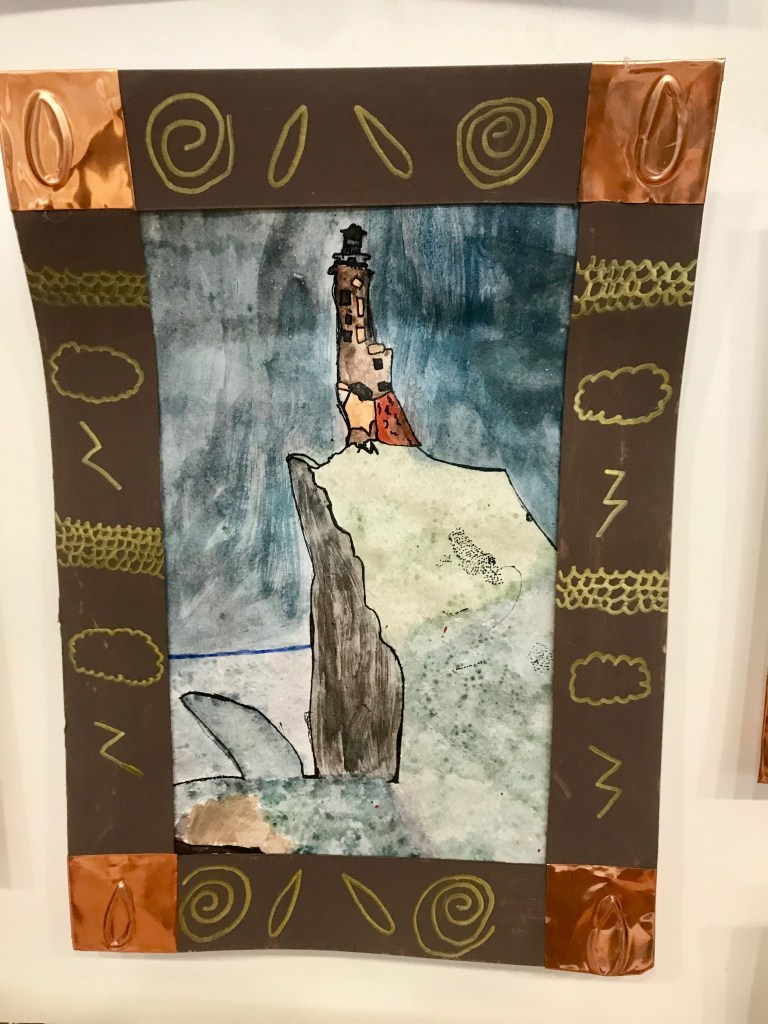
These Year 3 pieces inspired by the work of Kehinde Wiley blend ‘the old and the new’. They used watercolour and a glaze before framing their seascapes using embossed copper corners.
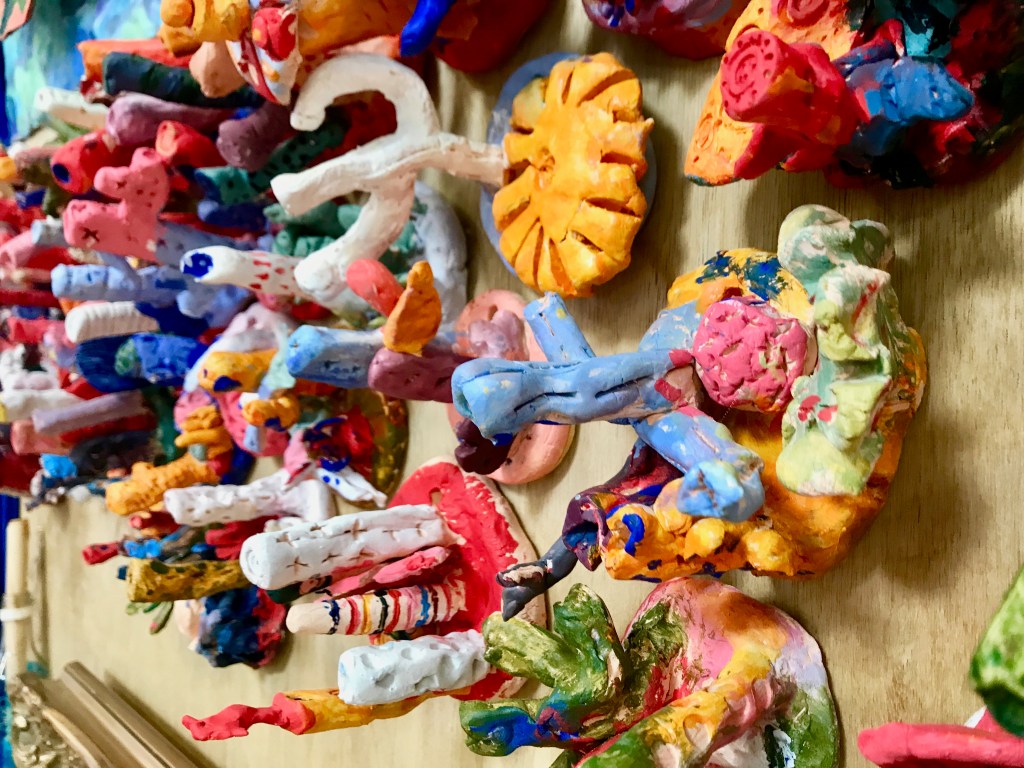
Year 4 had made these clay coral pieces while learning about how climate warming is bleaching and destroying coral in the sea. The pieces were glazed and fired in the school’s kiln:
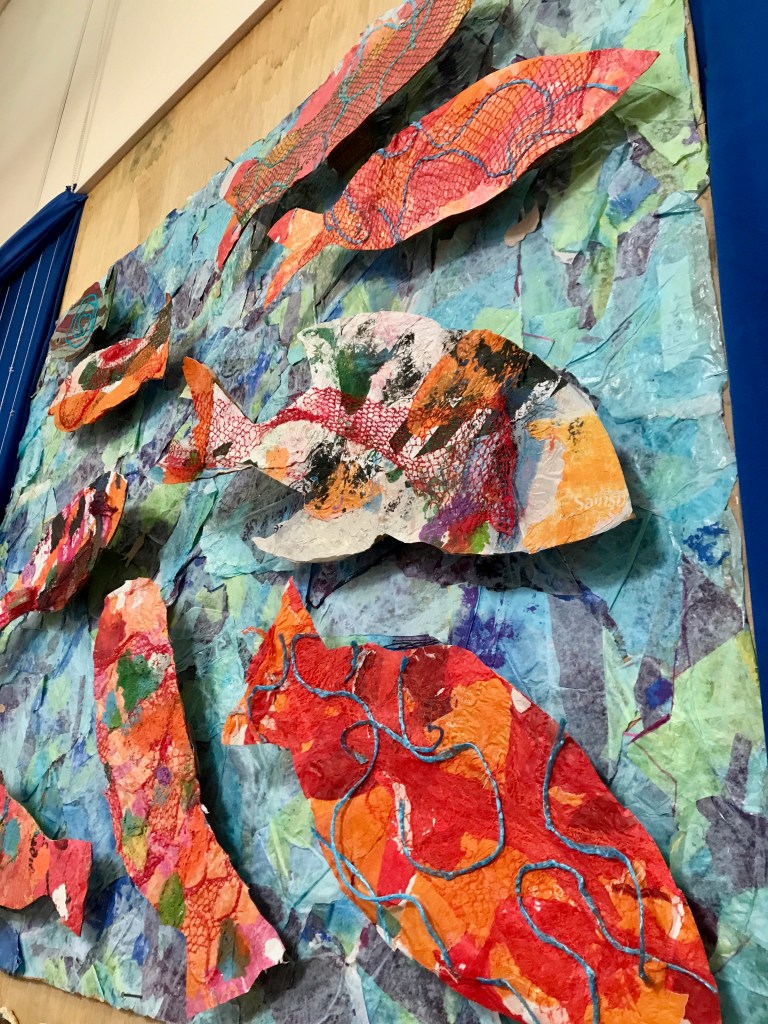
Again, on the theme of the environment, Year 4 had collected plastic waste to create this ‘Plastic Ocean’. They had fused the plastic bags and netting together using a hot iron and baking paper.
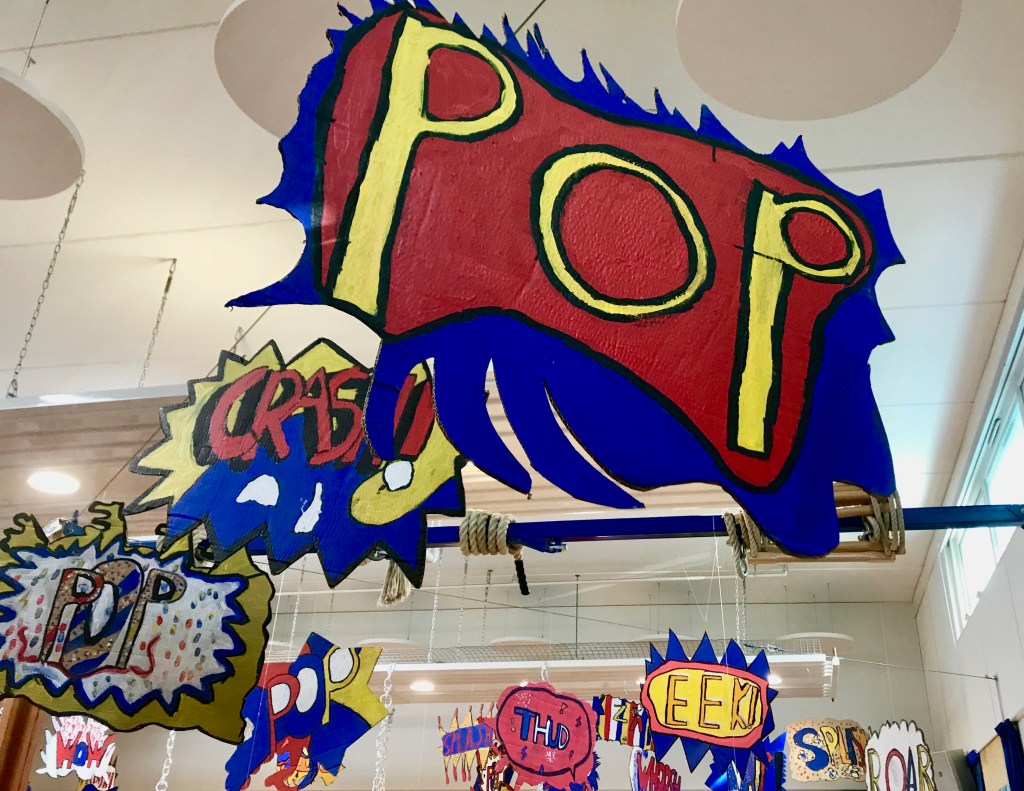
Those busy Year 4s had also created the Pop Art signs that hung above our heads. They had been inspired by the soundtrack of the shipwreck ‘Take One Picture’ that had been composed by the National Gallery.
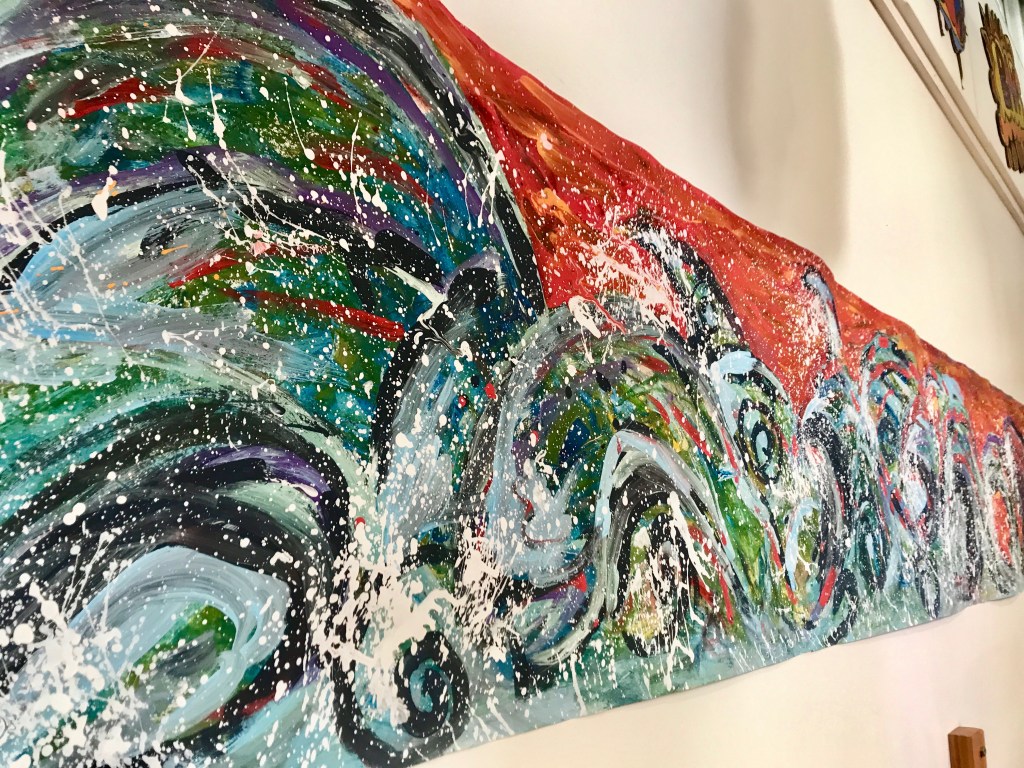
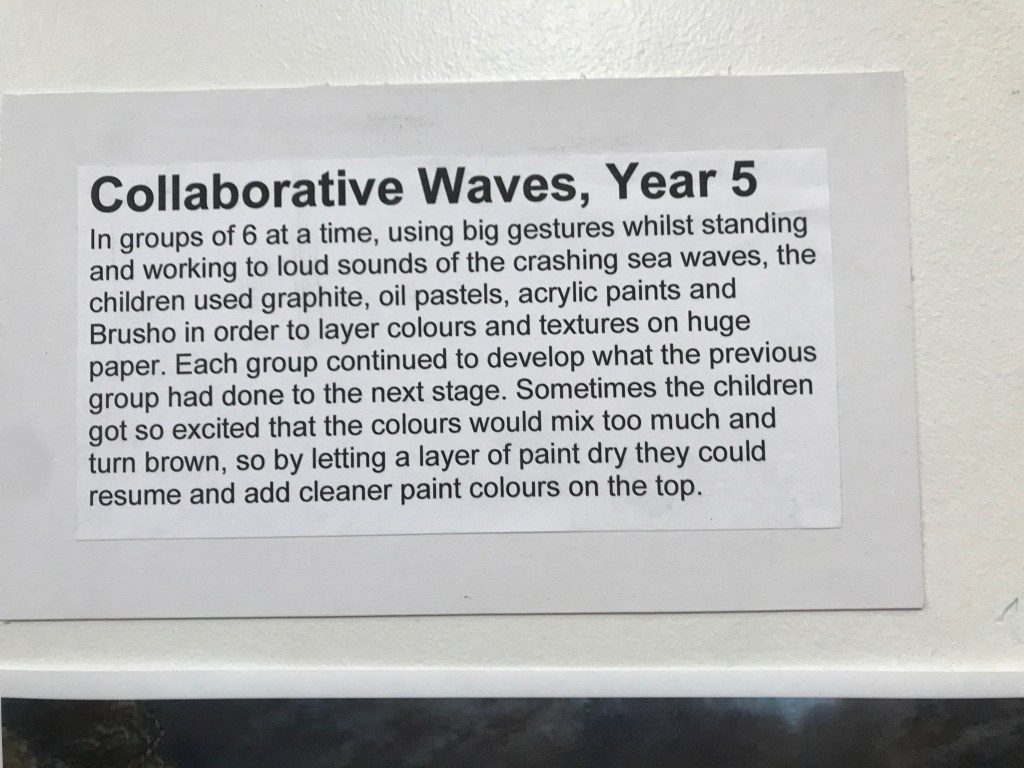
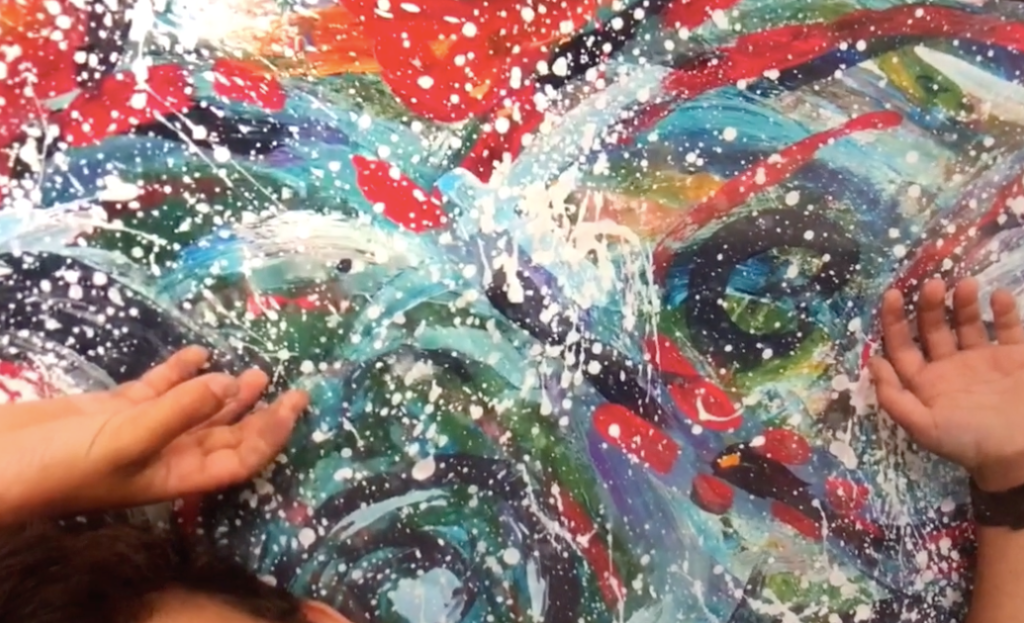
Meanwhile, Year 5 students had worked in groups to create these wall-length waves. They built up the layers using graphite, acrylics, oil pastels and, what appeared to be a Beecroft Garden favourite, Brusho!
Also on display were these Year 5 ‘fast fashion’ dresses made for a DT project out of fused plastic and a mix of recycled and natural materials.
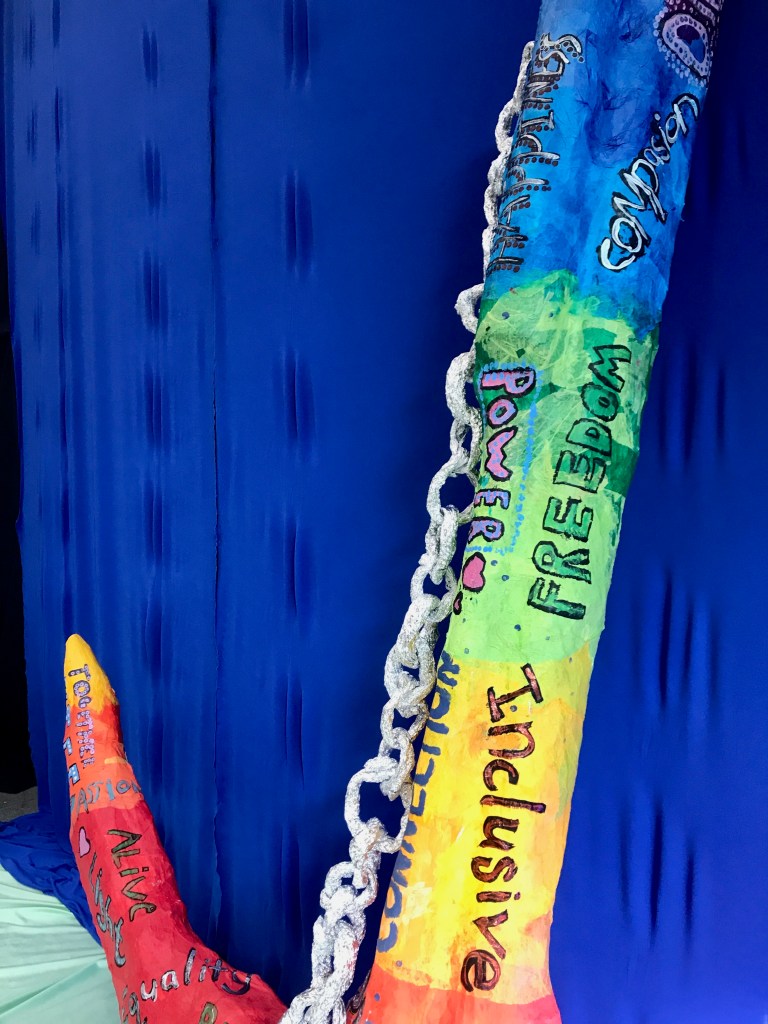
Next to the dresses was this card and plaster Pride anchor inspired by Year 6’s involvement with Pride Celebrations and marches:
Elsewhere were these large lighthouses with rotating lights:
… and animations that captured the feeling of being in a stormy sea:
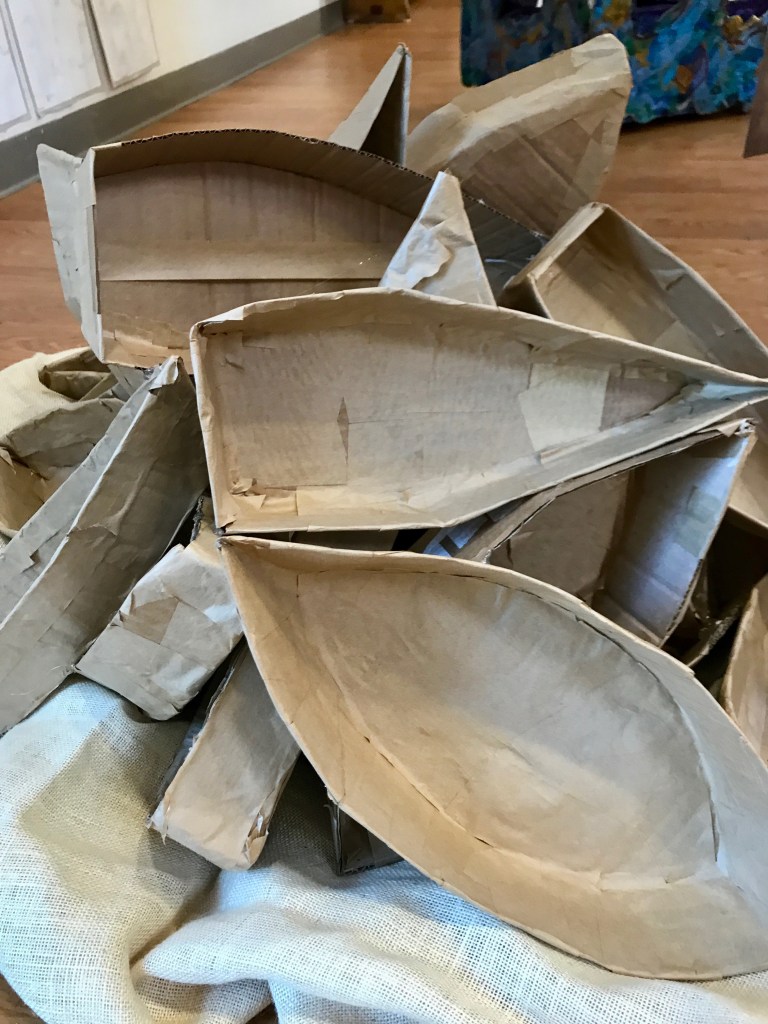
Our tour of the exhibition ended with this large boat hanging upside-down from the ceiling:
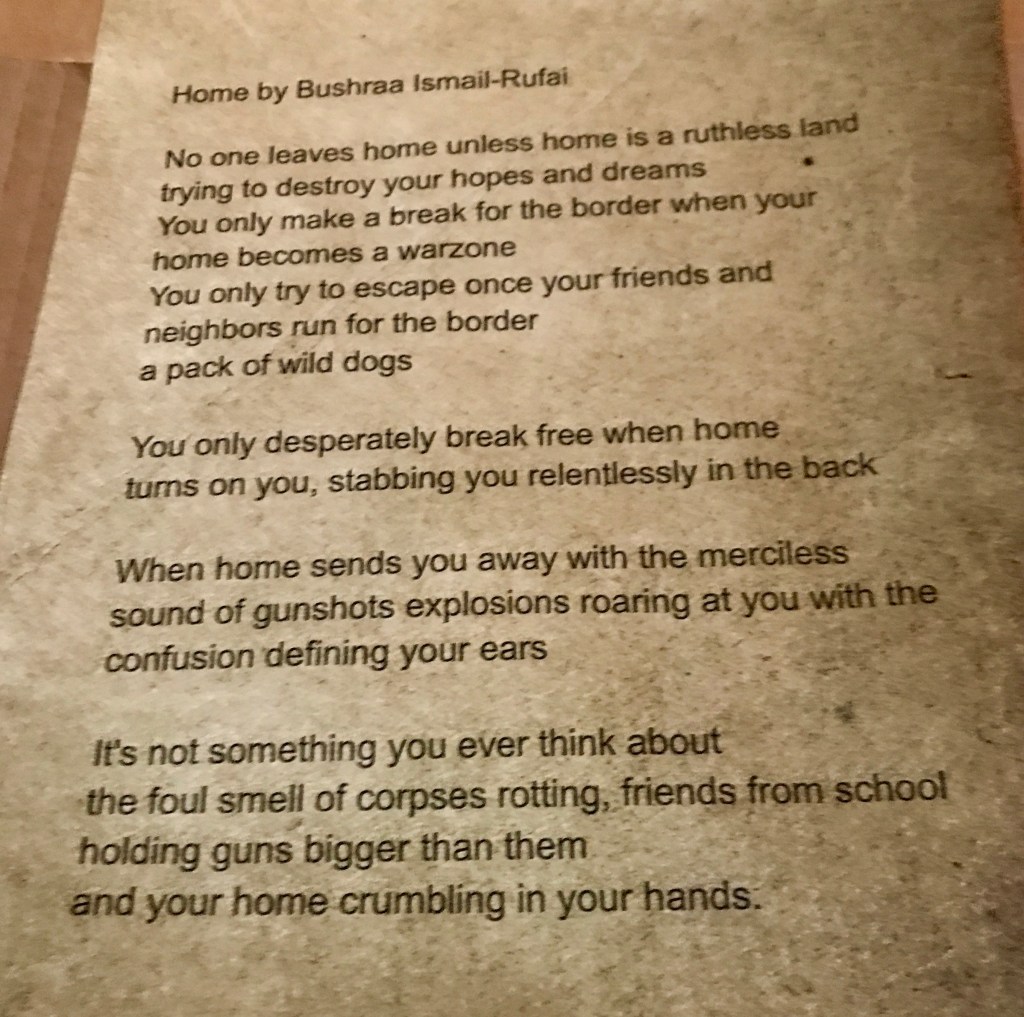
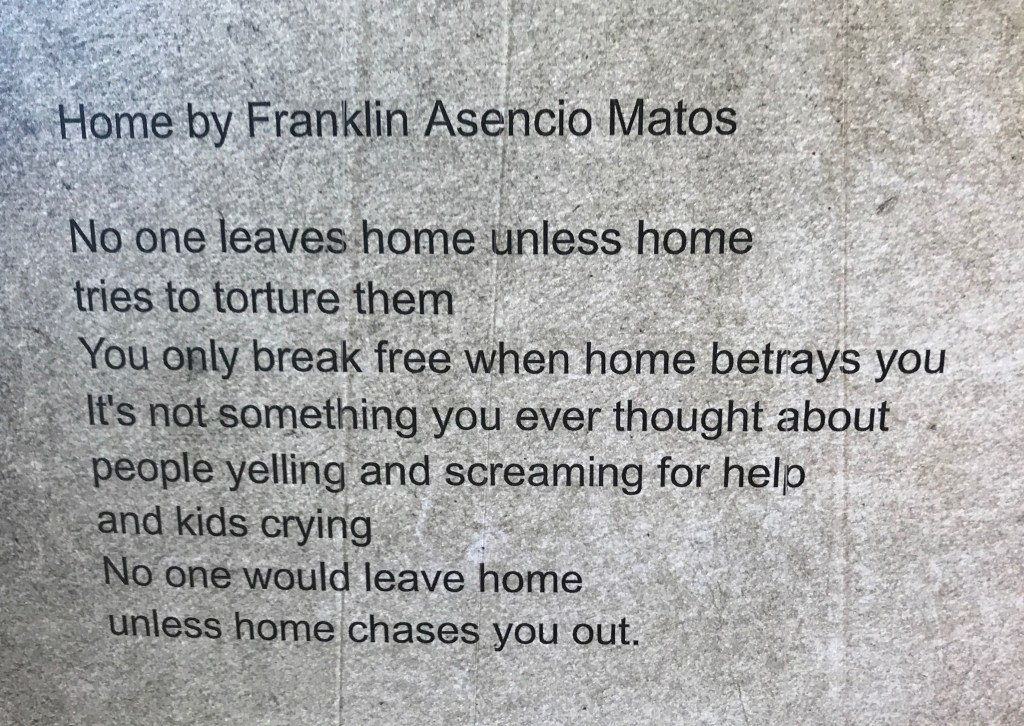
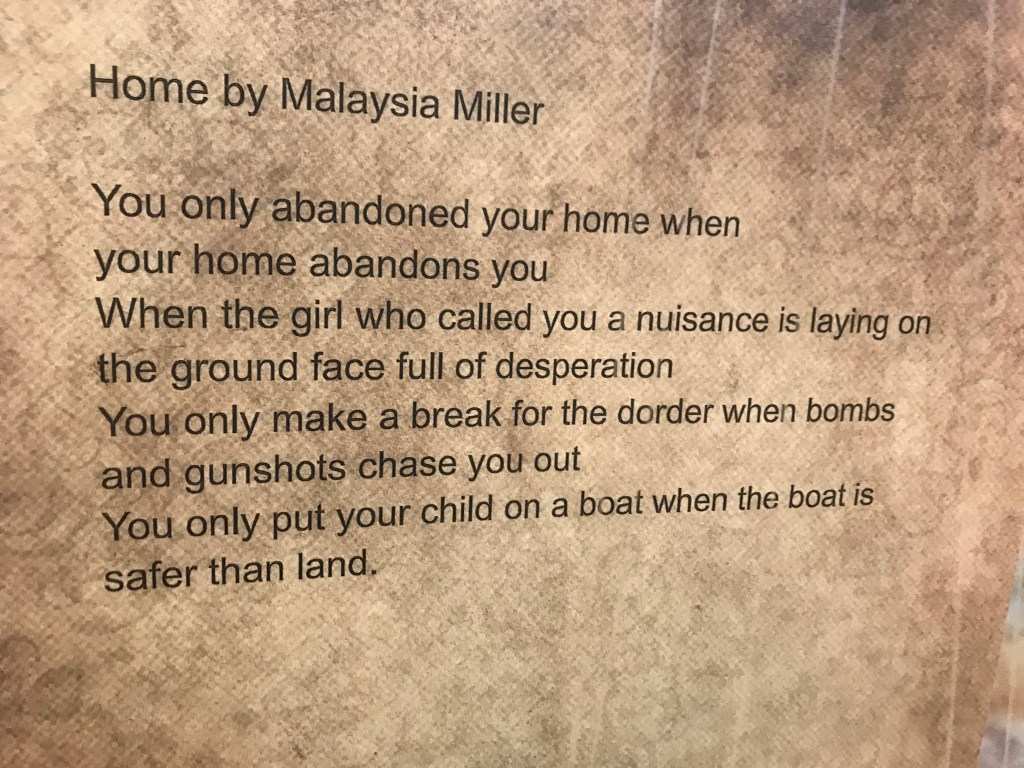
A series of poems were stuck to the inside of the boat:
Underneath lay a pile of small boats, symbolically sunk to the bottom of the sea on one of the many perilous daily trips across the English Channel by refugees, many of them children, just like those who had created this moving and conceptual artwork.
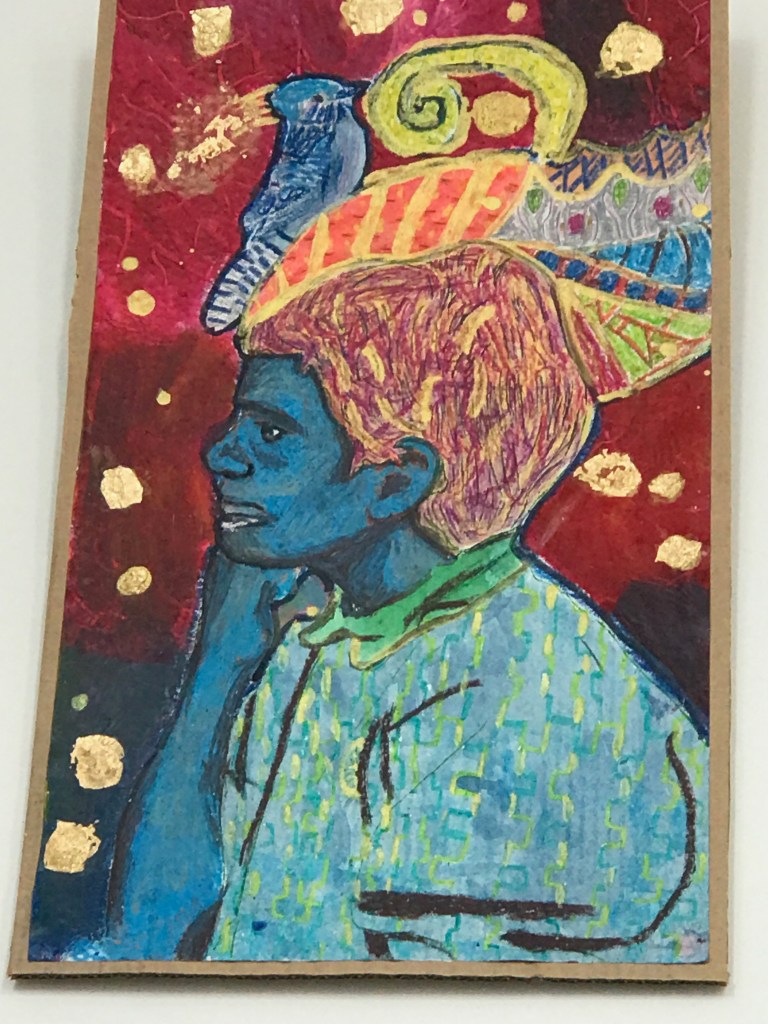
During this busy event, we got to speak with a group of Year 6 students who talked us through their artworks and how they valued the arts at Beecroft Garden. On the walls surrounding our interview table were these self-portraits inspired by the work of Tamara Natalie. The students talked us through the process of creation (it involves photography and gold leaf).
Many of them identified these pieces as their favourite and most memorable primary school artworks. They told us how they had already made space on a wall at home and how, with this piece in particular, they could express themselves. ‘It just feels like your own’, one of them explained: ‘It feels like it belongs to you’.
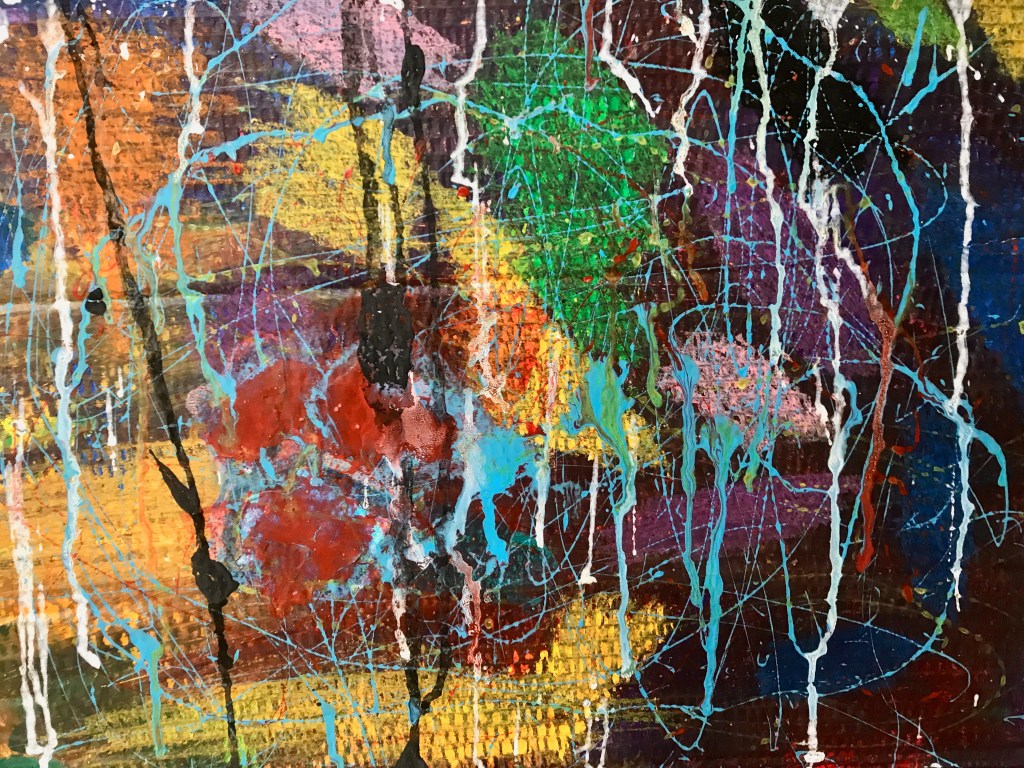
They also talked excitedly (‘You can be free. You can do whatever you want. There’s no restrictions!’)about the abstract work they had created inspired by the work of Frank Bowling.
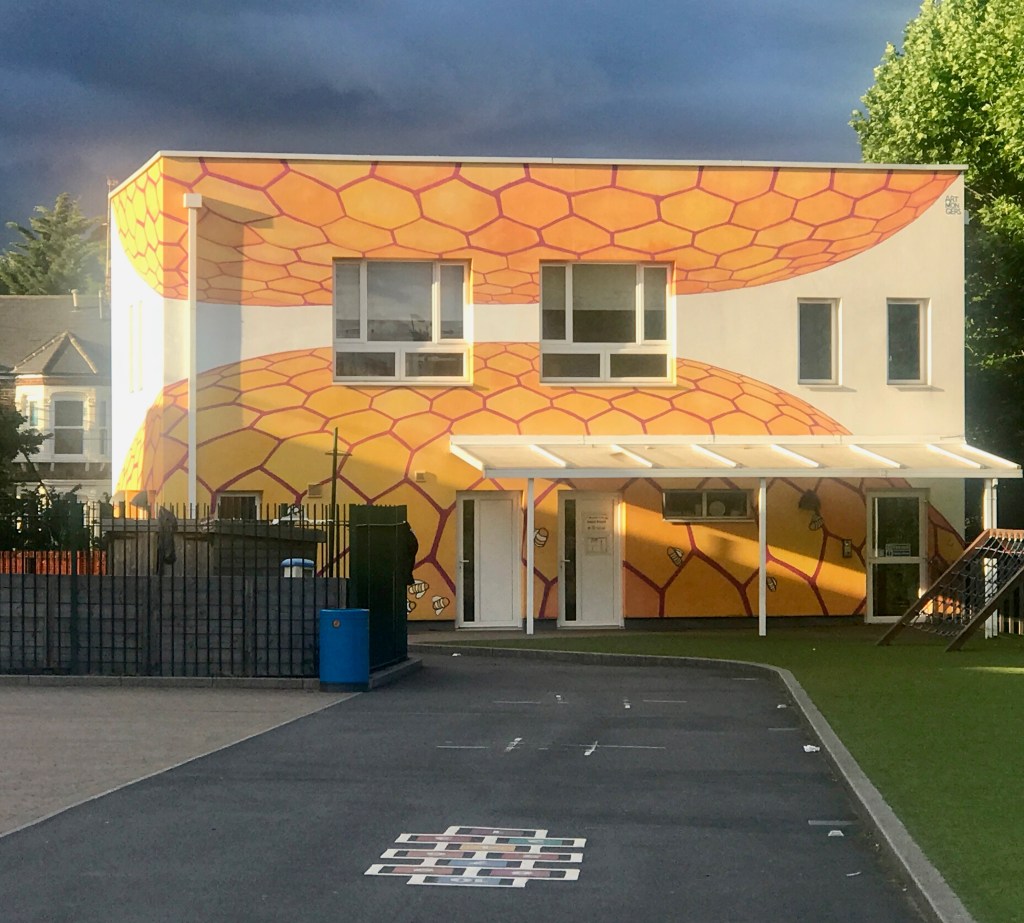
They also enthused about the street art projects they had done after studying the work of Mr Doodle, Art Mongers and making the most of the school’s links with Louis Masai and Lionel Stanhope.
Finally, we spoke with Arts specialist teacher Dilys Finlay (Fine Arts Degree from Goldsmiths) and Head teacher Graham Voller (Art Degree from Camberwell College. Art Specialism from Goldsmiths). Both are practicing artists.
They told us about how the school had been in special measures (It was called Brockley Primary at the time). Glenys Ingham was appointed as Head, Dilys as a supply teacher in Reception in 2009, and Graham as Deputy Head in 2010. Glenys underpinned the curriculum with accessible arts education for all children. When Glenys retired, Graham became Head and continued to make the arts and creativity central to the ethos and development of the school.
On the subject of their success as a flourishing arts-rich primary school with limited resources, Dilys told us that:
‘it starts off feeling really expensive, but if you got the right people there and the vision, the money makes itself. If you’ve got the right provision, you can sell the stuff and attract funding. You become an interesting entity and everyone wants to go to your school.’
Graham mentioned how parents are now queuing up to get their children into Beecroft Garden. ‘What parents want for their children’, he told us, ‘is for them to be happy and creative and think outside the box.’
On the subject of the many cultural and creative partnerships and visiting artists, Graham explained that:
‘you have to make sure that you’ve got the rest of your community involved in what’s going on, which is why it’s so, so important for us to invite people in. You can’t be in a bubble and do this because you want your children to feel that they’re creating something that’s got longevity and an audience.’
Dilys stressed that ‘We always try and choose people who reflect the diversity of the children here’. She also raised the idea of fostering children’s life-long engagement with the arts:
‘We need to have artists coming into schools because children need to see outside people making a living. This is a career opportunity. It’s a role model.’
Graham agreed:
‘We live in London. The creative arts in London are massive. If you break down the economy of London, visual Arts, performing arts and cultural events make up a massive, massive part of the income of this city. Chances are the children are going to have some kind of role in the creative industry, so what better way than to kind of like start them off than with creativity?’
What better way indeed.
Our sincere thanks go to Arts specialist lead Dilys Finlay for inviting us to this special event, to Head teacher Graham Voller for his insights into heading up an arts-rich primary, to HLTAs Stacey and Sebastian, and to the Year 6 students for sharing their enthusiasm for the arts and the guided tour of the school.
You may also be interested in reading our recently-published Art, Craft and Design Rapid Evidence Review – a survey of published scholarly literature on art, craft and design in education.


































 Researching the Arts in Primary Schools
