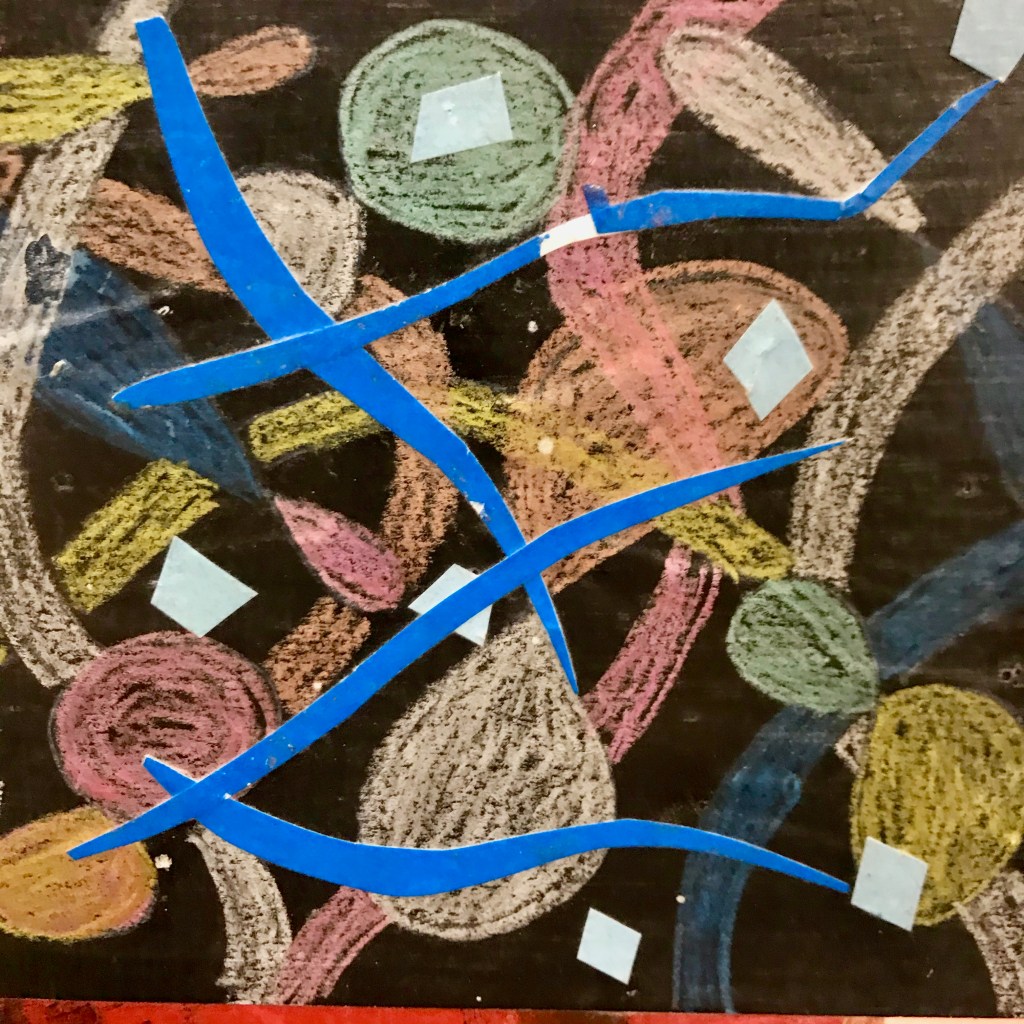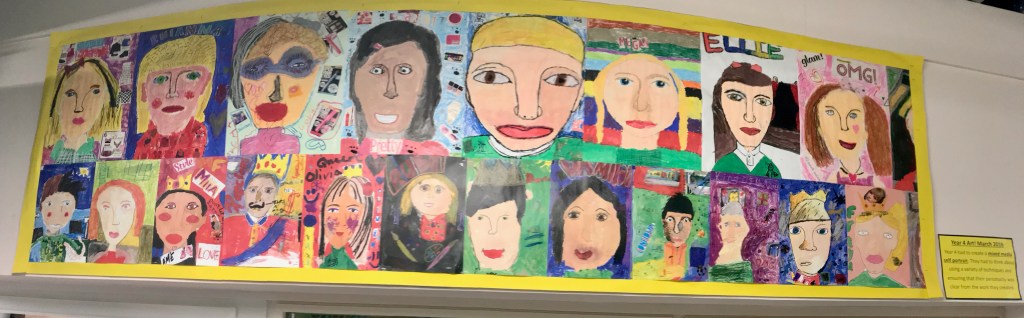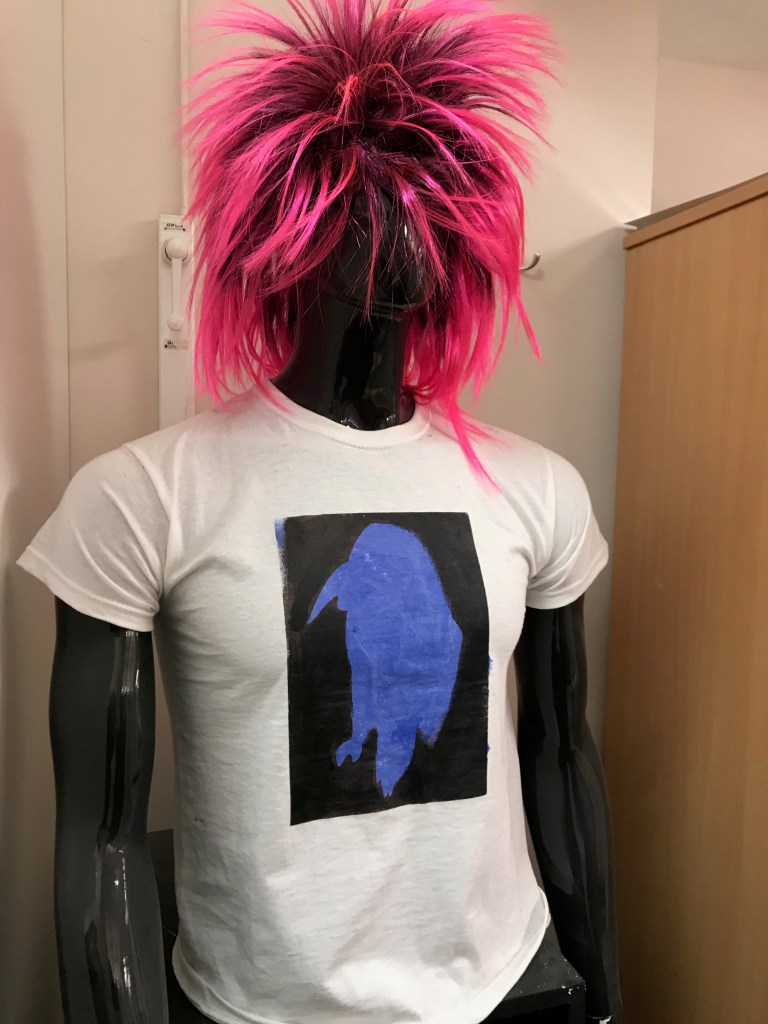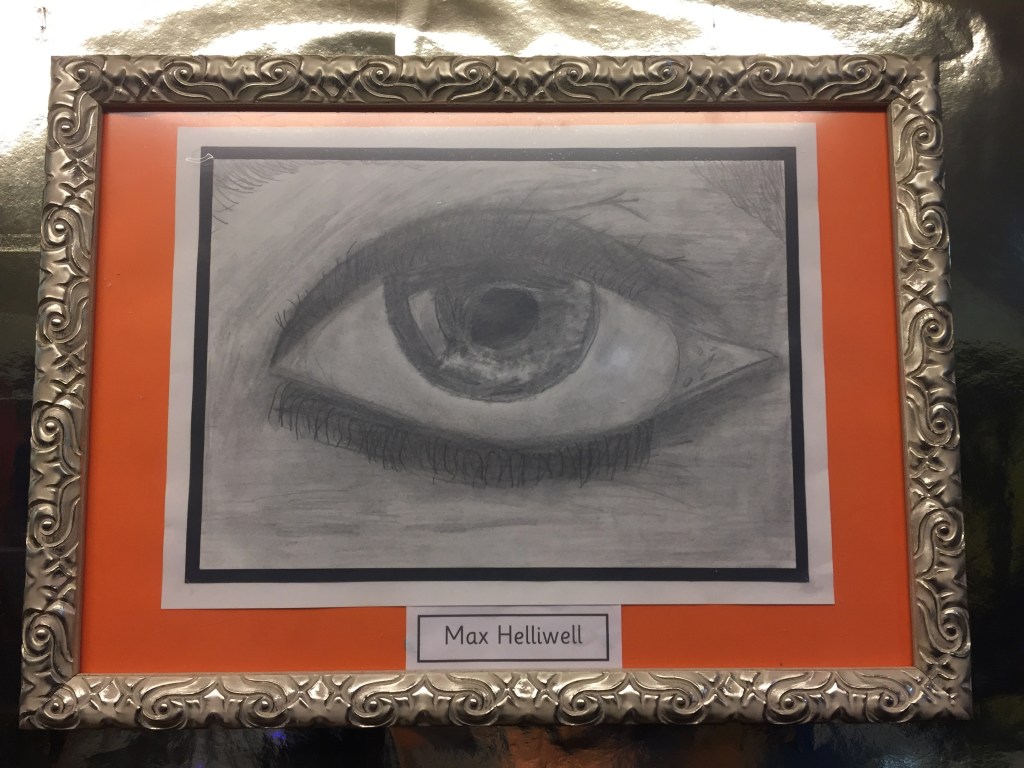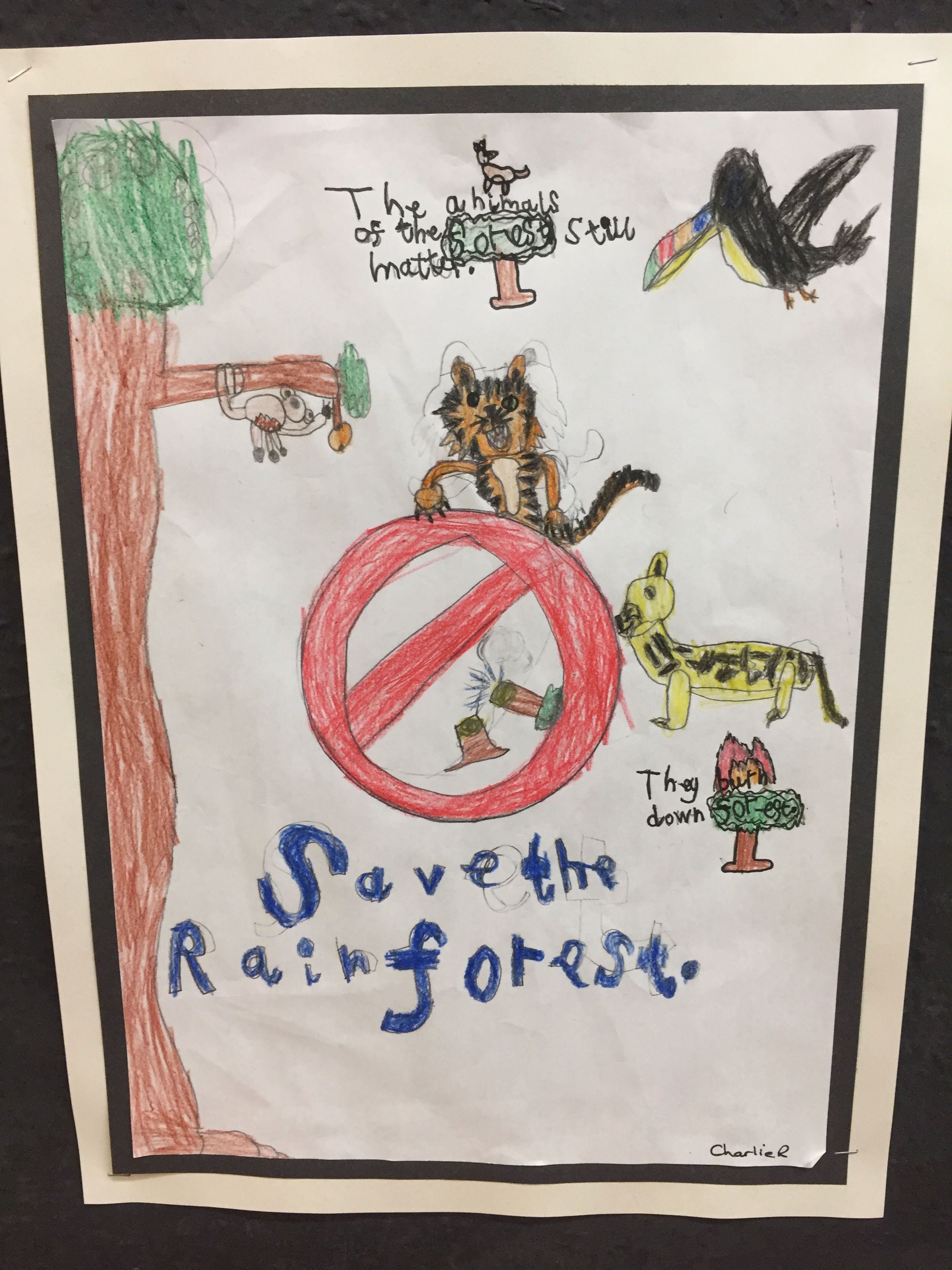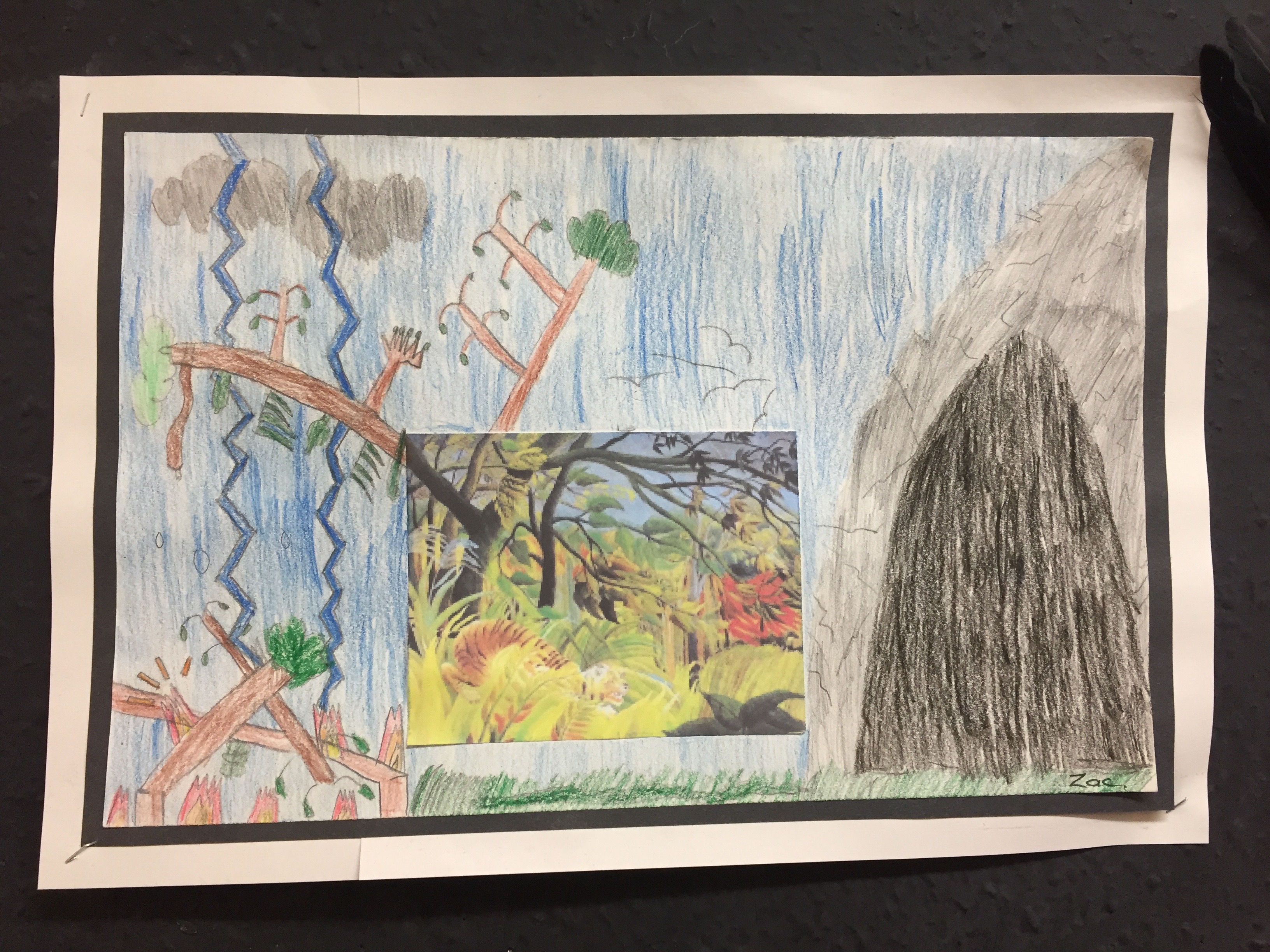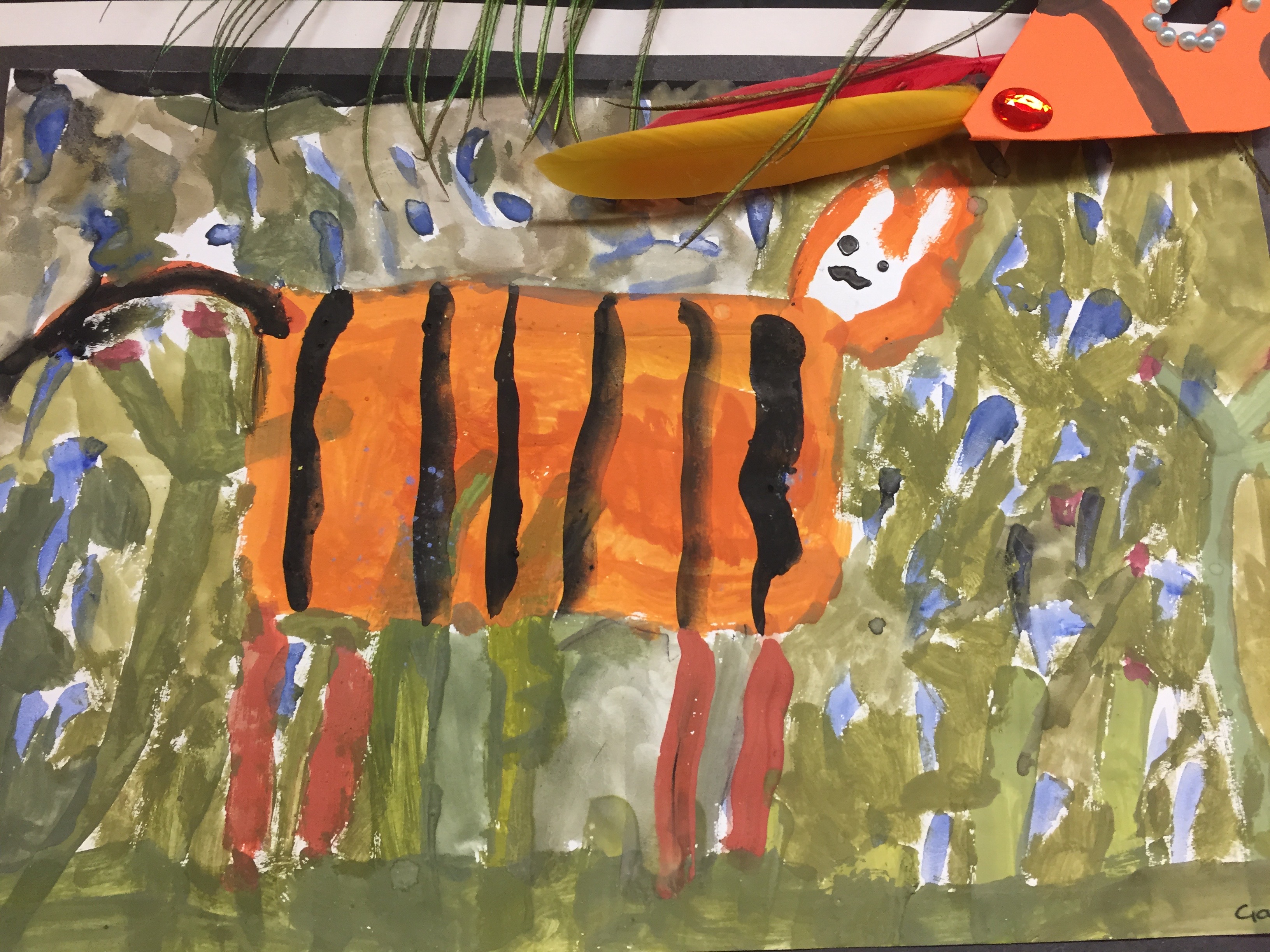
Nottingham’s favourite outlaw has an arts-rich school named after him. Welcome to Robin Hood Primary

Robin Hood Primary is a lively arts-rich school in Nottingham. To be precise, the school is situated four miles north of Nottingham in the large Bestwood housing estate, not far from the local town of Arnold. 
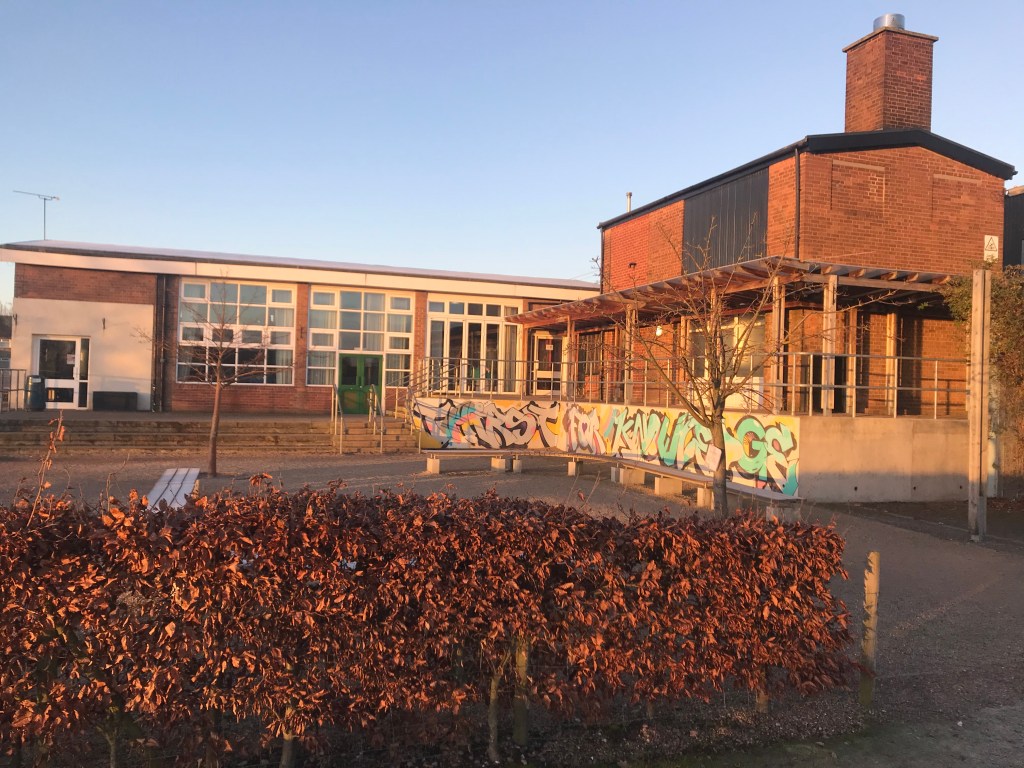
Robin Hood Primary in Nottingham

Despite our previous visits to Robin Hood primary on other arts-related business, there were so many new things that we learned about the school during our visit there on a frosty day in January.

For example, we never realised that the school buildings are completely surrounded by green space. It’s perhaps no surprise that the school keeps chickens and that all of the children do Forest School activities in specially created areas. 

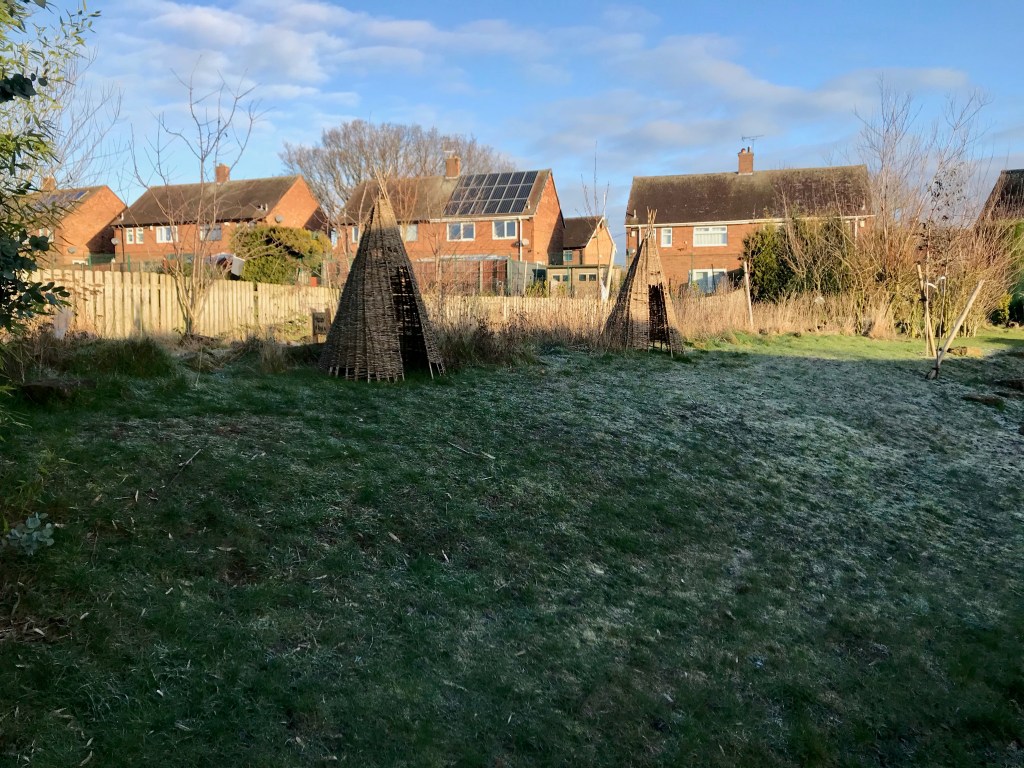
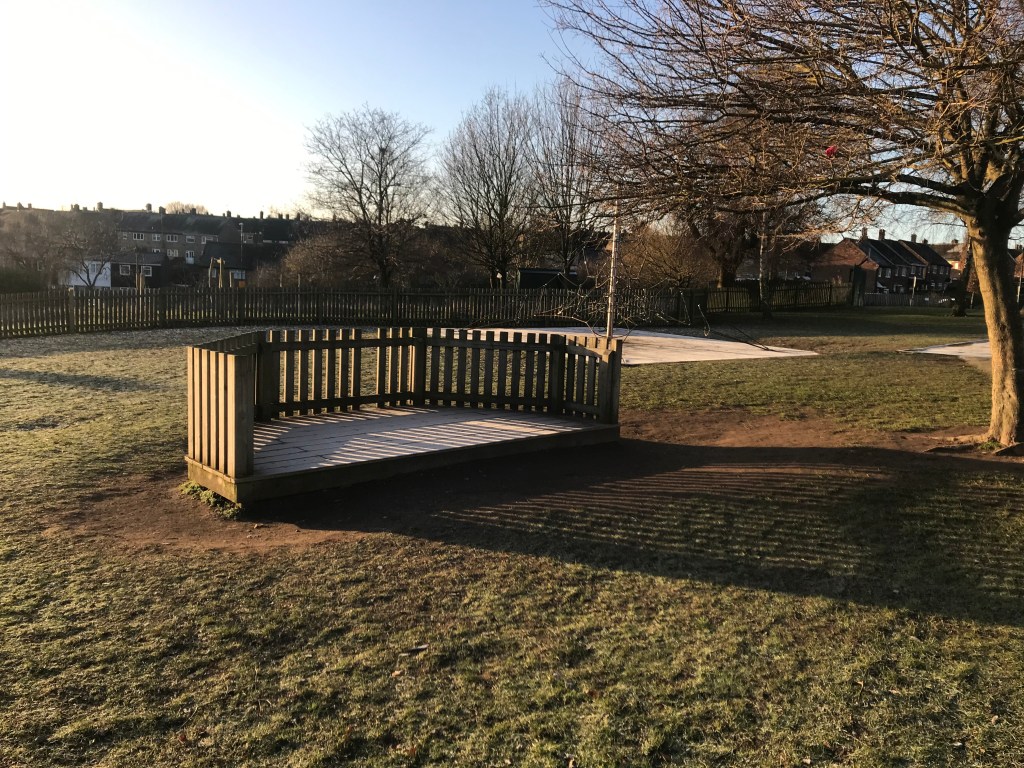
Arts Lead Kerry Whiting told us how the students had been making art out of mud and sticks. There was lots of outdoor space for on-stage performances and the reading/learning Tepees, as well as an impressive Gaudi-esque structure that doubles as learning space. 
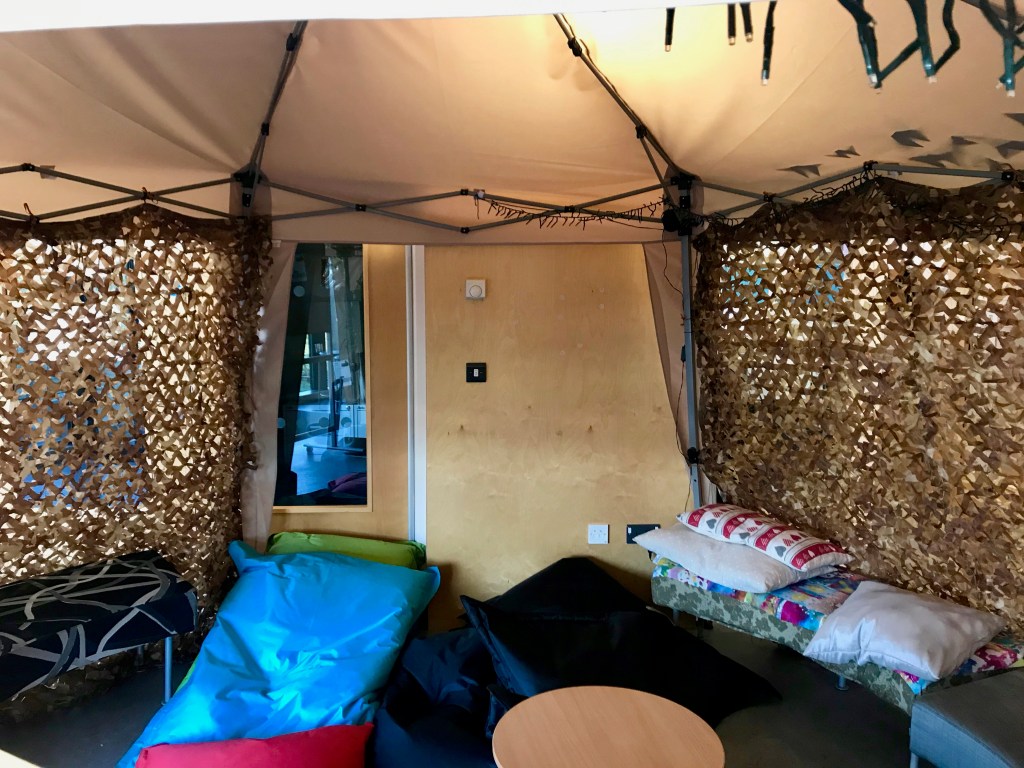
On our tour, Kerry pointed out lots of individual outdoor and indoor areas that had been developed for break-out, chill-out and small group learning purposes. 

We spoke with Clare Farrelly who has recently started leading Key Stage 1 Music. She also leads the Forest School sessions. We knew that this school takes their music seriously, and it was interesting for us to find out more about how they had been working with Nottingham Music Hub for the past nine years. As we discovered, Nottingham is one of just seven cities running the In Harmony programme, part-funded by the Arts Council. Robin Hood’s KS2 students all get to play either violin, viola or cello.

Clare told us how her KS1 students were enthusiastically working through some of the BBC’s Ten Pieces units. She told us how the singing in class and in assembly, coupled with rhythm and pitch work, was providing a valuable foundation for the extensive instrumental and vocal work that the students do in KS2.

Classroom made of hay!

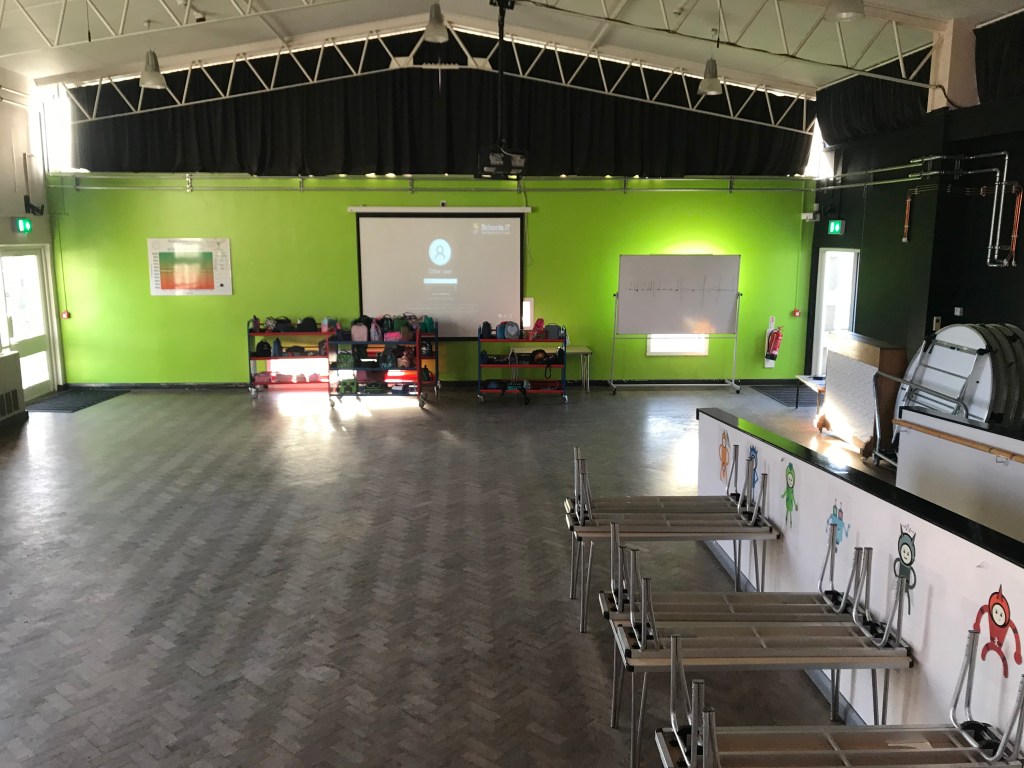
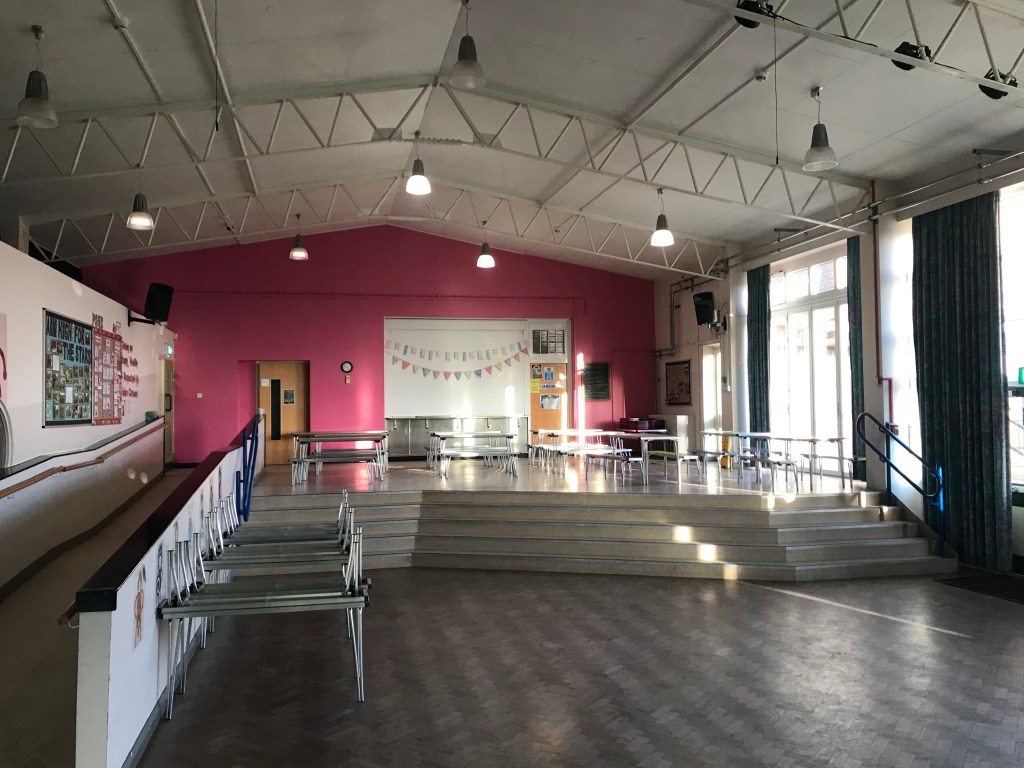
Unsurprisingly, Robin Hood has a large hall for group rehearsals and public performances. Both ends of the hall can be used as a stage. Like the other musical schools we have visited, Covid has had a profound impact on rehearsals and performances. In 2021-22, Robin Hood are redoubling their commitments to music, dance and drama. 
The school also has a decade-long links with the Royal Shakespeare Company and the associate artists in drama, dance and visual arts. The partnership has led to Robin Hood students performing a Shakespeare play in Stratford.

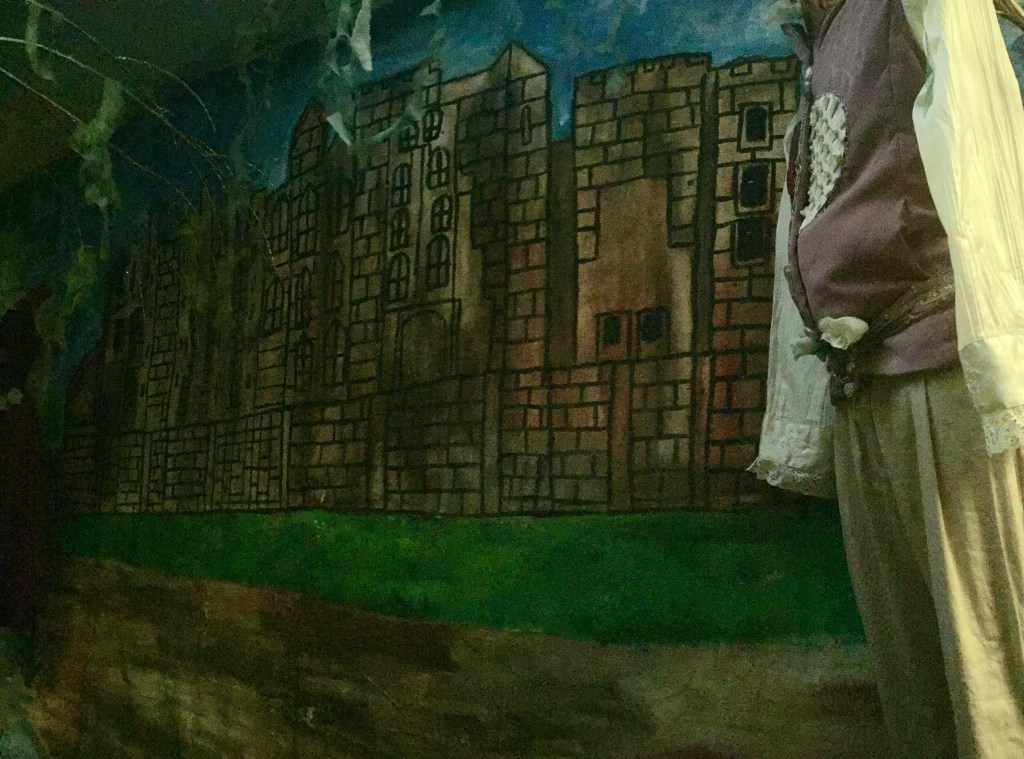
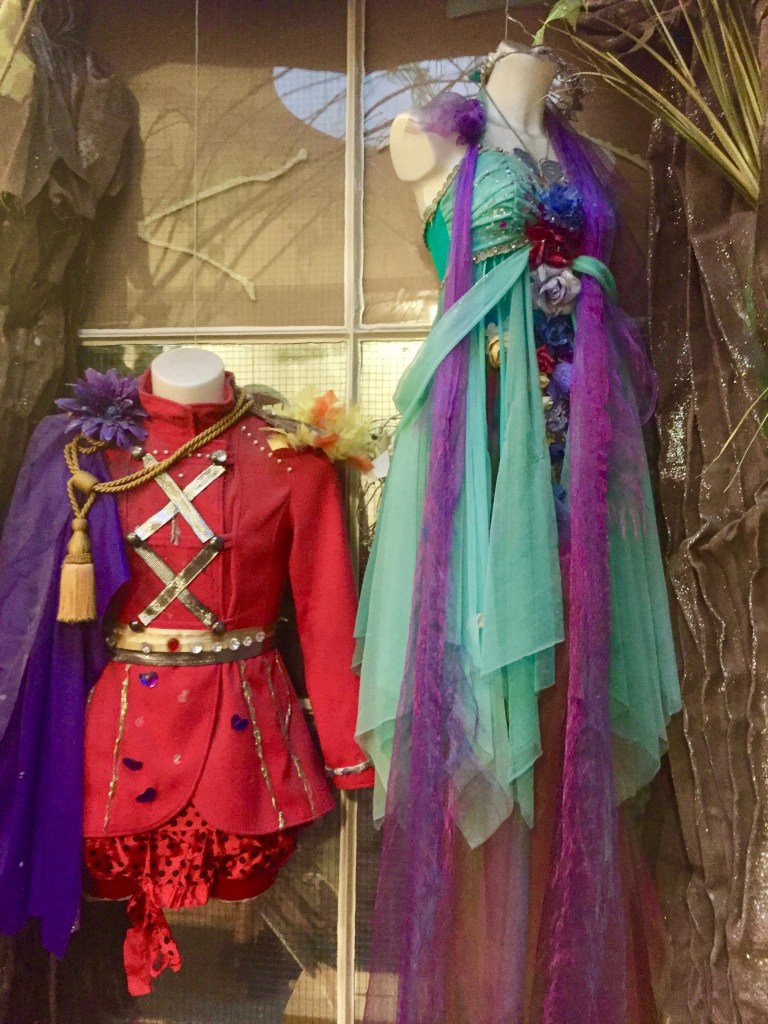
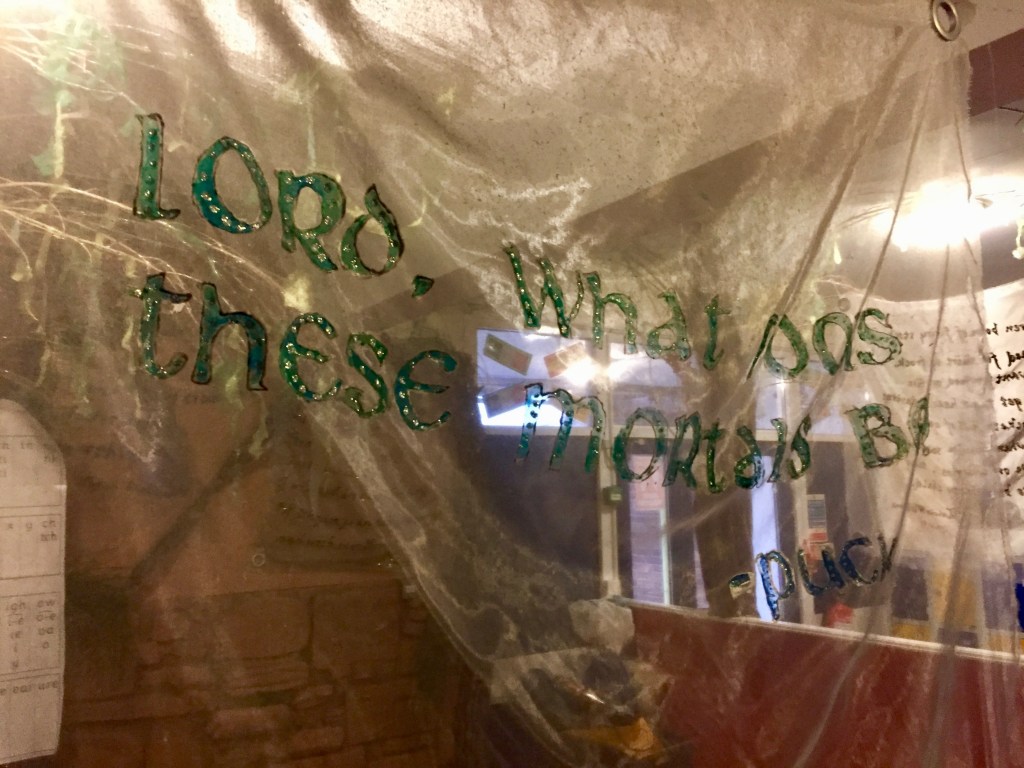
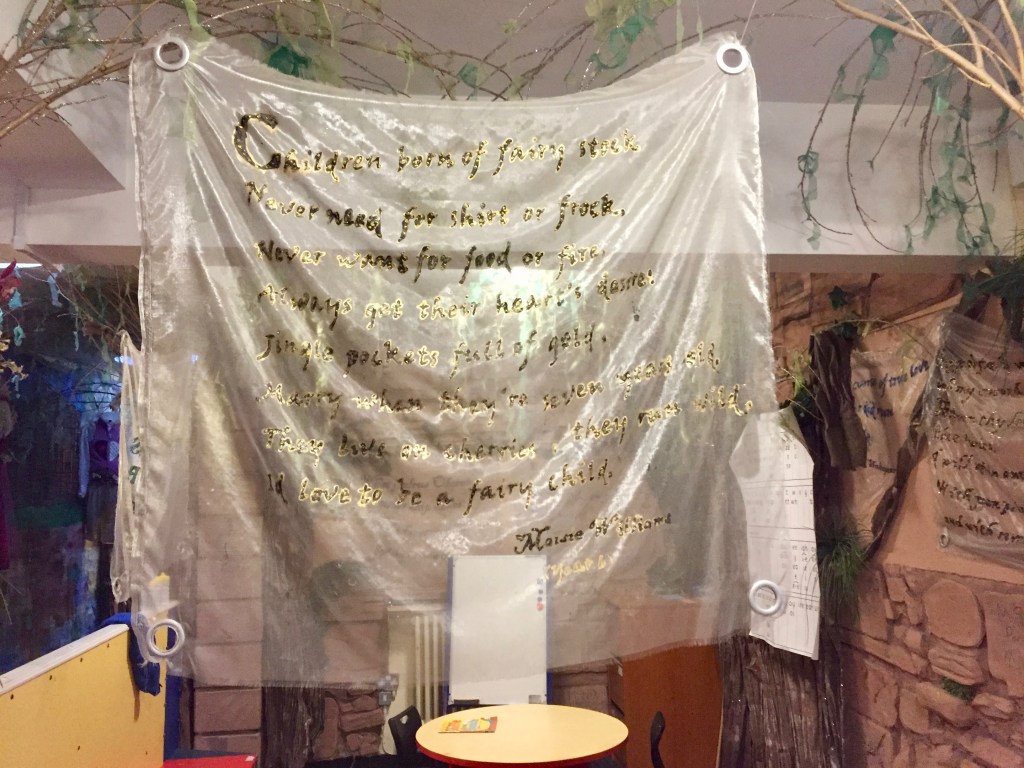
A Midsummer Night’s Dream display
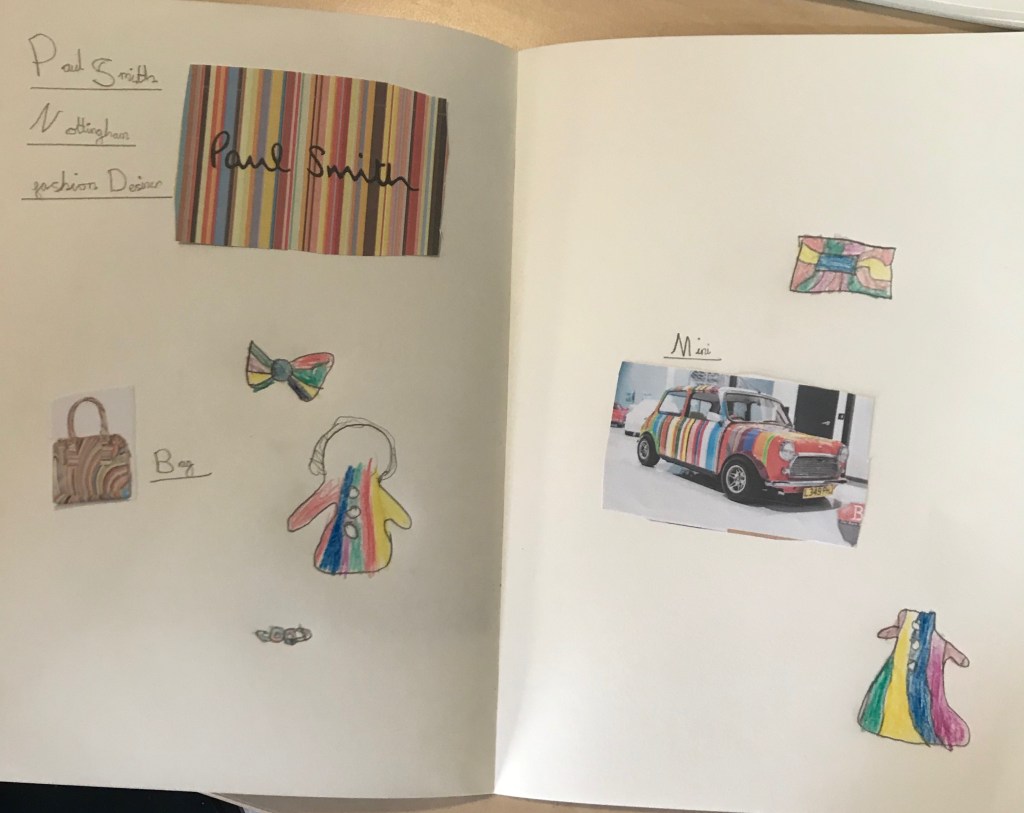
The school also has long established relationships with Nottingham Contemporary. Working with Assemble – architects from London – students’ clay work will form part of a big exhibition there in the Spring. Robin Hood also partners with Lakeside ArtsNew Art Exchange and Nottingham Castle. We know that there has recently been a big Paul Smith (Nottingham-based clothes designer) exhibition at the Castle. So we were excited to see that the students of Robin Hood had been recreating Smith’s trademark stripes and designs in their sketchbooks. 

Lastly, Robin Hood has an artist in residence who is bringing out the play in everyone. Laura Eldret specialises in multimedia work, installations and play – paper play, water play –  and getting older children and adults to play as part of their art making. Kerry was excited at how Laura was introducing new activities and methods to get staff and students to think about art in playful productive ways.
The school is looking forward to further embedding their dance offer by working with nearby Park Valley Academy, and to working on arts projects for the Queen’s Diamond Jubilee this summer.

We would like to thank Head teacher Nicky Bridges, Arts Lead Kerry Whiting, music teacher Clare Farrelly and all of the staff and students at Robin Hood.

You may also be interested in reading our recently-published Art, Craft and Design Rapid Evidence Review – a survey of published scholarly literature on art, craft and design in education.

‘There isn’t a single project that we couldn’t enhance by the use of the arts’: Hillstone Primary

Music and drama run through Hillstone Primary like the River Rea and the Digbeth Branch Canal run through nearby Birmingham, a city named after Boerma, its Anglo-Saxon founder.

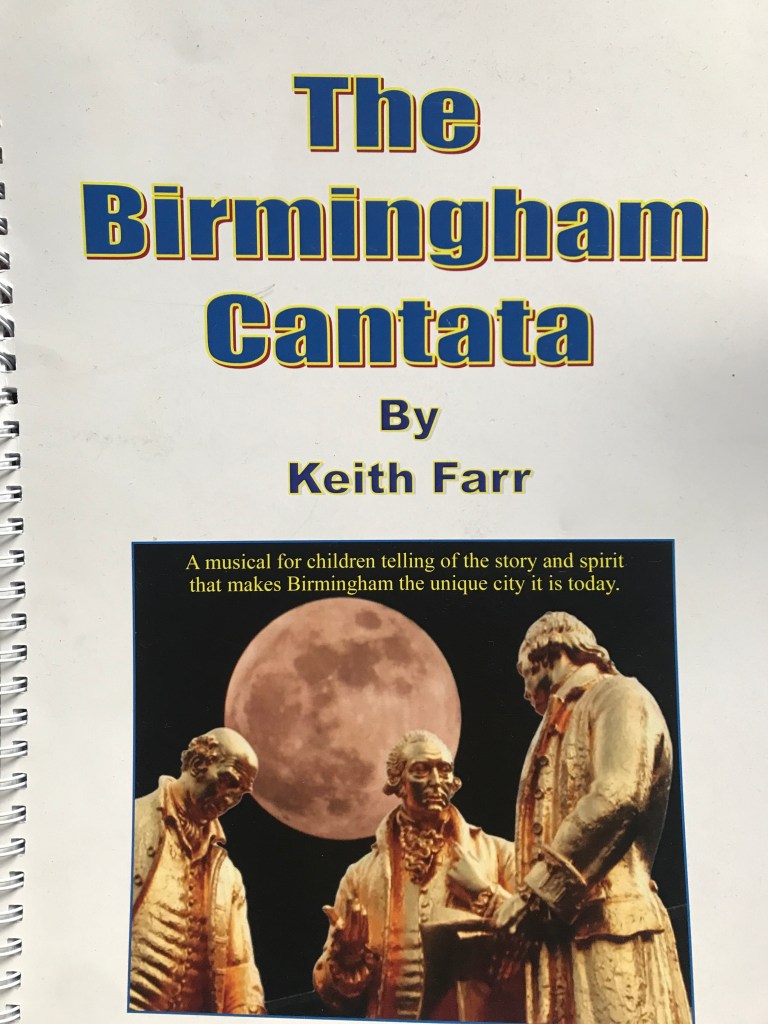
How do we, from the East Midlands, know so much about our West Midlands neighbours? Well, Hillstone’s music and drama teacher Keith Farr wrote a musical for the students called The Birmingham Cantata, full of facts about history, heritage and culture.

The songs evoke the sights and smells of the region’s Industrial Revolution, detail the contributions of steam engine pioneers Matthew Boulton and William Murdoch, and celebrate Birmingham’s multi-cultural past and present.

In fact, turning topics into mini-operas is something of a speciality for Keith and his students. For example, after the school had been to watch the full 3-hour version of Madame Butterfly performed by school partners Welsh National Opera, students spent a week rewriting the story and songs in English. Forty-eight of them performed it onstage for their parents back at school.

After watching performances of Stravinsky’s Peter and the Wolf and The Firebird they wrote and composed music for their own Russian folk tales and performed them with a group of schools. They have also created a piece called Three Planets based on the three primary colours.

Students have also worked with the Birmingham Royal Ballet, Birmingham Rep, the Royal Shakespeare Company and many other cultural partners. 

We have written before about how little we get to see music and drama performances during our research visits. At Hillstone, we were lucky enough to watch (and sing along with) Keith’s pre-school rehearsal of a recently composed musical nativity, and attend (and participate in!) the after-school choir session.

The students’ enthusiasm for music performance was palpable. Immediately after one of our focus group interviews, Year 5 students insisted on playing for us on their guitars, trumpets, violins and clarinets, and singing some of the songs that they were rehearsing. 

With all of this musical confidence flowing through the school, it is no surprise that Keith places his emphasis on the process – the various problem solving, technical and other skills that the students learn while they are creating, shaping and rehearsing a work. 

Head teacher Gill Sparrow told us of her passion and support for the cross-curriculum integration of the arts, and for Keith’s methods. ‘There’s nothing that you couldn’t write a song about or create a dance to’ she explained, before adding ‘there isn’t a single project that we couldn’t enhance by the use of the arts’.

School bandstand

In addition to the benefits of the process, Gill stressed that everything that the students did had to have a purpose. That might be in the form of an exhibition, or a performance at the school or at local old people’s homes, or in the toy designing-and-making project they did with a professional toy maker.

As well as enhancing the curriculum and making it more enjoyable, Gill told us how the arts were particularly important for her students, their families and the local community. 51% of the students are on Free School Meals; the children’s families score high on markers of abuse and deprivation; many parents are third generation unemployed.

Gill told us that while many middle-class children may have easy access to ballet, the theatre and the wider arts, her mission is to provide ‘brilliant opportunities’ – high quality arts experiences that children have the right to access. As an arts-rich school for all of Gill’s 20 years as Head, the arts were enriching the school and transforming individual lives.

For example, one student had been taught some photography techniques by a teacher. He then went on to win a photography competition.

Every year, parents and carers attend the ‘Music for a Summer’s Evening’ concert in which at least a quarter of the children are involved (after auditions!). Teachers dress in posh clothes and local dignitaries attend. The audience has learned to take the event seriously – parents now stay until the end, watch all of the students perform, and clap after each act.

While Gill talked of the precarity of having arts specialisms driven by just one person, she has been keen to share her passion and knowledge by setting up ArtsLink, a network for Birmingham primary arts teachers.

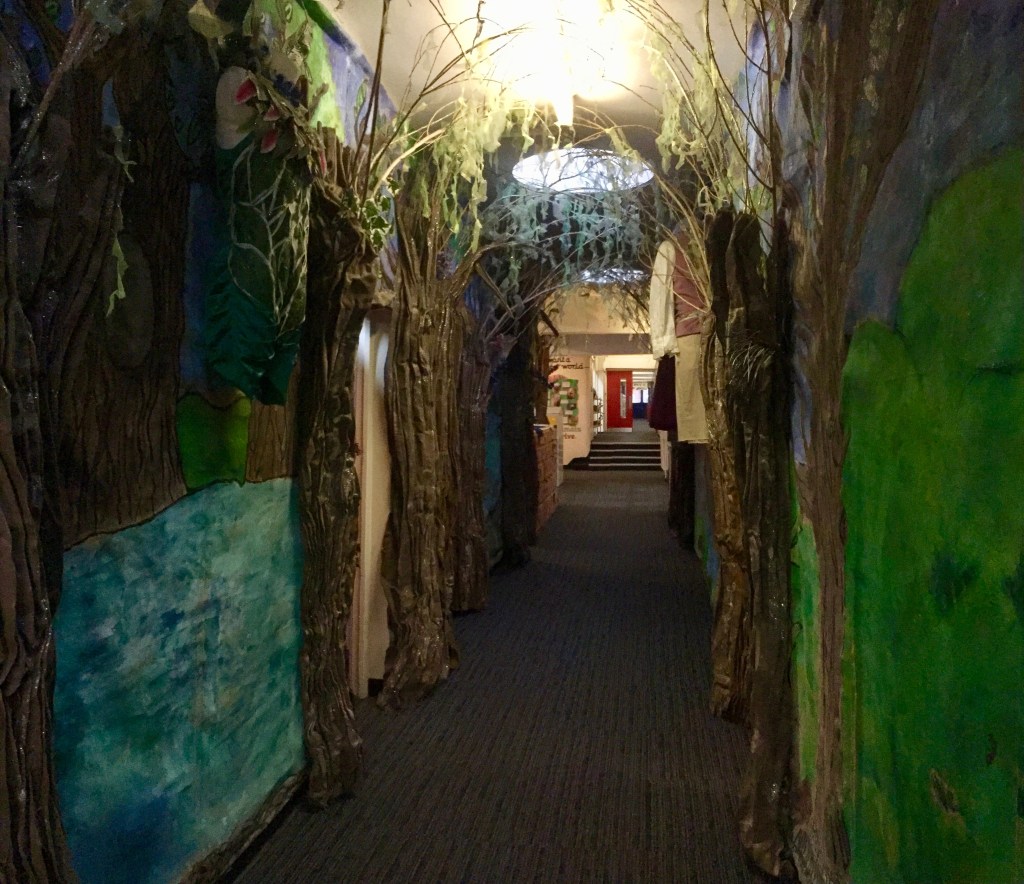
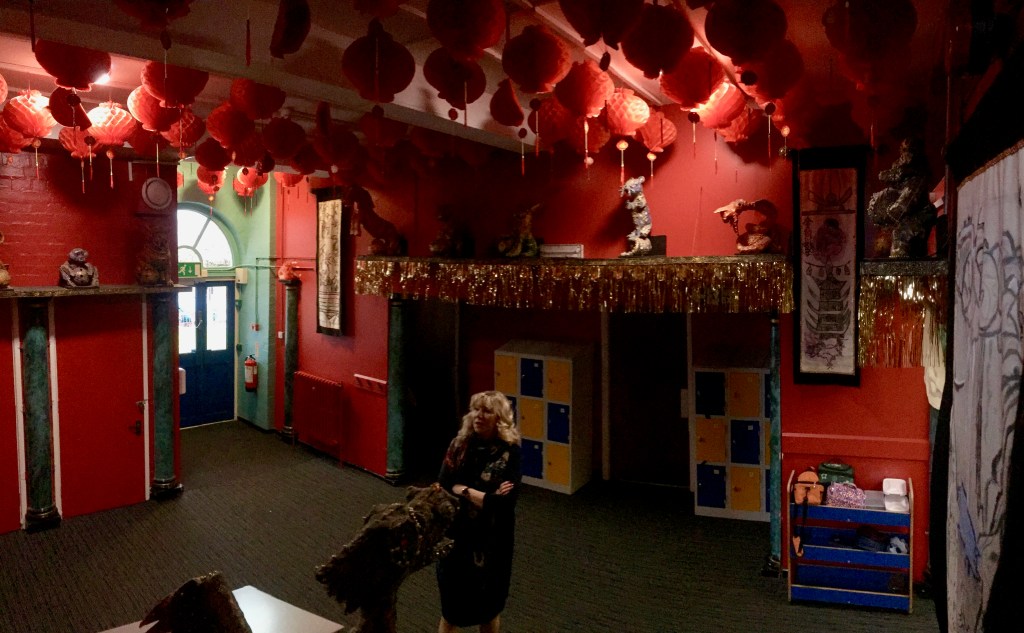
The immersive environments in the school, produced through weekly workshops with arts professionals, themed around A Midsummer Night’s Dream (corridor installation, costume design, banners, performance, etc) and a Chinese Temple are lasting testaments to Gill’s commitments to an arts-rich education. 

The students’ enthusiasm for music, drama, and the wider performing arts were matched by the liveliness of their sketchbooks and by the art works on display around the school. 

So, in the words of one of the songs from The Birmingham Cantata:

Ignite the torch and lead the way. The light spreads far and wide.

Opens eyes and strengthens ties. Forward to the future.

Thanks to Head Gill Sparrow and Music and Drama lead Keith Farr for their warm hospitality and insights into their arts-rich school. Thanks also to all of  the students we met and interviewed.

You may also be interested in reading our recently-published Art, Craft and Design Rapid Evidence Review – a survey of published scholarly literature on art, craft and design in education.

Suffragettes, STEAM and Sustainable Development at Torriano Primary

Torriano is a Rights Respecting arts-rich primary school in the Camden/Kentish Town area of London. With a socially and economically diverse community, this school values the rights of all children. 

Since 2009, the school has been part of this UNICEF initiative to embed the rights of children and young people’s in their practice and ethos. This means that much of the curriculum, learning and school dialogue are framed by the 42 Articles. For example, Article 29 states that ‘Education must develop every child’s personality, talents and abilities to the full.’  

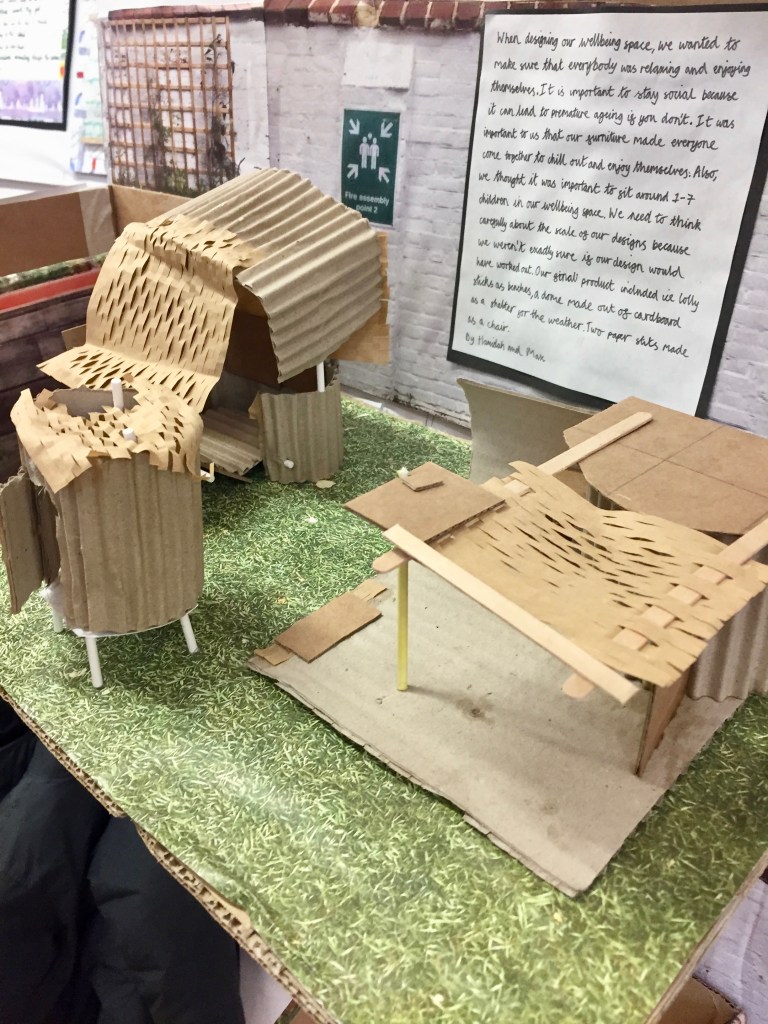
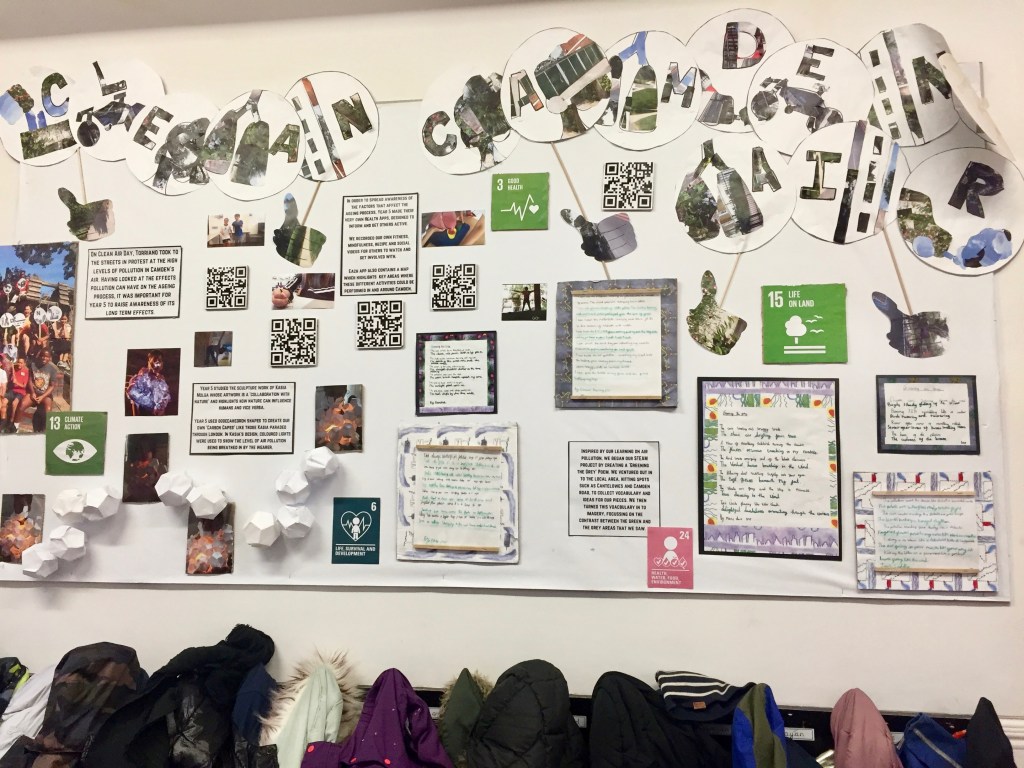
The work displayed around the school reflects both an understanding of these rights of the child and the school’s strong focus on the UN Sustainable Development Goals (SDGs). In practice, this means that many of the works of art and creative products that we saw on our visit had SDGs and articles referenced. This ensures that everyone can clearly see which issues and Articles are being addressed.  

Our lead for the day was Kat Branco, Head of Curriculum, Culture and Innovation and Year 6 teacher, with a degree in philosophy, a professional background in charities and non-governmental organisations, currently studying for a Masters in education policy. 

On our guided tour, we saw a number of these large Suffragette banners on the walls. Gender equality signs (SDG 5) appeared on a number of the displays we saw, hilighting the legacy of work on gender equality. 

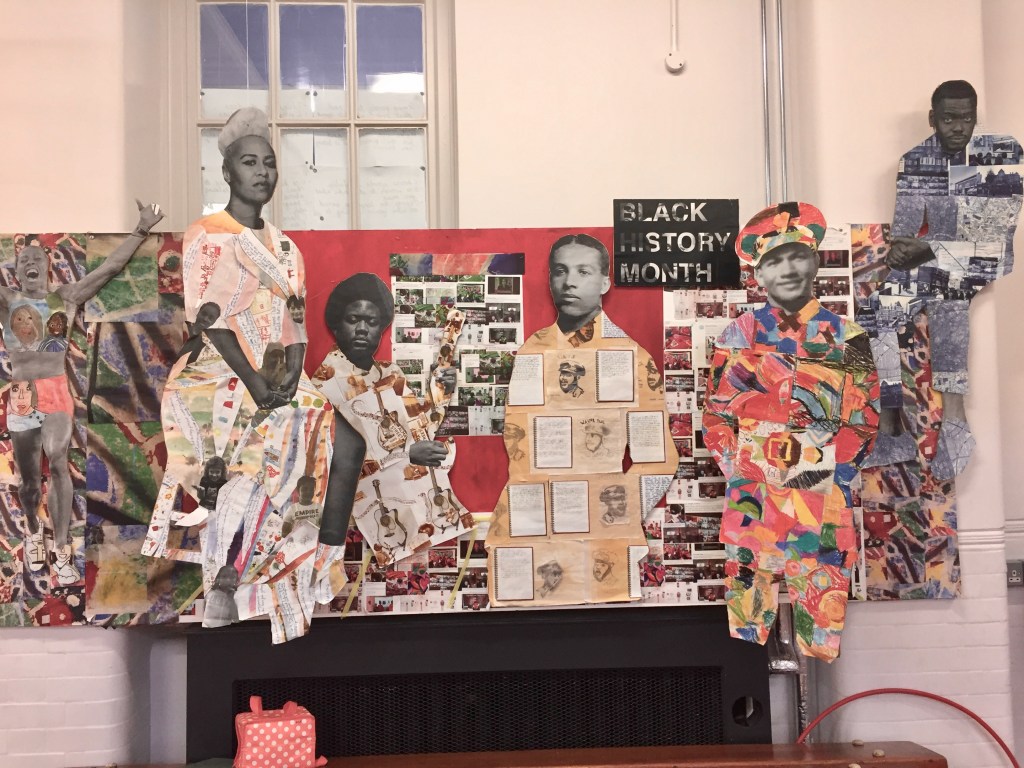
There were large displays of Black History Month art work in the main hall. One project focused on a soldier from World War 2, others on local artists Michael Kiwanuka and Daniel Kaluuya. Daniel is an alumni of the school and spoke to the children from Hollywood in 2020.  

The students had also recently done work based on the French Tunisian artist JR who creates community based participatory art works, often with a socially political theme. The students, supported by the school’s Artist-In-Residence Jim, adopted JR’s black and white cut and paste aesthetic to create (sometimes huge) self-portraits. These represent who the children are ‘Proud To Be’ and link to the 2021 Black History Season national focus.

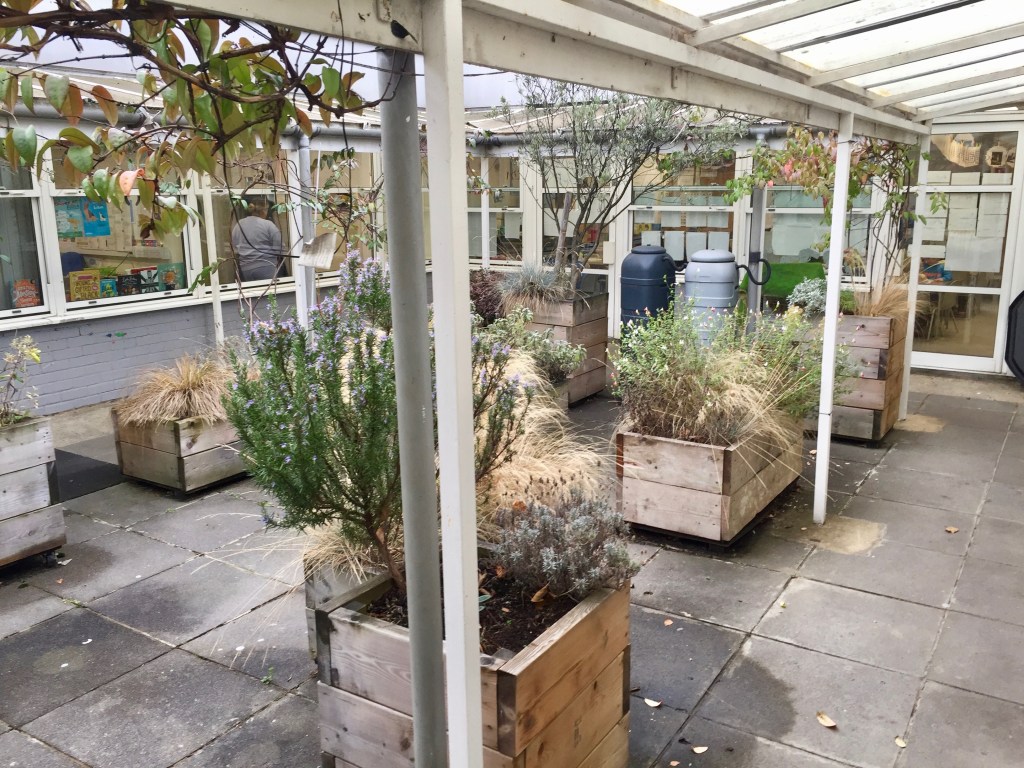
Torriano was full of plants! The school had worked on projects based on sustainability, green energy, recycling, urban regeneration, bees, cleaning up the air, and making art out of rubbish. Recycling, re-using and rewilding are evident across the school, both inside and out. 

Students had created a ‘Harnessing the Sun’ machine as a way to use solar energy for ‘Repowering Torriano’. This was their Year 4 STEAM (Science, Technology, Engineering, Art and Maths ) project focus in 2021, linked to their Electricity science unit.  

The school also has a vegetarian ‘Earth Kitchen’ – a separate building which the children use for Food Technology lessons every half term. Fortnightly, the Waste Food Café opens; left over food from the school canteen is used to make nutritious smoothies.

As you have probably guessed, there was strong focus on STEAM. We have read all about how the Arts could be seamlessly integrated into a curriculum that also covers Science, Technology, Engineering and Mathematics. In fact, we have recently finished a 3-month Rapid Evidence Review which included us looking at STEAM education from all over the world. Torriano showed us exactly how well this could work in a primary school.

These displays in the large main hall use art, craft and creativity to explore issues that combine maths, coding and computing, as well as historical and social context.  

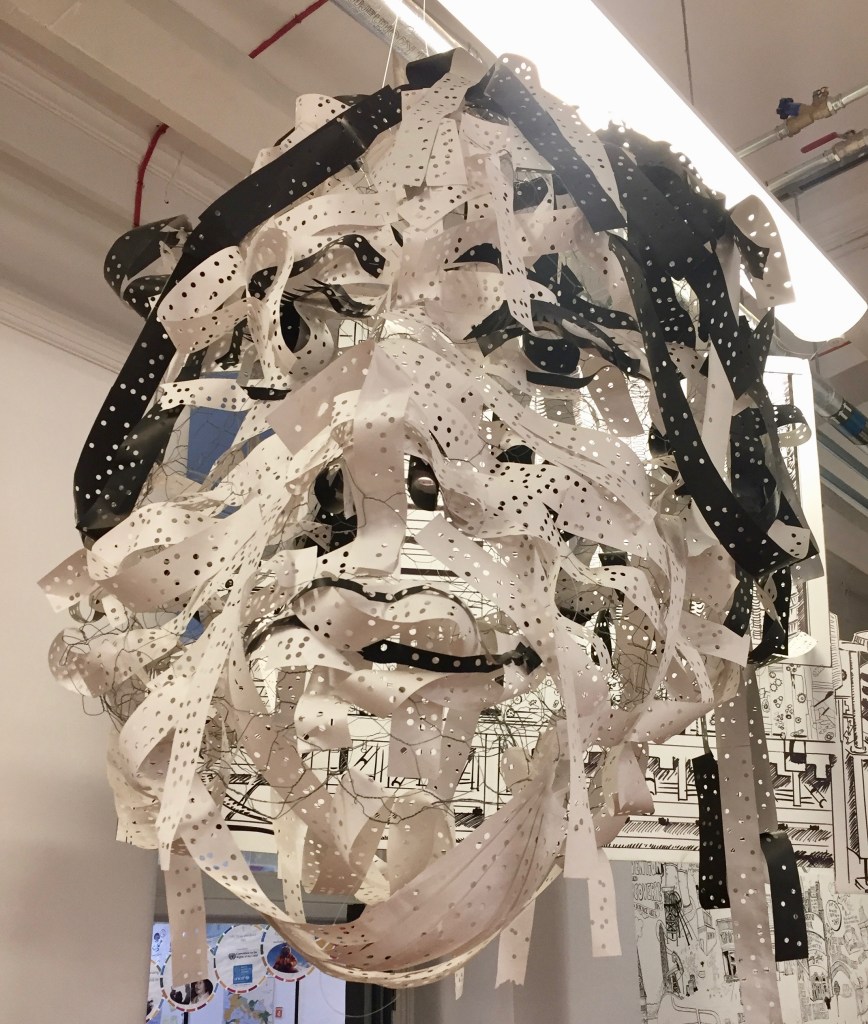
This large head is Ada Lovelace, created to celebrate her crucial role as the first computer programmer, algorithm writer and skilled mathematician. The students had made Ada from long hole-punched strips of paper, imitating the first coding from the Analytical Machine. In class, they had also created hole-punched card computers and other work on the topic. Fans of Ada will know that her mum was also a mathematician and her Nottinghamshire-based (like us) father was a poet. Ada was breathing STEAM before it became popular! This was a good example of how learning about historically significant polymaths could help to give context to coding lessons for all children. 

While giant heads and sun-capturing machines are eye-catching products that showcase the behind-the-scenes learning processes, we were excited to see a number of (again, sometimes large) displays which used art, design and creativity to make exploratory processes visual, and to show how parts of systems connect. The students had created these biological artistic info-graphic pieces based on the work of Fritz Kahn. 

Referring to Torriano’s arts-integrated curriculum, Kat said: ‘It helps us understand new ways of thinking, ways that we didn’t necessarily think of before’. She stressed the need for the various dance, animation and other projects to be linked to a meaningful context.

Executive Head Helen Bruckdorfer explained how the arts were perfect for making complex issues such as social justice, inequality and citizenship understandable and tangible. She talked of the arts’ role in developing the advocacy and agency of the students, and of promoting their right for self-expression and their right to be heard.

Ongoing plans are looking to further develop and create more meaningful partnerships with local schools, parents, communities, and the many cultural organisations that are within a short bus ride of the school. We wish them well. 

Thanks to Head of Curriculum, Culture and Innovation Kat Branco for organising and hosting our visit, and to Executive Head Helen Bruckdorfer (on Zoom) and Head of School Holly Churchill for their sharing their insights.  

You may also be interested in reading our recently-published Art, Craft and Design Rapid Evidence Review – a survey of published scholarly literature on art, craft and design in education.

Music and the performing arts thrive at Anston Greenlands – Here’s how

If, like Anston Greenlands, your primary school has a strength in music, you will know that your ability to sing together and play instruments has been severely limited over the last 18 months or so.

As a band member (since the age of 12) and a songwriter, Head teacher Alex Wirth is not only passionate about the music (and the arts in general) in his school, but has come up with innovative ways of providing exciting musical learning experiences. The methods may have been influenced by lockdown but are now proving valuable in themselves.

From our point of view, researching music and performing arts in schools can be challenging when compared with visual arts. Only occasionally do we get to see dance, drama, instrument or singing rehearsals, and so far on our RAPS visits, we have not seen a final performance.

Unlike drawings, paintings and other visual arts, music is not displayed on walls or tables. We rely on students and staff to give us their verbal insights into music and performing arts activities. So, when we can, we love to see it and hear it!

So it was exciting to discover how Alex and the team at Anston Greenlands had been using songwriting, singing and recording during lockdown to produce songs and videos for the school’s YouTube channel (200+ videos).

For example, ‘These Four Walls’ is a whole-school lockdown-themed rock anthem, features ideas, words and singing from the students and playing from the Head and musician parents and friends. Most importantly, the song was put together while many of the students were learning from home. They sent in their remote vocals and air-guitar videos to sit alongside those of their in-school classmates.

Screen shot from Anston Greenlands' 'These Four Walls' video on Youtube

The school’s dedication to creating original songs (and videos and artwork) for YouTube dates back to ‘My Fight’, a song they did in aid of WarChild.

As well as music videos, YouTube was integral to projects about the environment, history and other topics. For example, Alex had posted a series of video messages ‘from the future’ which were tied to the arrival of a big mysterious package in the playground and a sustainability theme.

Not only are the videos a great way to showcase students’ work (to families and arts-in-schools researchers!) and engage them in time-travel adventures, these short films have kept students and families tuned in and involved during lockdown and beyond.

Finally, Alex and the team had made another Covid-inspired change to the school, this time to the physical structure. Last Spring, frustrated by the lack of opportunity for his students to sing, dance and make music together indoors, they had a light bulb moment. 

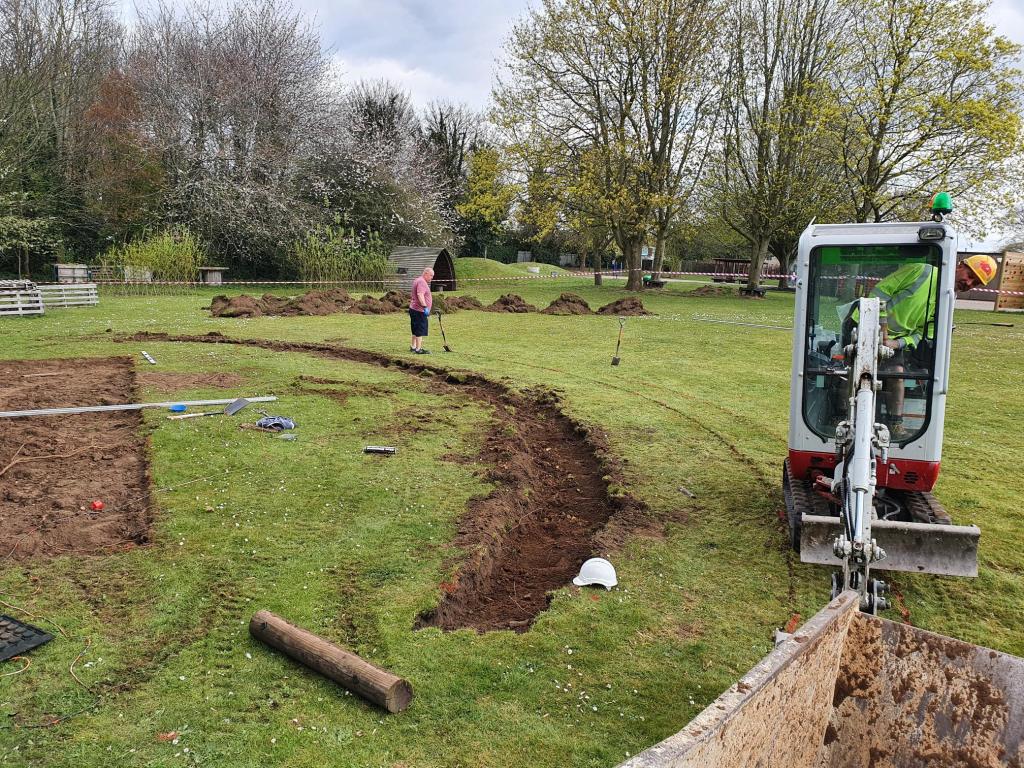
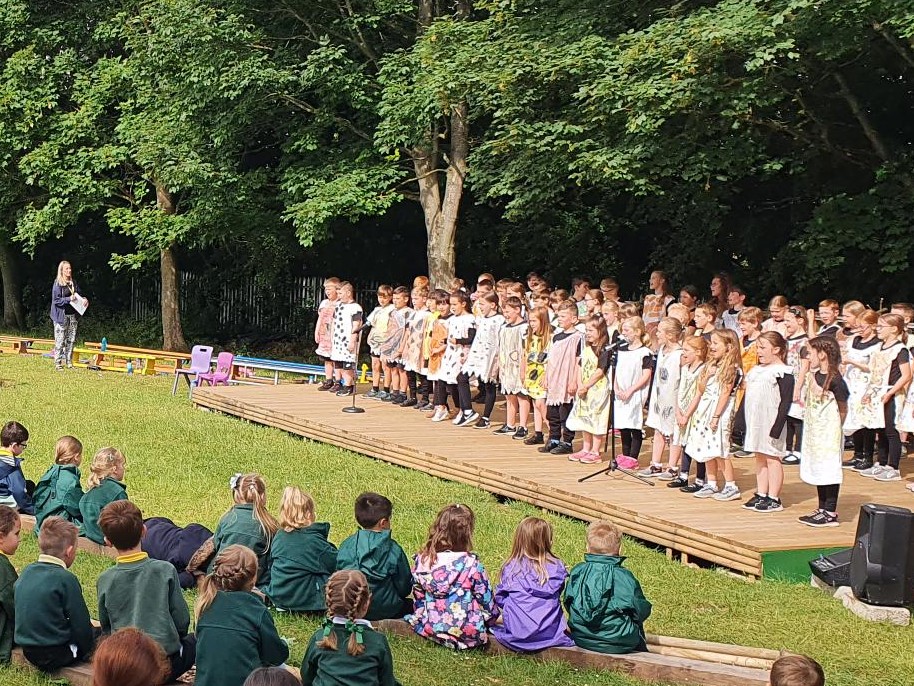
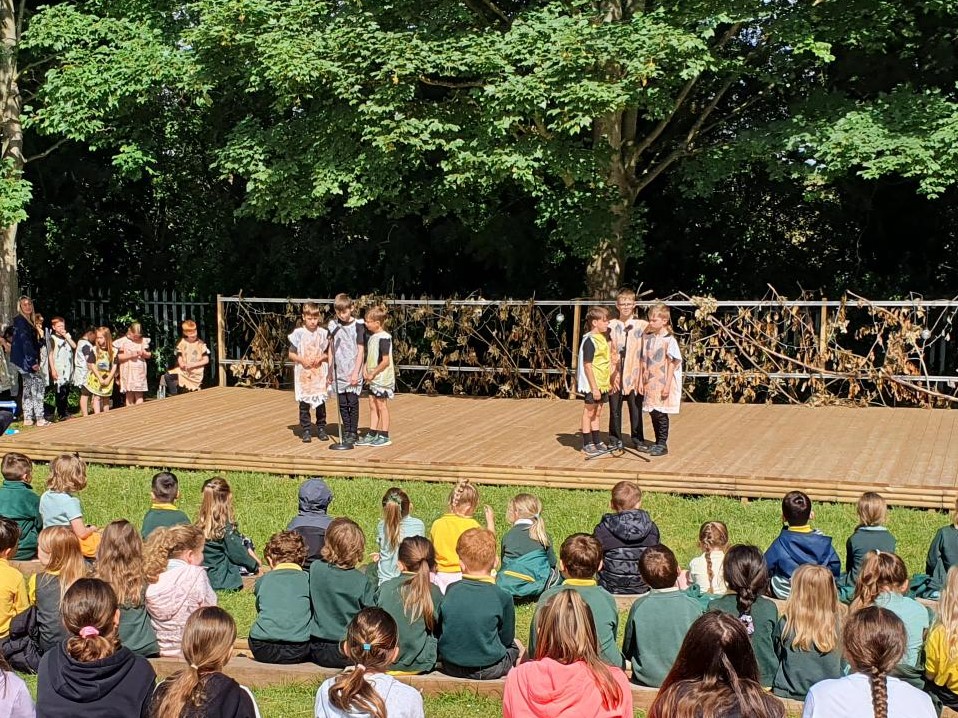
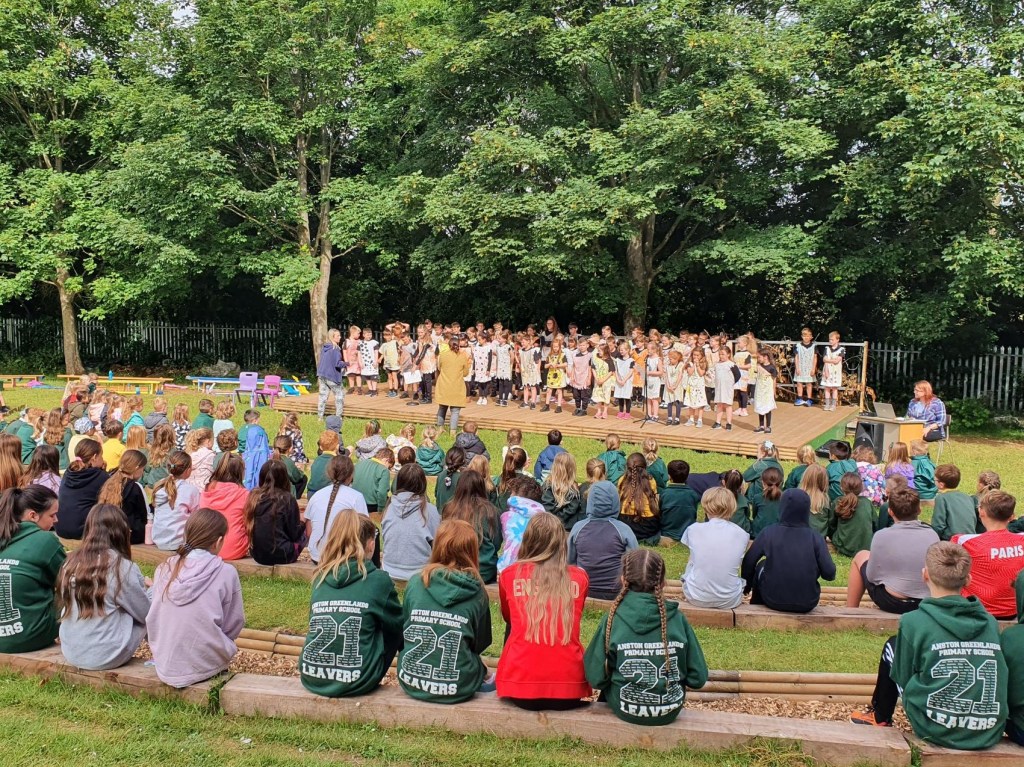
In a blur of activity, Alex got on the phone, hired a digger, went out onto the school field with the caretaker and a TA, and dug the school an amphitheatre. The curved and raked seating was completed with a substantial wooden stage, perfect not only for the music, dancing and drama work they were doing in school, but also for hosting parents, families and the local community to open-air performances.

While the sun struggled to get over the horizon during our wintery visit, the photos of the children singing in the summer sun lifted our hearts. We could almost hear the music – a sure sign that whatever the challenges, schools like Anston Greenlands will keep primary music and performing arts alive and thriving.

Many thanks to Head Alex Wirth, Deputy Kate Roberts and all of the Year 4, 5 and 6 student who gave us an insight into the arts in their school.

You may also be interested in reading our recently-published Art, Craft and Design Rapid Evidence Review – a survey of published scholarly literature on art, craft and design in education.
The ArtsMap video for this school and the others in the RAPS project are available on the RAPS Youtube channel. The videos have been produced by students to showcase the arts in their primary school.

How the Arts have transformed Feversham Primary

Feversham is a large primary school located in Bradford Moor, an area of pronounced social deprivation less than a mile from Bradford city centre. It is an exemplar of how the Arts can transform a school. 

After being placed in special measures a decade ago, the decision was made for music and drama to form the core of the school’s connected curriculum. This has not only produced excellent results in maths, reading and writing, but has contributed to the students’ confidence, positivity and friendliness, all factors noted in the school’s recent Outstanding Ofsted report.

Our day-long visit began with a lively assembly in which Year 3 students used music and drama to depict the employment and education of Victorian children. The graphic depictions of working conditions and punishments elicited a flood of questions from the rest of the students.

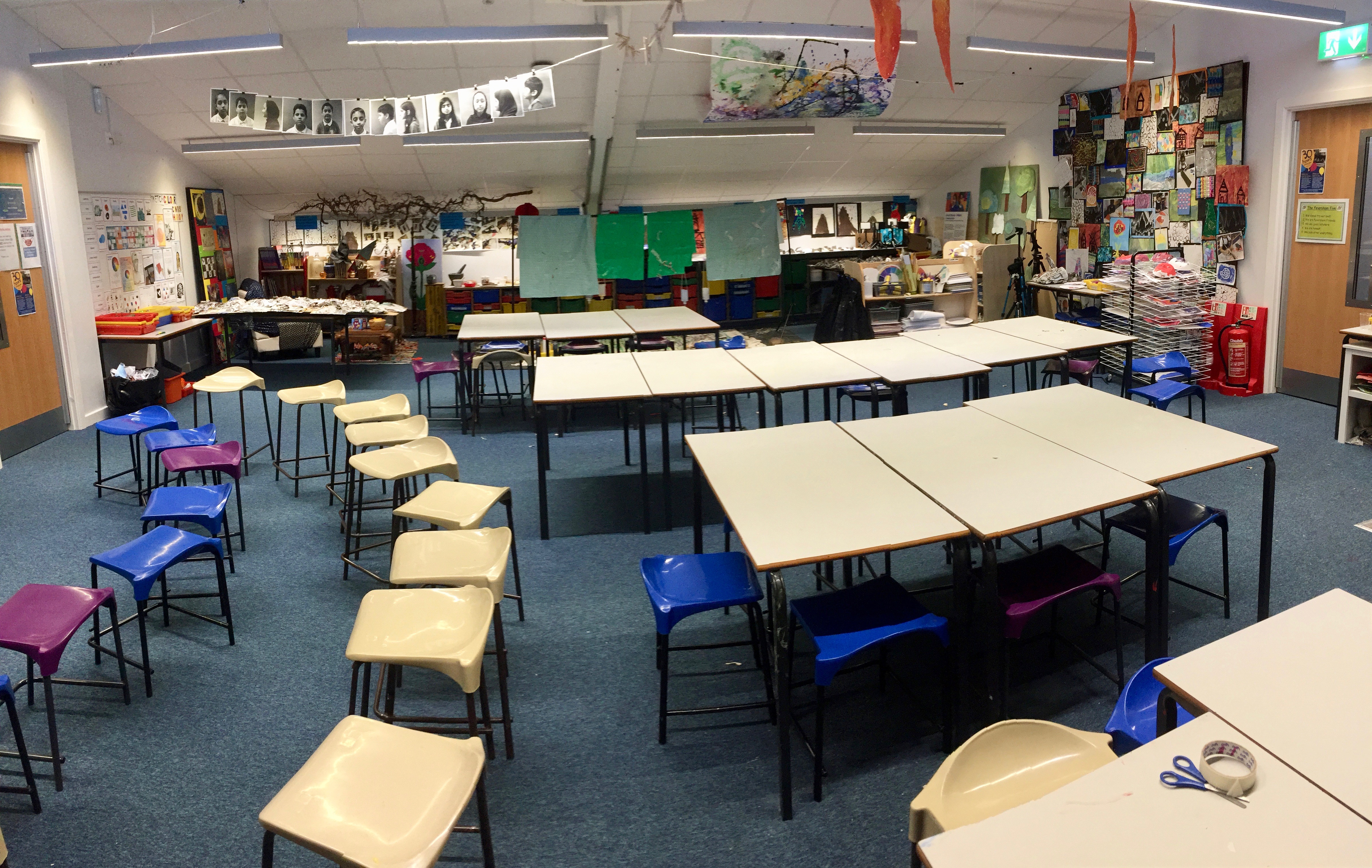
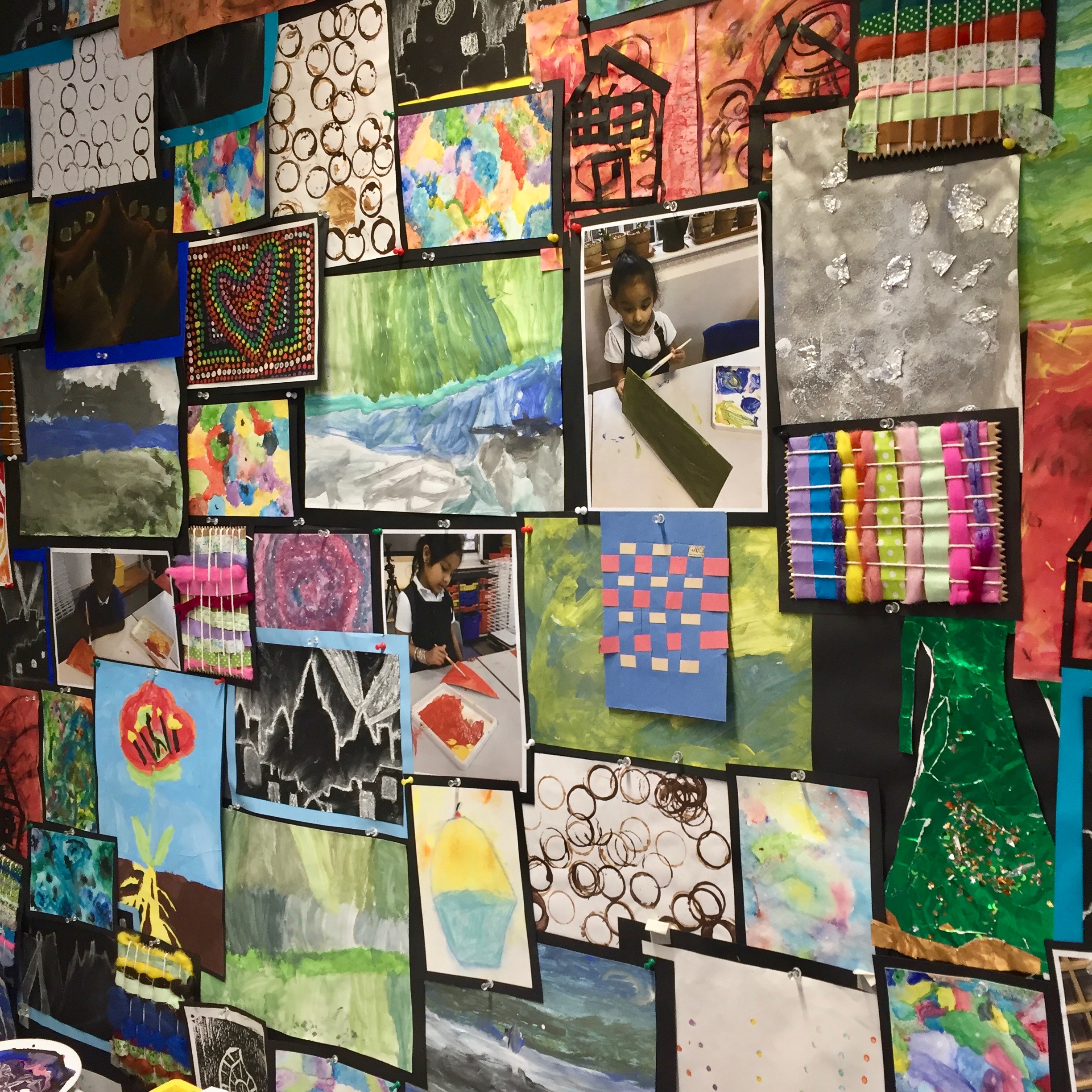
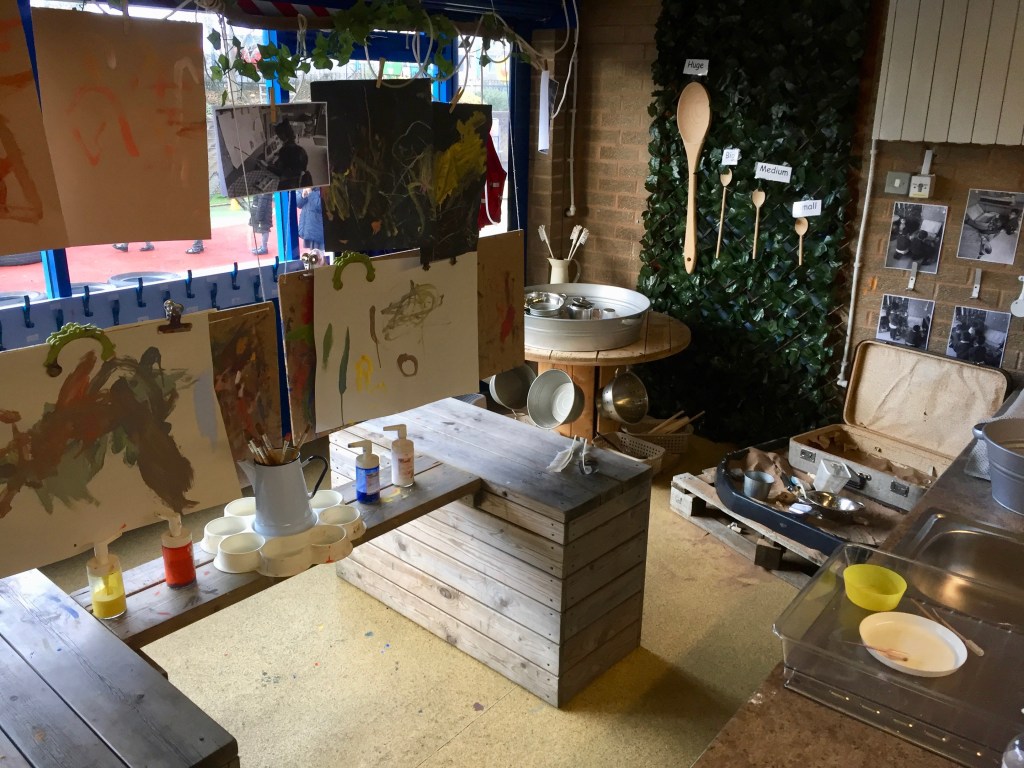
Our guide for the day was Arts Lead Alisa Yates. We began our tour in the large, light and open Arts Studio. A wide range of media and techniques were displayed on walls, drying on racks and hanging on strings. 

Alisa has written an article all about this creative space in the latest edition (#33) of NSEAD’s AD Magazine. In it, she talks about promoting independent thinking and a proactive approach.

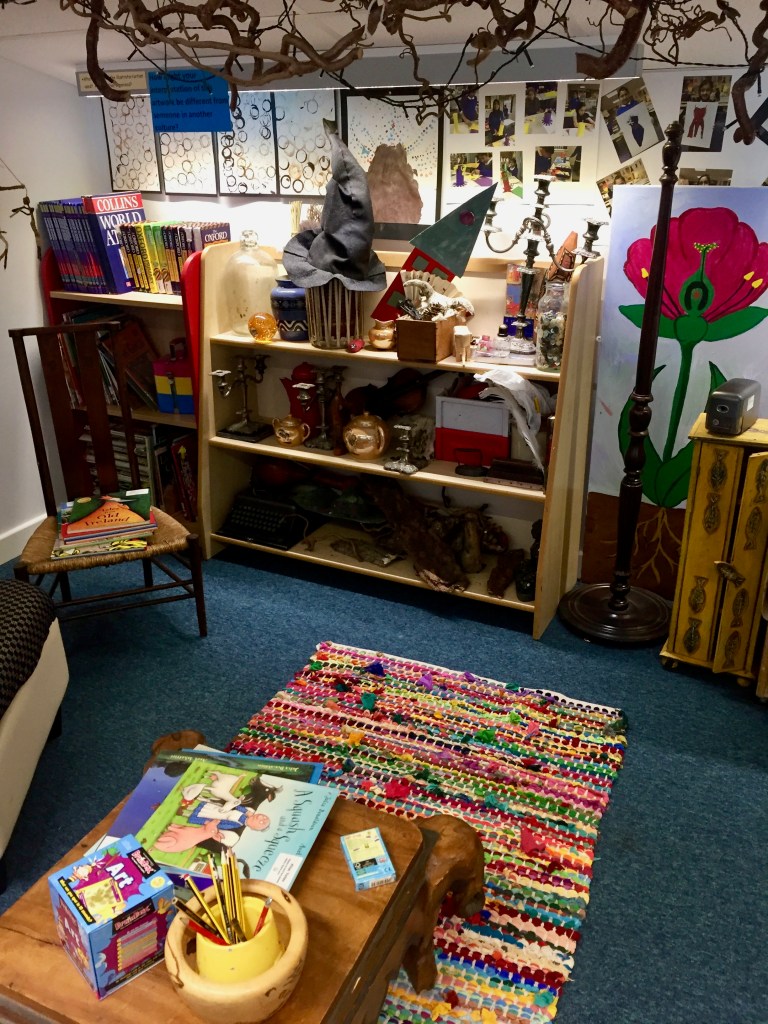
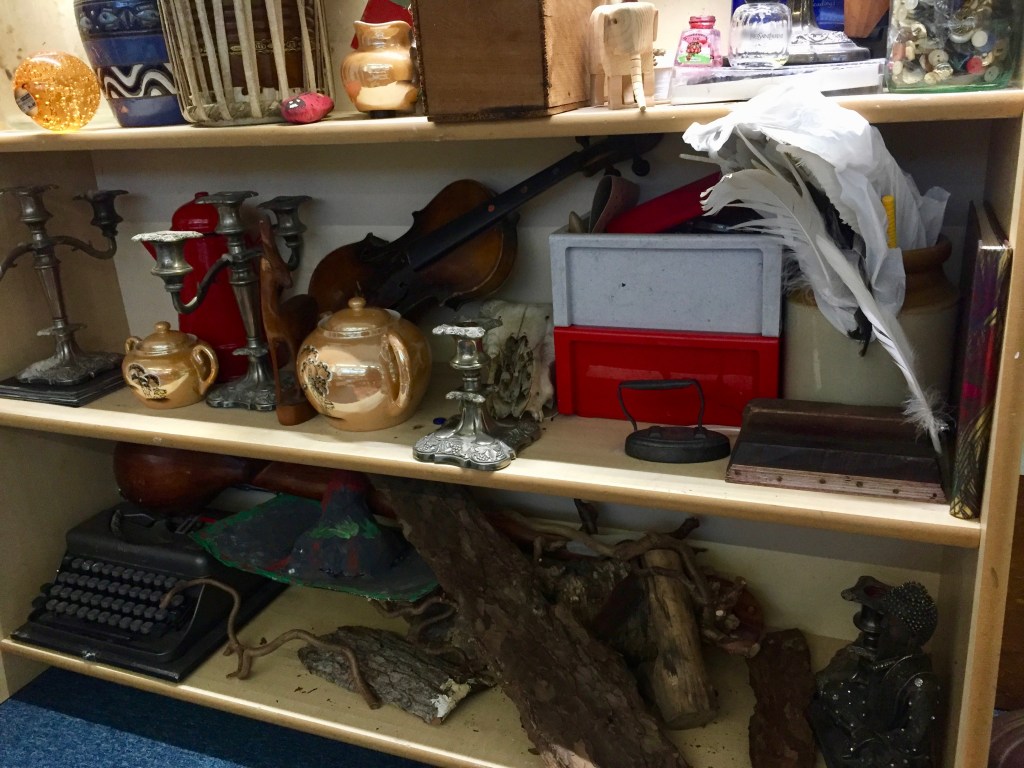
There was a corner ‘curiosity’ area with comfy seating where students could use the miscellaneous objects as stimuli for sketching and inspiration.

Alisa showed us the table of pestles, mortars, gums and stones used to make paints and dies. We were told how the children would learn about the process of grinding and combining ochre and other materials to make powders and pigments that would become the colours they use for their own art works.

The Art Studio also contained light boxes for a stop-time iPad-based animation project. Alisa told us of her professional background in photography from the age of 16 often working with her own team of stylists and technicians. She is a current arts practitioner specialising in watercolour painting, photography and textiles.

Her ongoing exploration of media and techniques, and passion for experimentation was evident not only in the vibrant Art Studio, but also in the conversations we had with Year 4, 5 and 6 students. Their many arts activities at Feversham are documented in this ‘Art Studio’ blog. Alisa also curates this ‘Art Academy@FPA’ blog which includes stimuli, activities and learning materials.

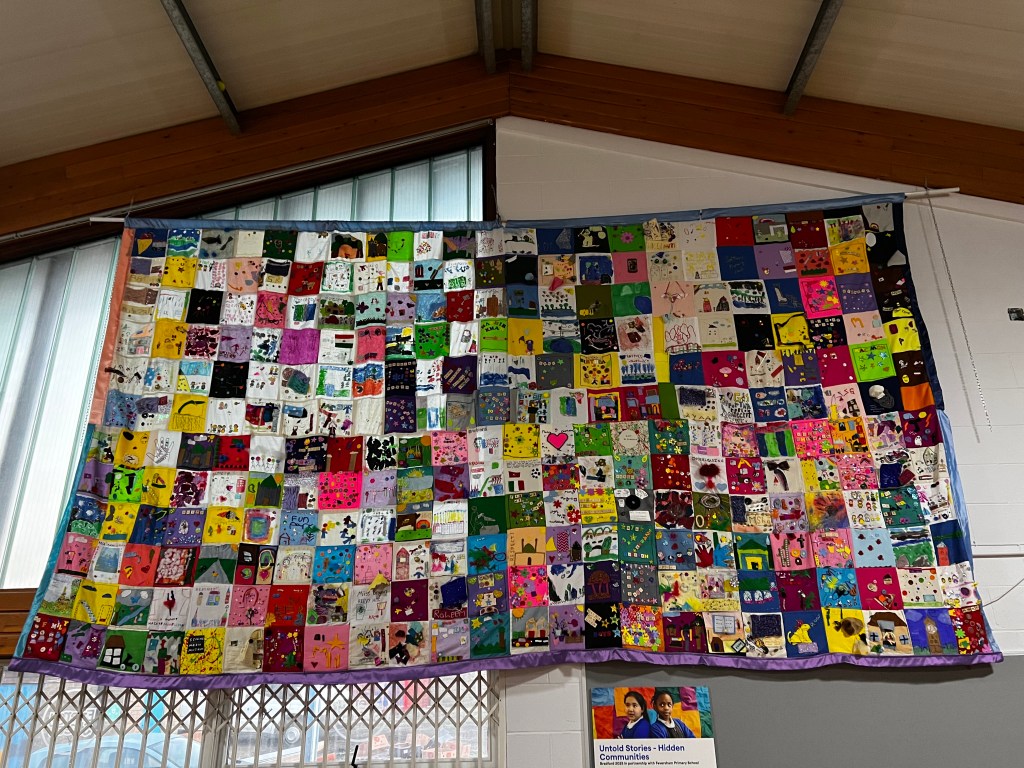
Led by Alisa, the school had been involved in a quilt making project. Feversham students, in partnership with the Bradford 2025 Year of Culture bid, made a video to explain the project and to ask other schools to contribute squares that communicated something about their ‘Untold stories, [and] Hidden Communities‘. The 200 individual squares were sewn together to create ‘a collection of memories and histories’ specific to the area and to the children.

We also met Jimmy Rotheram, Senior Leader for Music – probably the only one in the country, he told us. It was Jimmy who was leading the assembly earlier. Starting as a supply teacher eight years ago, Jimmy has developed an effective and influential music programme based largely on his training in Kodaly and Dalcroze, undertaken alongside his teaching. As a primary music expert, Jimmy and the music pedagogy of Feversham (up to six hours of music per week) have been featured in The Guardian, on the BBC, and in podcastsYouTube videos and teaching magazines.

Jimmy talked about his mission to get the music of his many Muslim students more widely recognised. Like Alisa, Jimmy has a professional arts background – in music performance, a record deal and working in the industry.

Jimmy told us: ‘I have had formal music training. I just always found reading music far more difficult than someone of my musical ability should have done. It wasn’t until I discovered alternative ways of developing musical reading that my own ability to read music managed to catch up, and I discovered that all children could learn to read music well if taught in more child-friendly ways‘.

He bases his teaching largely on singing, rhythm and body percussion. You can read more about his ethos and methods here. His book (to be published in the Spring) will explain his methods to other music and performing arts teachers. 

We were impressed by the time, effort and dedication that Alisa and Jimmy spent working with the Early Years and reception children and staff. It was clear that, through the arts, the school were building skills and confidence from a young age. On our visit to this area, we enjoyed the subdued lighting, stand-up easels and attention that had been paid to creating a warm and inspiring environment. As a demonstration of how Jimmy has embedded his approach to music across the school, a group of reception children were assembled to participate in a spontaneous singing and movement session.  

As well as music, singing, quilt making and the Arts Studio activities, students had been working in collaboration with the Joss Arnott Dance Company.

The school is currently undergoing extensive expansion. The main hall has already been extended to incorporate a stage and the new site will include an updated music room. The transformation continues.

Feversham is a story of how arts pedagogy, arts leaders with professional arts backgrounds, and the creative application of continuing professional development can transform a primary school, drive the curriculum and inspire many others beyond the school gates.

Our thanks go to Arts Lead Alisa Yates for showing us around, to Senior Leader (Music) Jimmy Rotheram for his time and insights, and to all the staff and students at Feversham for their warm welcome.

You may also be interested in reading our recently-published Art, Craft and Design Rapid Evidence Review – a survey of published scholarly literature on art, craft and design in education.

The ArtsMap video for this school and the others in the RAPS project are available on the RAPS Youtube channel. The videos have been produced by students to showcase the arts in their primary school.

Collaborative Creativity at Kelsall

On our recent travels around England visiting arts-rich primaries, we have noticed that many schools have developed, and continue to grow their arts-richness through a close working relationship between the Head Teacher and the Arts Lead. This is one of our ‘emerging themes’ – something we will explore in more detail later.

One such creative double-act is doing wonders for the arts at Kelsall Primary school, a rural village school about 4 miles away from Tarporley in Cheshire.

While we have met other dynamic arts duos on our travels, what was perhaps most interesting here is that Head Teacher David Wearing and Arts Lead Jon Clayton have developed their visual arts skills, ethos and pedagogy alongside, and in combination with their roles at the school. 

While their active status as musicians pre-dates their days at Kelsall (David has been here for 10 years, Jon for 20), neither had a background in the visual arts when they arrived. Jon told us how his passion for visual art and his ‘loose’ experimental style took shape through primary teaching.

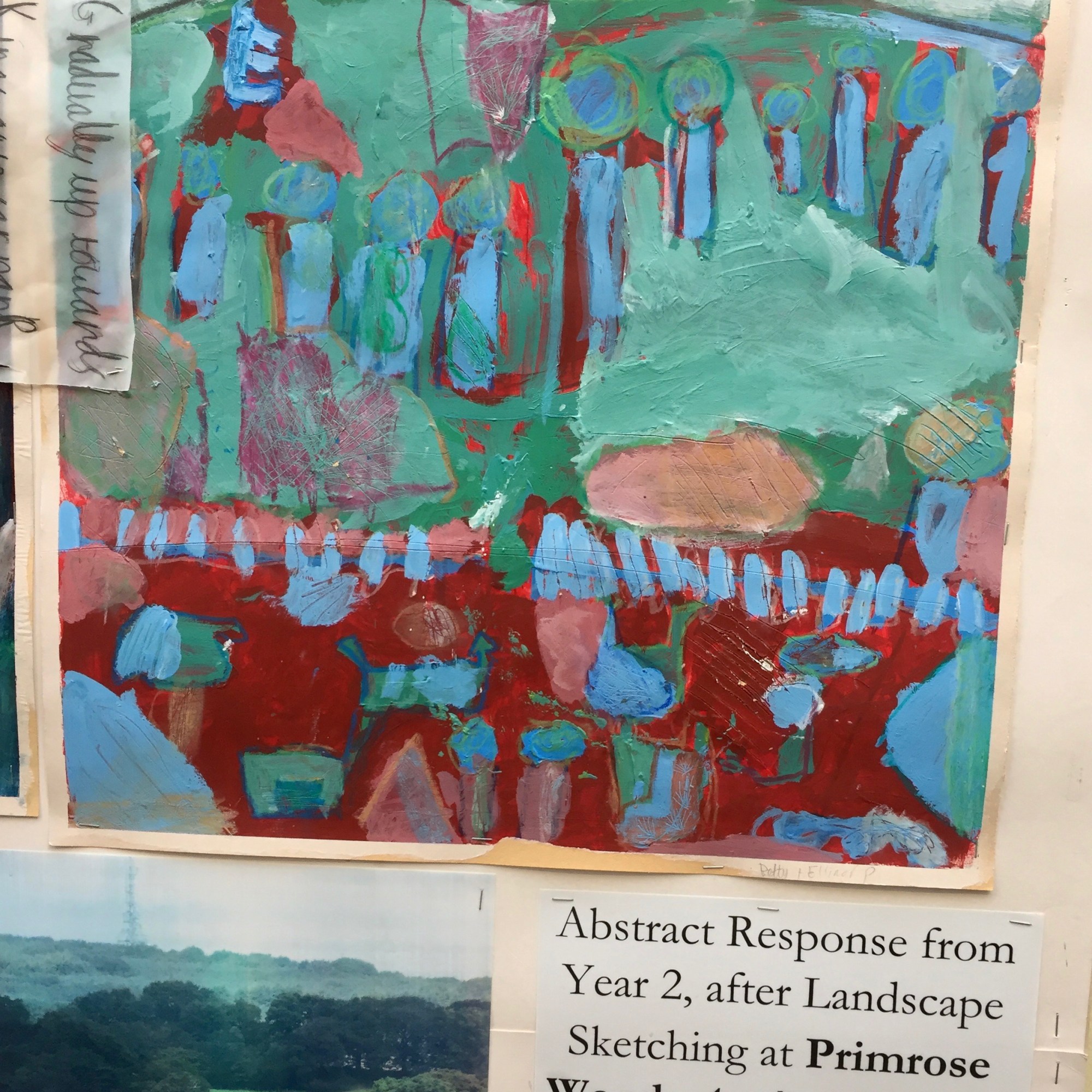
As examples of idiosyncratic primary arts practice and pedagogy, we were drawn to these Year 2 pieces from recent visits to the nearby woods:

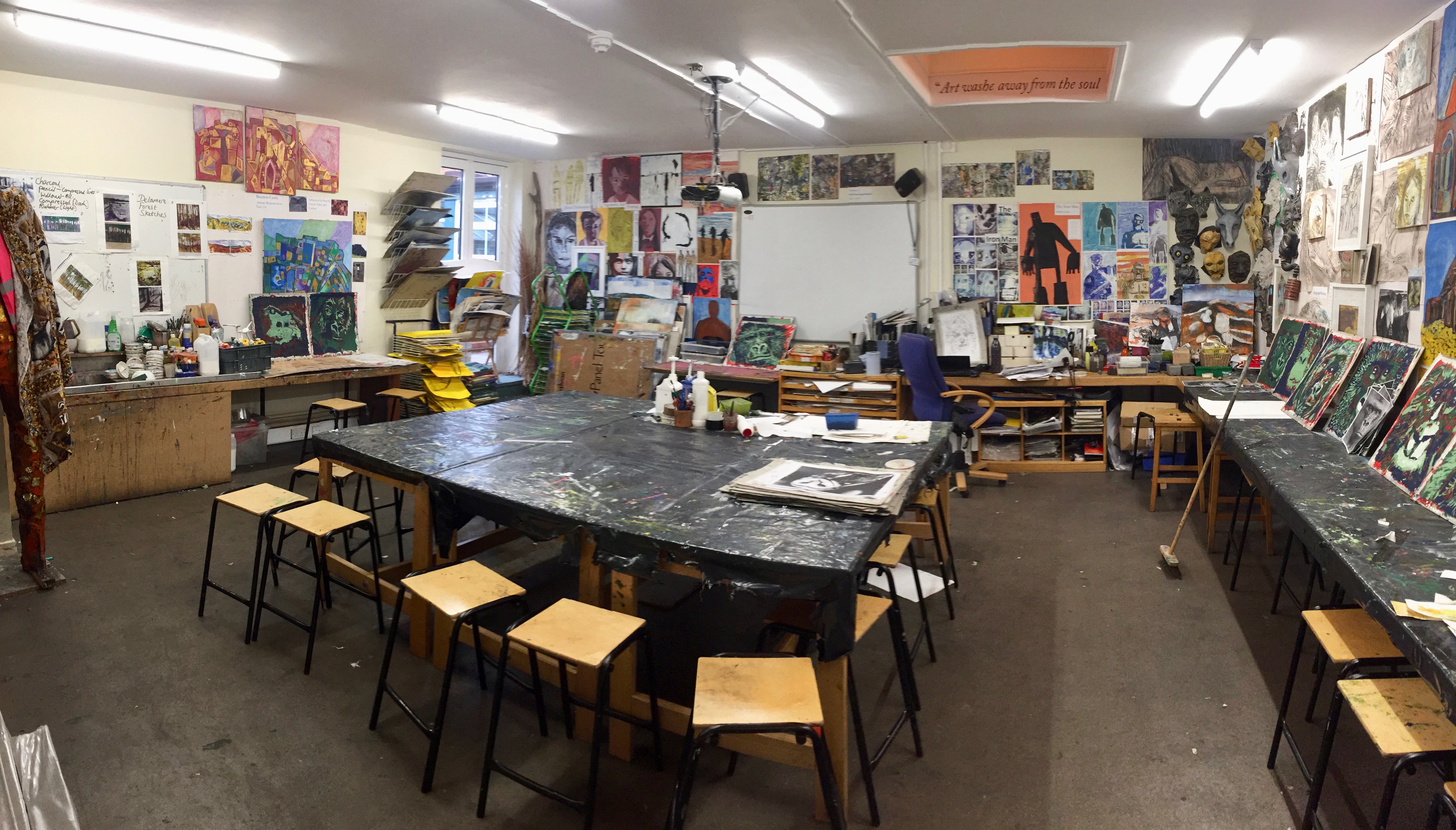
Under Jon’s tutelage, the students at Kelsall have developed a distinctive semi-abstract style based on the extensive use of sketching, reworking, and a ‘no mistakes/no rules’ approach to art making. Jon explained to us how after building basic skills through structured lessons, the students could enjoy the freedom, independence and confidence of art making. He encourages the students by telling them to ‘go with it’ and asking for their thoughts. Jon repeatedly referred to the children’s sense of joy and play when creating art in this way.

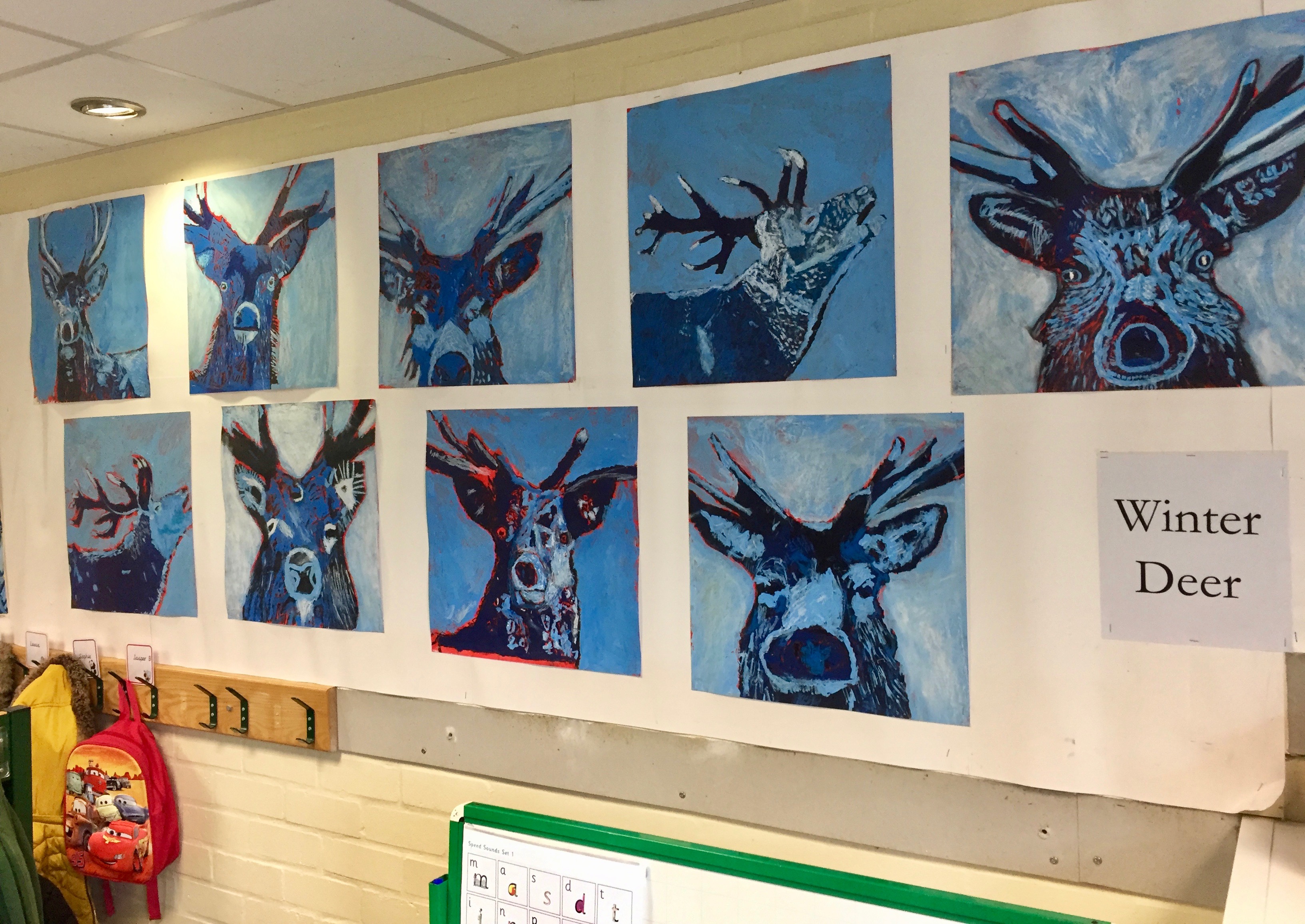
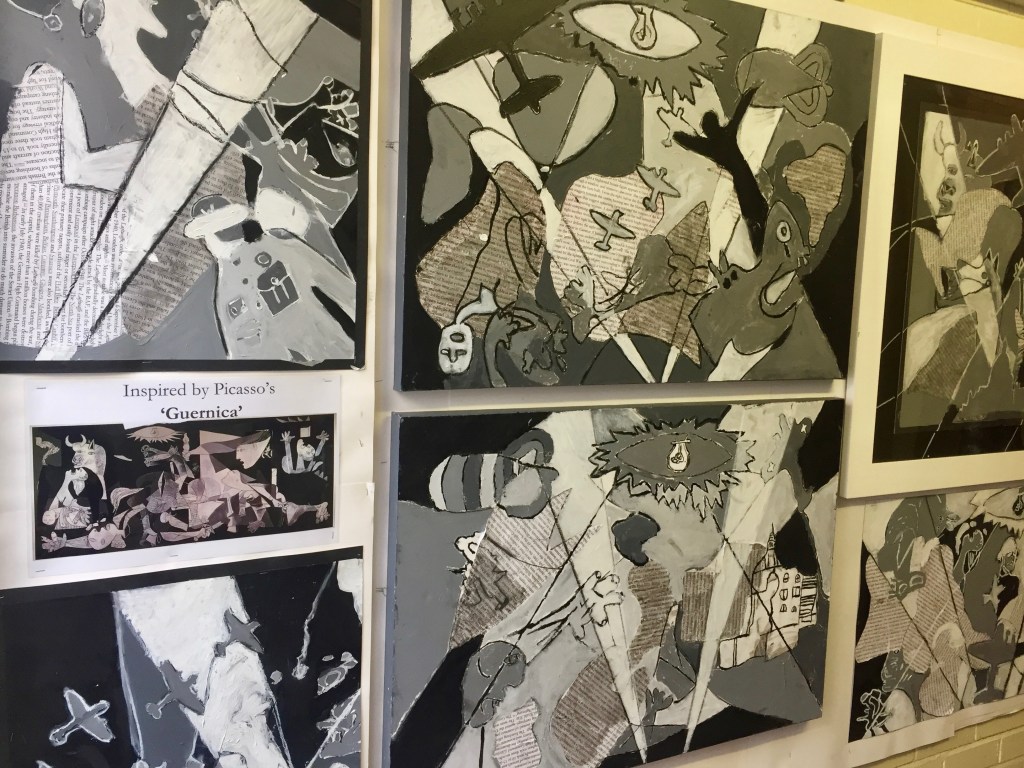
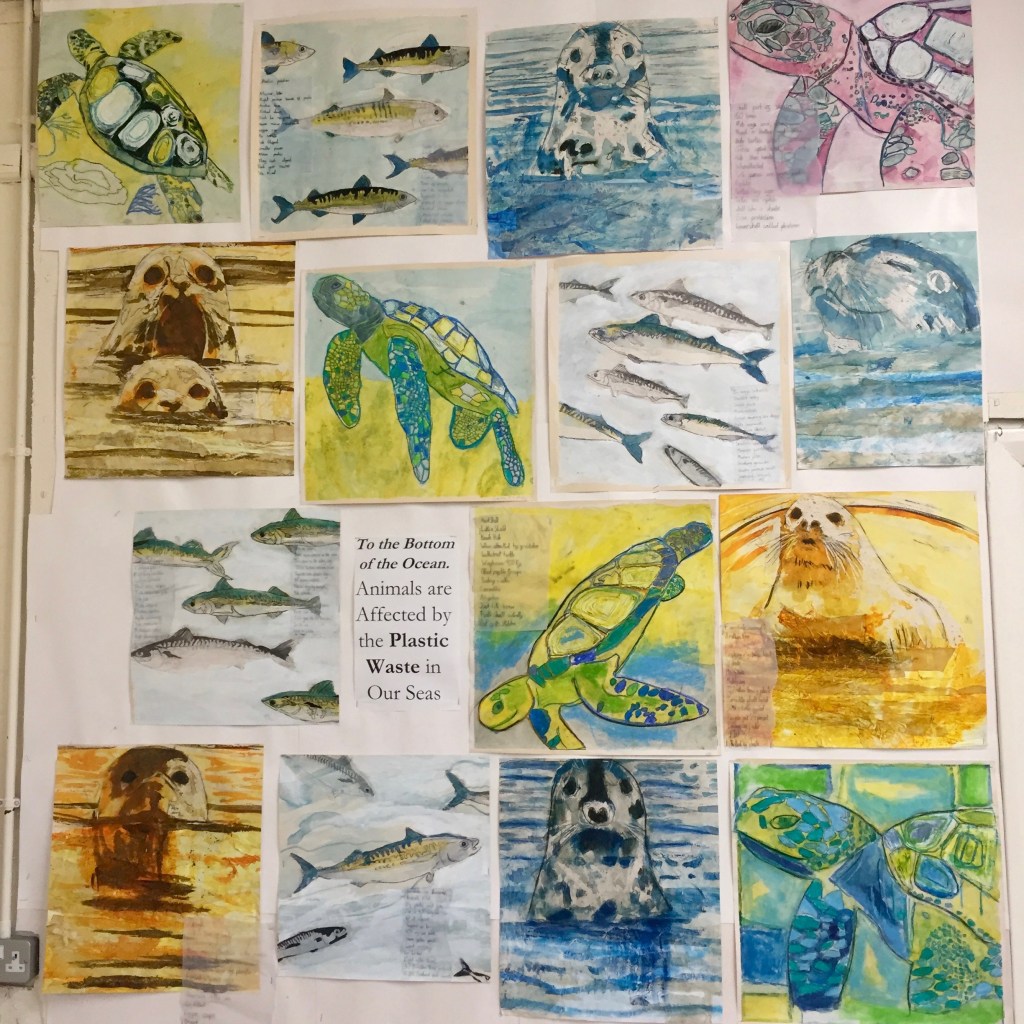
Displays included students pictures of animals (gorillas, tigers, orangutans, deer, turtles, crows, etc.), self-portraits, buildings, Guernica, and astronauts. They were using art to explore issues of plastic pollution, endangered species, refugees, war and other subjects.

While Jon told us that the students’ art was always based on something tangible, he described how working in semi-abstraction avoids many of the frustrations that students encounter then they strive for realism and a closely copied photographic approach. ‘They’ll always be rubbing out’, he explained.

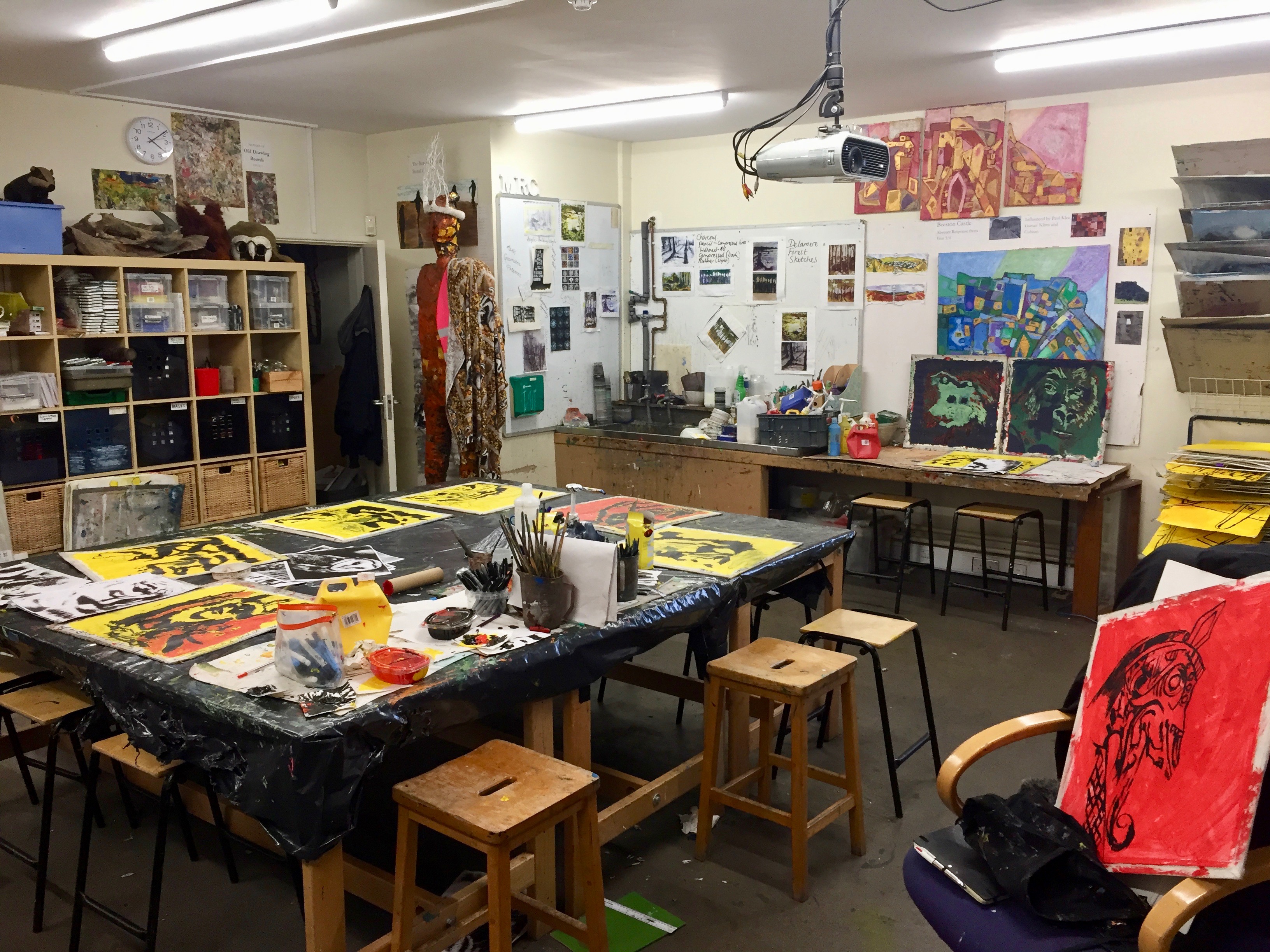
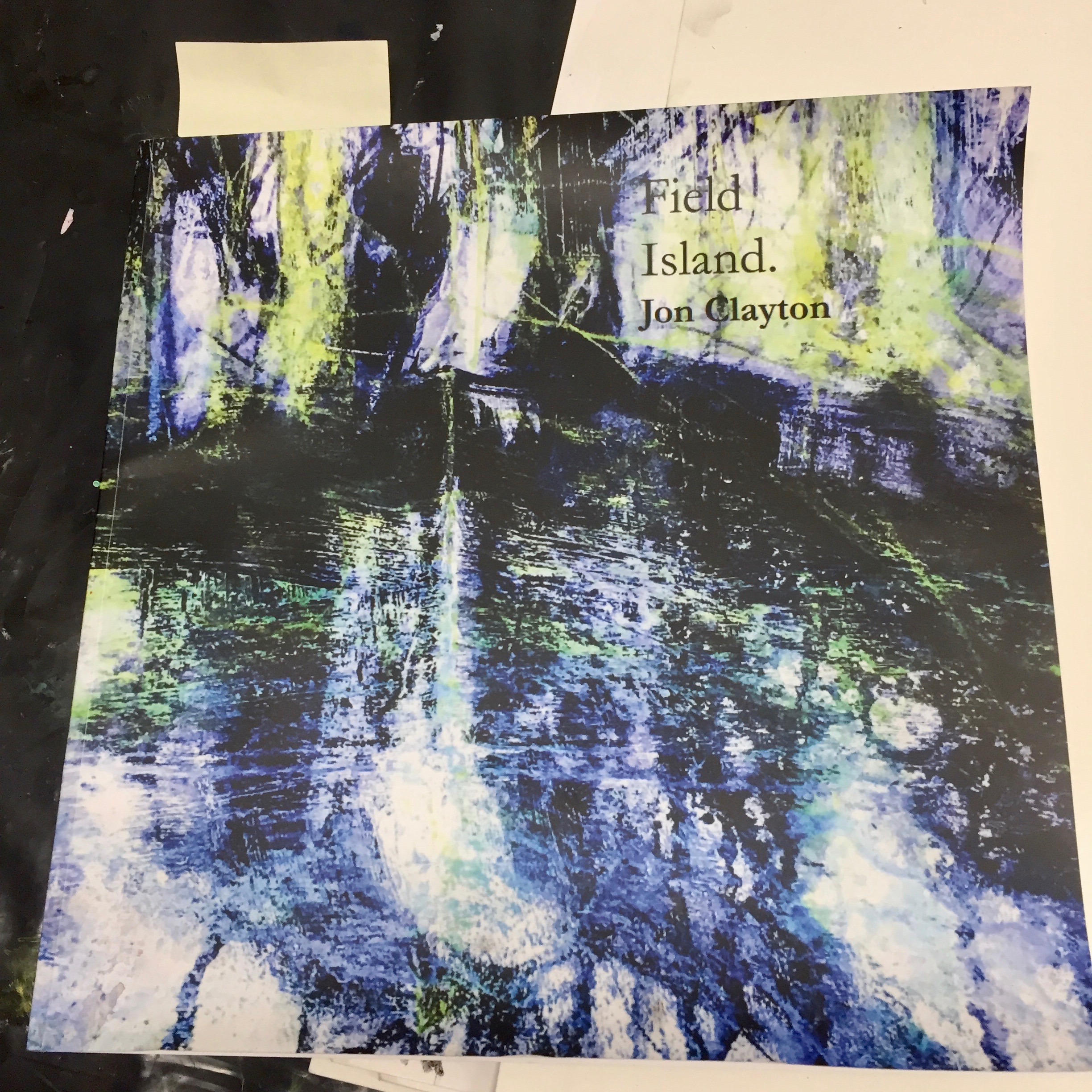
Jon and David were also creating their own artwork in the Art Room, after school and in the holidays. Their work was stored alongside the students’ work in the Art Room and other spaces in the school, there to inspire students and to use as explanation of techniques and approaches. Both men self-publish a series of books of their art work which could be found in corridors and classrooms.  

The students’ work had been entered in many local primary arts competitions. David told us that the school had voluntarily withdrawn from many of them in order to let other schools win occasionally (!). 

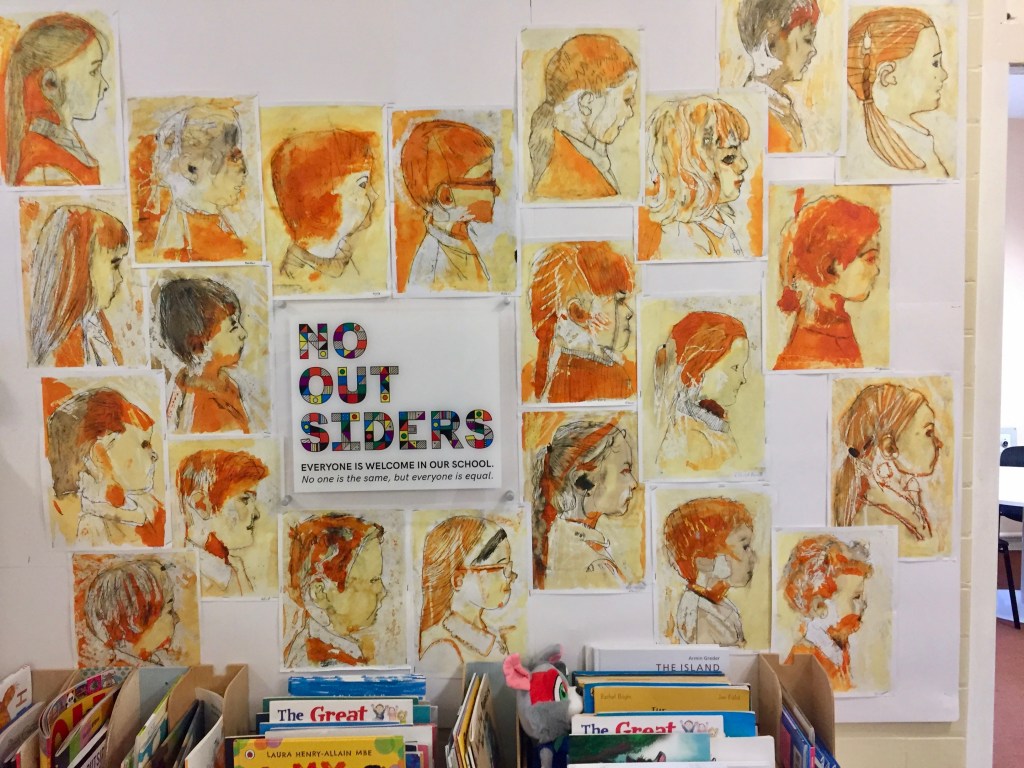
Kelsall’s whole school curriculum is based entirely around ‘high-quality’ books, used as ‘pathways’ to link specific artists, topics and issues. For example, there is a display of ‘No Outsiders’ portraits in the reception area.

As with all of the arts-rich school we have visited, there are many more arts activities taking place at Kelsall that could not be covered in any detail in a short blog piece. The short list for Kelsall includes:

  • A full-size statue of Nelson Mandela and extensive Black Lives Matter art works in the reception area
  • Twenty glockenspiels (!) plus equipment and performance spaces for the school Rock Band and other performance work
  • An in-development Room 13-style student-lead outdoor arts space
  • Gilbert and George

Thanks to Head Teacher David Wearing and Arts Lead Jon Clayton for inviting us into your school and to the students of Kelsall for sharing their experiences of their arts-rich education.

You may also be interested in reading our recently-published Art, Craft and Design Rapid Evidence Review – a survey of published scholarly literature on art, craft and design in education.

DaVinci, Dewali and Dragons at Blackrod Primary

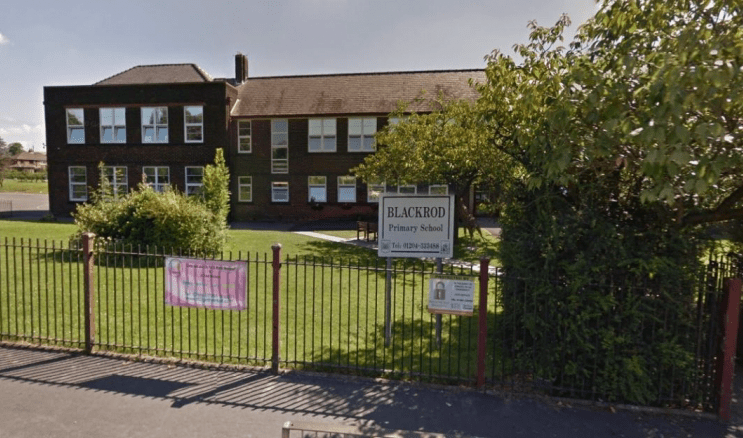
When we arrived at Blackrod Primary in Blackrod village (4 miles from Wigan, 7 miles from Bolton), we didn’t realise we were visiting the location of a popular television show.

Three years ago, parents participated in Channel 4’s ‘The Class of Mum and Dad‘ in which they spent a half term experiencing the everyday experiences of their children – uniforms, including uniforms, SATs tests and sports day. Luckily, we were spared such treatment! Our mission was to immerse ourselves in the arts spaces, arts works and arts-focussed conversations with staff and students.

Blackrod Primary School drawing/painting

Our first interviewee was Head Teacher Ian Dryburgh. Despite his 35 years as a Head here, Ian told us that was always open to new ideas. The school’s prioritisation of the arts over the last few years is evidence of Ian’s embrace of change and of his ethos of developing and celebrating the children’s humanity and individuality. He talked of a revelatory moment when he was looking through the children’s sketch books, comparing the same child’s work across a number of years, and seeing little in the way of development. Arts lead Rachael Littlefair told us that the need to reapply for their ArtsMark (they now have a Platinum status which has been mentioned in Parliament) also helped them focus on developing an integrated arts-rich curriculum. 

Ian stressed to us that all children were entitlement to the arts and that the school’s job was ‘to widen children’s horizons, not to narrow them down’. 

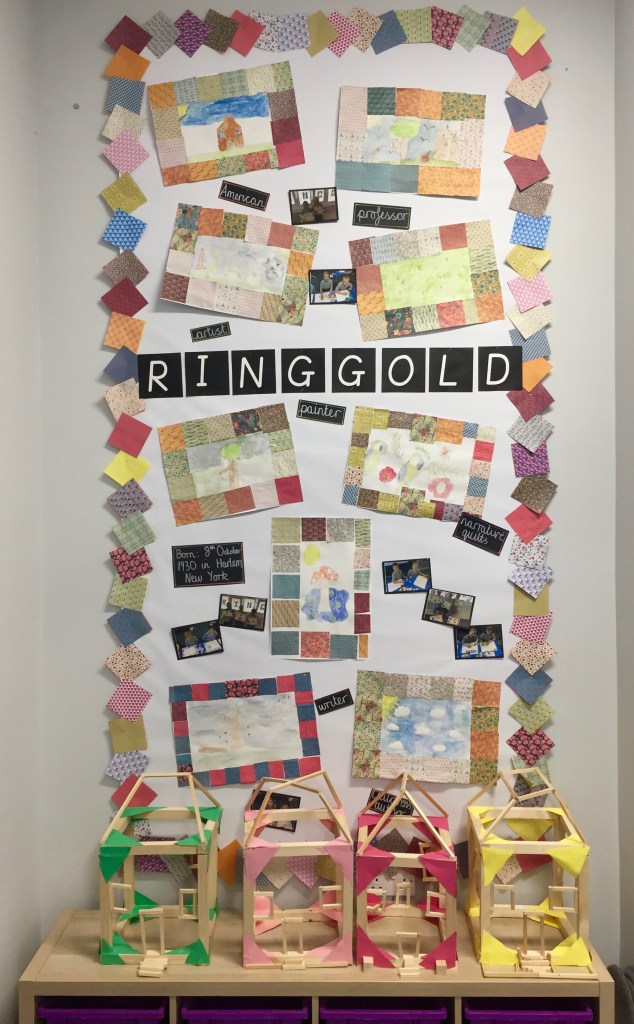
We were struck by the diversity of artists and artworks on display. With each class named and themed around a specific artist, we had a great opportunity to learn more about Milhazes, Ringgold, Mahlangu, Weiwei, Gauguin, Kahlo, Mackintosh, Lowry and others. 

Each classroom had a quote from the artist on the wall and a big wall-sized ‘Where our learning takes us’ display.

The arts were clearly being combined with geography, history, cultural issues, and other subjects. The curriculum is cyclical allowing topics to be revisited to add depth of understanding. Students were learning both about and through the arts.

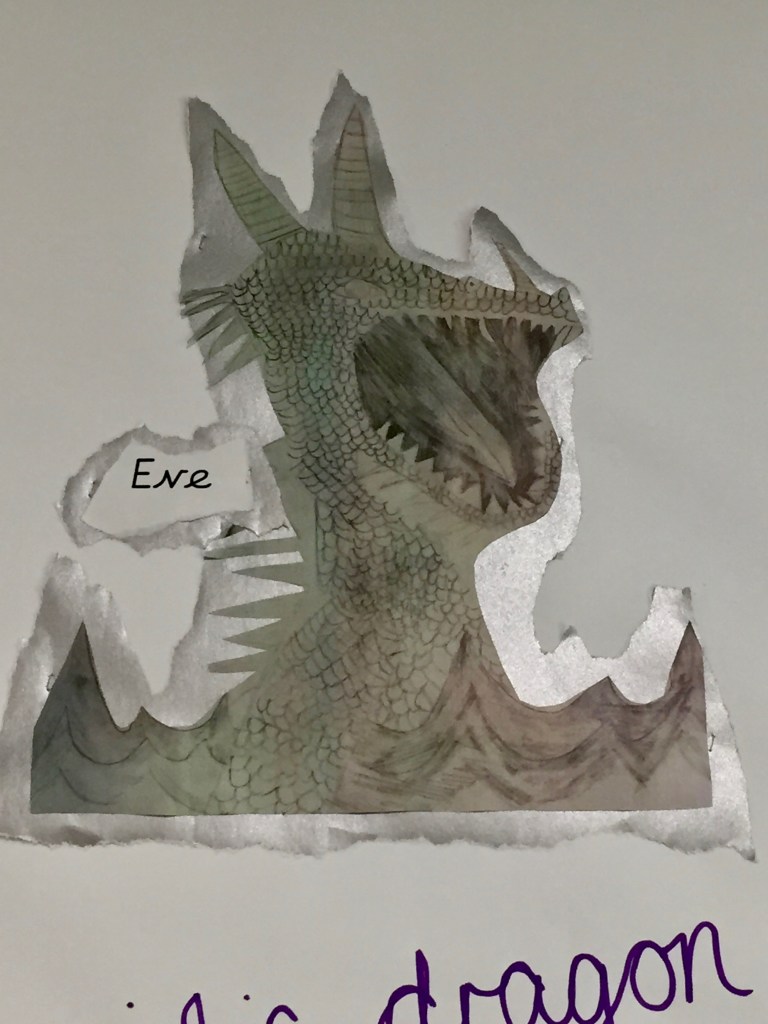
Ian had talked passionately about one particular piece of student art. The Dragon pictures were drawn from memory; each was highly individualistic. In terms of its unique expression of the Year 4 artist’s depiction of a character from ‘The Iron Man’ by Ted Hughes, and their displays of shading, perspective and other technical skills, the Dragon seemed to exemplify the school’s evolving vision for the arts. 

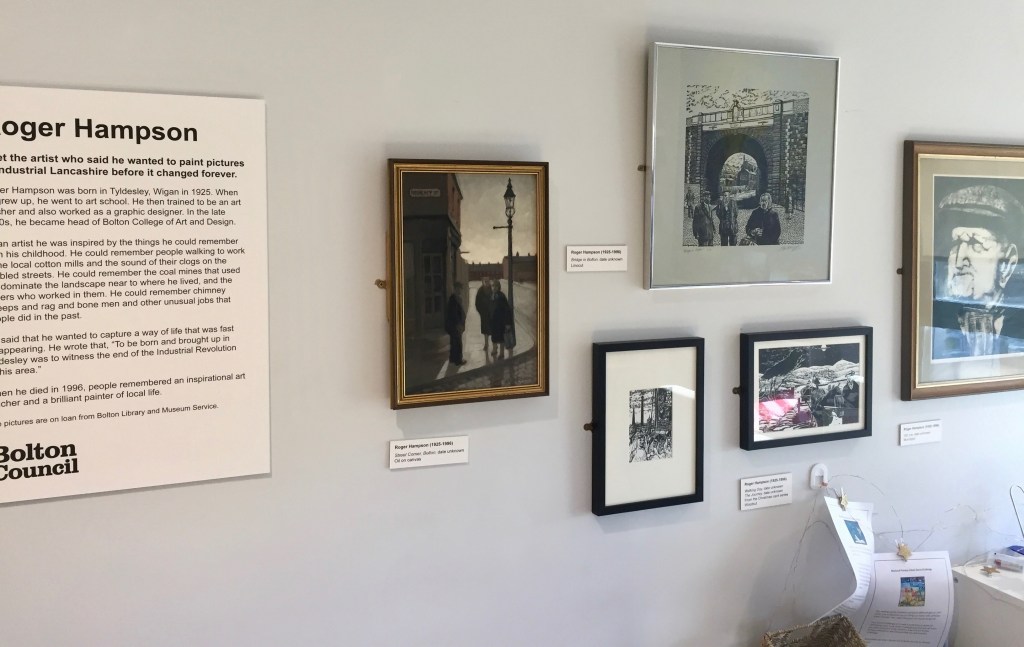
The students told us how they had greatly enjoyed creating work in the style of local artist L.S. Lowry. Rachael told that many of the locations in the paintings of Lowry and another local Roger Hampson that were displayed in the school were within walking distance and would be familiar to the children.

Students were making art works for Diwali that week.

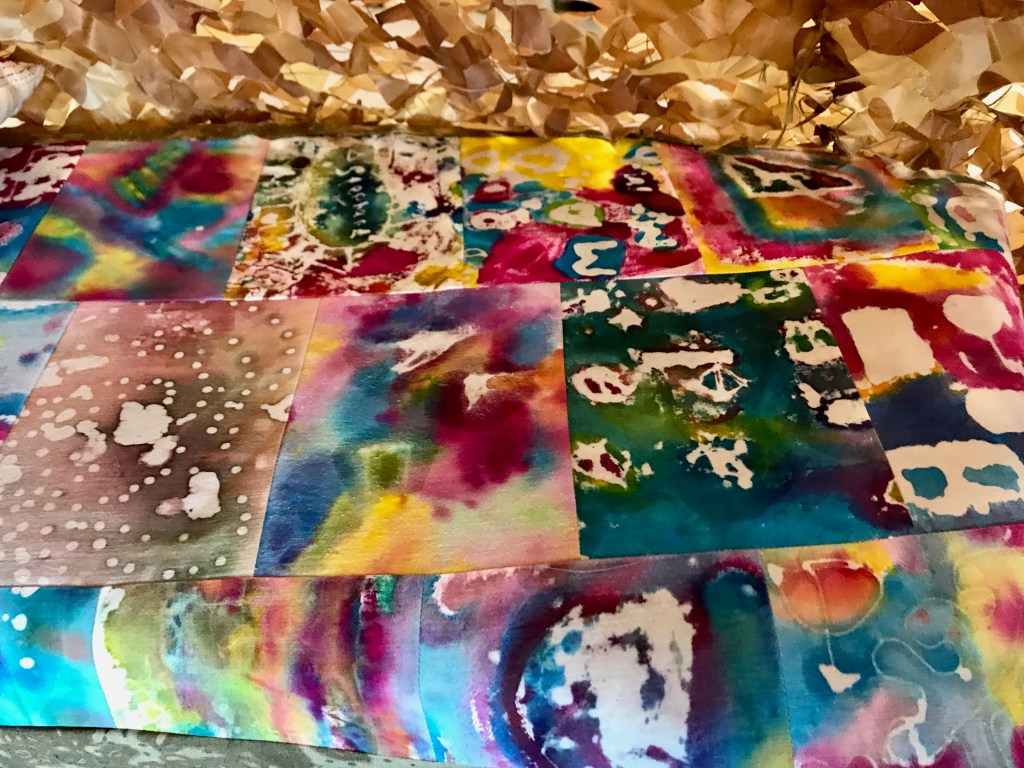
They told us how they really enjoyed the textiles work they do. Creating batiks, tie-dies and cross-stitch was clearly very memorable for them.

Ian’s vision of honouring the individuality of his students and staff has secured the school an outstanding Ofsted rating. Yet, in their links with Bolton Octagon Theatre, in their role as Bolton cultural ambassadors and in their emerging commitment to outdoor learning, the school continues to change and develop. Rachael has recently gained her Forest School Leader qualification. The children can now use tools, ropes, tarps and other equipment to explore the wooded areas on site. She also talked about starting a Rock Band club. Onwards and upwards!

Thanks to Head Ian Dryburgh and Arts lead Rachael Littlefair for letting us into their school and to the students of Blackrod for their important insights.

You may also be interested in reading our recently-published Art, Craft and Design Rapid Evidence Review – a survey of published scholarly literature on art, craft and design in education.

Narrative immersive, a double decker bus and a giant illuminated sculpture: Leamington Community Primary

When Leamington Community Primary was built 90 years ago, it was located on a farming estate. It is now in the middle of the Norris Green housing estate in Liverpool. Despite this being an area with high levels of multi-generational unemployment and other markers of social deprivation (34% of the students have special educational needs), it has spawned notable musicians (Ian McCulloch of Echo and the Bunnymen; Holly Johnson and other members of Frankie Goes to Hollywood; A Flock of Seagulls), actors (Geoffrey Hughes and Tom Baker) and radio presenter Winifred Robinson.

Leamington’s links with the local community and the creative initiatives the school has taken to address some of the challenges, especially through the arts, were the most memorable aspects of our visit.

It’s not every day you get to visit Narnia. On our tour of the school, we found ourselves in the middle of a narrative immersion session designed to bring this topic and text to life. Teachers use props, costumes, storytelling and characterisation to stimulate emotion and imagination. 

In this session, the students had gone to another room where they touched and interacted with objects from a pre-prepared box (ice packs, snowflakes, etc.). When they returned to their classroom, it had been decorated with furry coats across the door and other props. Students could then react to the space and the objects, and ask questions of the teacher who was in costume and character. We could almost taste the Turkish Delight! This was the first part of a project that looked more closely at the story. Apparently, the class did get to taste some of those pink squidgy sweets later.

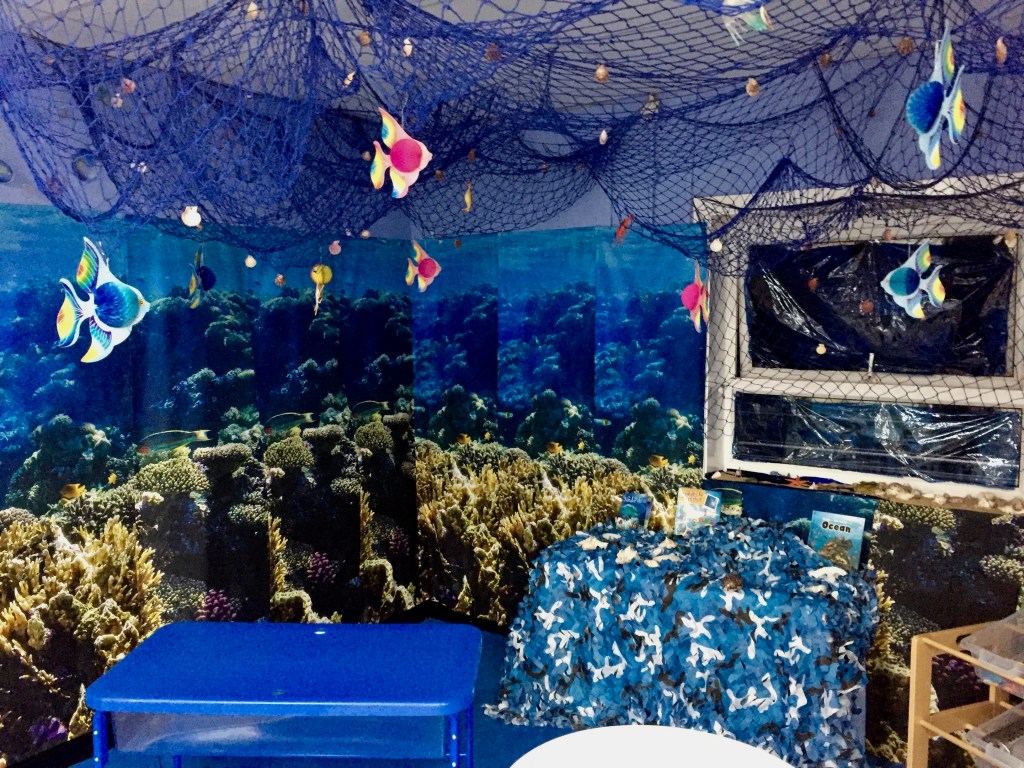
Other areas of the school were dedicated to creating similarly immersive environments (forests, under the sea, space, etc.). 

The school had strong links with The Bluecoat, a gallery in the centre of Liverpool. Among other ‘Out of the Blue’ initiatives, The Bluecoat had provided free bus tickets and café vouchers for children, parents and families to visit during half term.

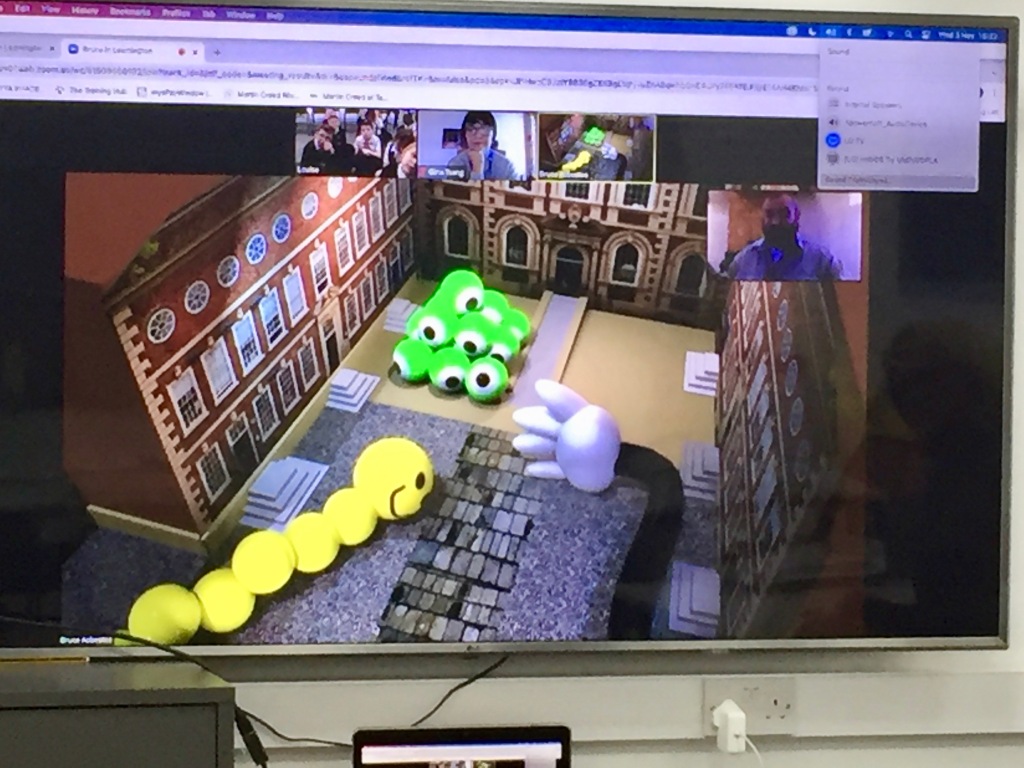
Mock up of Bruce Asbestos' work in the Bluecoat courtyard

The partnership was working towards the design and installation of a large sculptural illuminated piece of art in the school grounds as a permanent structure – something to bring fun and light into the dark days of winter, arts lead Steph Leach told us.

We were lucky enough to attend an after-school Art Club session in the art room with a Zoom link to Bluecoat-linked commissioned 3D sculpture artist Bruce Asbestos, who is based in Nottingham (like us!). The Art Club children were working with Bruce to design the new work around themes of community, love and friendship. Bruce showed how simple objects could signify emotion and connection – a big red bow tie, a happy/sad faced Japanese doll, a hat in the shape of a slice of cake, and his ‘cheap’ wedding ring.

The students had brought objects (lots of teddy bears) and ideas to the session. They made quick five-minute sketches and worked with plasticine to create models for their ideas.

Bruce came into school the week after and worked with the children, using air dough, on their initial ideas which included food, monsters and cartoon characters. More Zoom links will refine the ideas. The plan is to install the final sculpture in the playground in February 2022 in a place where families and the local community can see it.

The newly extended art room was just one of the ways the school was developing their arts rich profile. 

The main hall had also been extended specifically to include raked seating, stage blocks, black wrap-around curtains, and high-end stage lighting. The children talked to us a lot about the performing arts they do in school. 

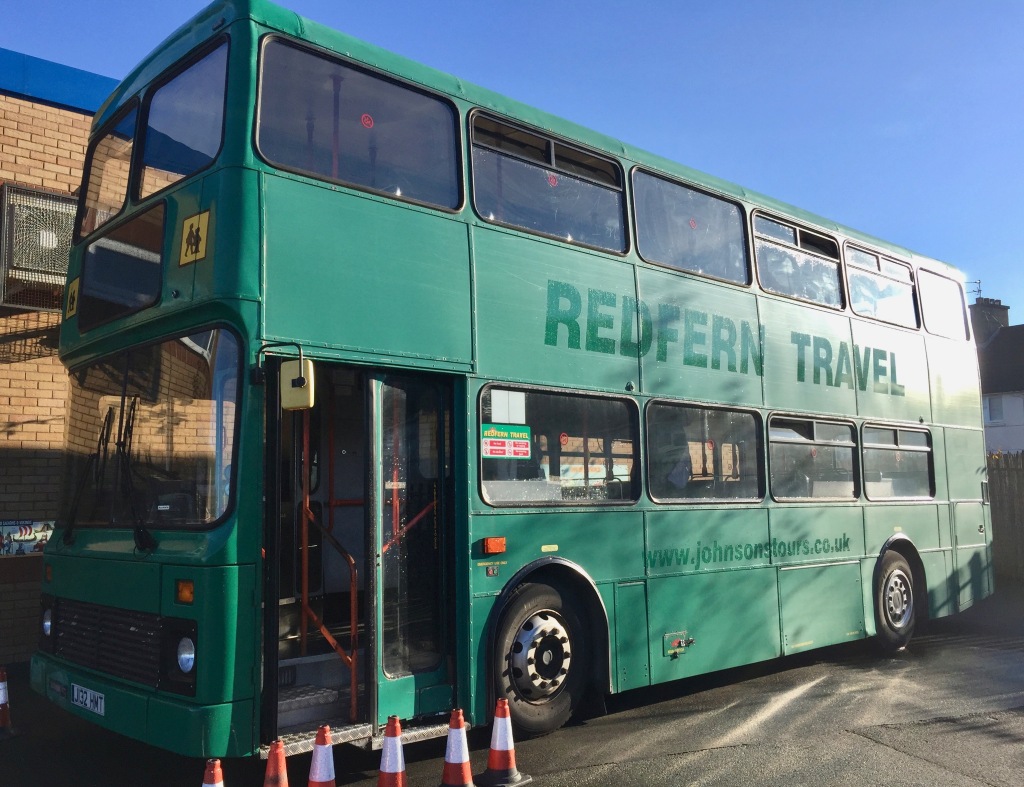
Finally, Head teacher Paul Vine had just bought a double decker bus. We sat on the bus in the playground while we heard about Paul’s plans to convert the downstairs into a space where parents could come to wash and dry clothes, make meals, have drinks, and get information and advice. Upstairs is planned as an immersive area for the children – blacked-out, full of stars, moons and rockets!

A green double decker bus

Along with the big colourful illuminated sculpture, the extended art room and performance space, and the immersive areas, the bus was a great example of how school-centred arts, could fire the students’ imagination and creativity whilse engaging, inspiring and supporting the local community. 

Thanks to Head Paul Vine and Arts Lead Steph Leach for arranging our tour of the school and interviews with students and staff. We look forward to seeing the finished sculpture in February.

You may also be interested in reading our recently-published Art, Craft and Design Rapid Evidence Review – a survey of published scholarly literature on art, craft and design in education.
Sidegate Primary, Ipswich: Our first RAPS visit

It’s not everyday you get to meet the Prime Minister or the Secretary for the Arts. So we were excited to have the opportunity to ask them probing questions about the arts in primary schools, or, more specifically, the arts in their primary school.

Because these dignitaries were all in fact students at Sidegate Primary in Ipswich, the first school that we visited in the RAPS project. The school parliament (all the members were proudly displayed in the foyer) and the dedicated Arts Council were clear signs that Sidegate was taking the teaching of democracy and the student voice seriously. As we found out, this dedication to student-centred and collaborative learning activities ran through the many arts projects that we saw and heard about.

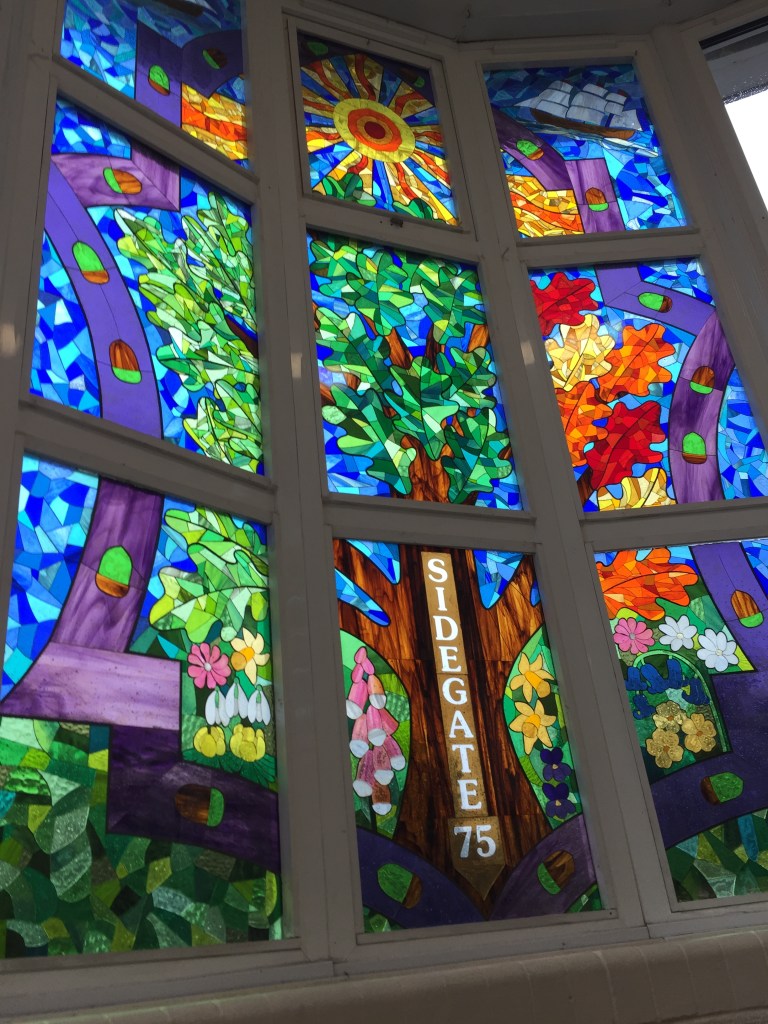
Sidegate is a school of around 650 students set just outside the town centre with a long established commitment to the arts. Staff could not remember a time when the arts were not central to the school’s curriculum and ethos. This history was evident in the large stained-glass window that commemorates the school’s first 75 years. The students who showed us around said that every child got to insert some coloured glass into the design.

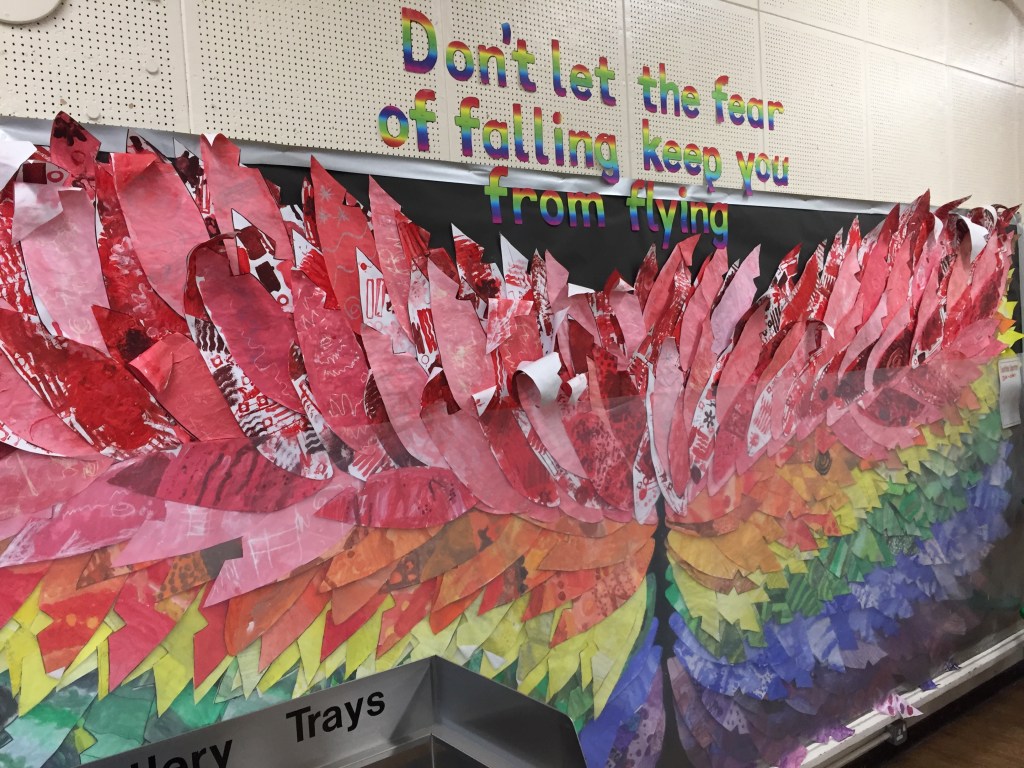
Displays of art covered the walls and ceilings of the corridors, classrooms and other spaces. The large bird-like display in the main hall was mentioned repeatedly during the focus groups that we conducted with students. Each of them made a coloured feather to contribute to the whole. The experience was obviously memorable and meaningful to them. The students talked repeatedly about teamwork in the context of artistic creativity.

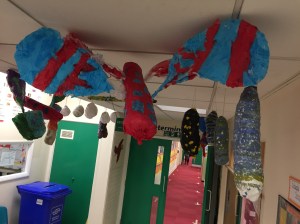
Butterflies, caterpillars and chrysalises were everywhere at Sidegate – hanging from the ceilings and climbing up the walls.  This was a whole-school creative project that embraced the themes of hope and change after the challenging months of being in lockdown. The metaphor of transformation was apt; a large choir was rehearsing in the main hall, their first chance to sing together in many months.

We were lucky enough to meet Trunks, an elephant who had long inhabited the school’s heated swimming pool but was now roaming a classroom. Trunks had been part of town-wide project that took the students’ collaborative ethos (each of them had decorated Trunks with their thumb print) into public spaces.

There was another public-facing arts example of Sidegate’s collaborative spirit on the waterfront, this time in the form of a long mural of sea creatures that had been created by a number of schools. The word ‘Sidegate’ and the colourful paintings must be the first things that many visitors to Ipswich see, as they were for us.

The Arts Council had lots to say about how they wanted to make the arts more enjoyable so that everyone in the school would want to get involved, and for there to be more arts (even more!) in the school. Their comments showed a nuanced understanding of the value of the arts in people’s lives (including adults) and a desire to diversify the arts that they do in school.

Thanks to Arts Lead Jane Ryder and all at Sidegate for a warm welcome on our first visit.

You may also be interested in reading our recently-published Art, Craft and Design Rapid Evidence Review – a survey of published scholarly literature on art, craft and design in education.
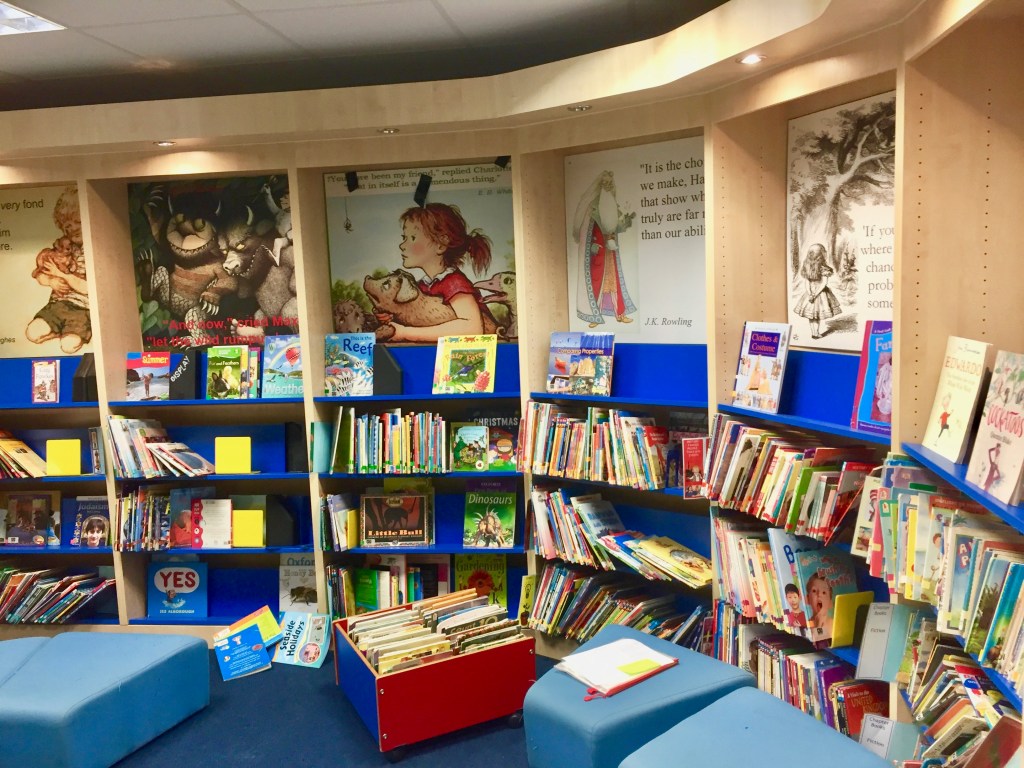
The ArtsMap video for this school and the others in the RAPS project are available on the RAPS Youtube channel. The videos have been produced by students to showcase the arts in their primary school.
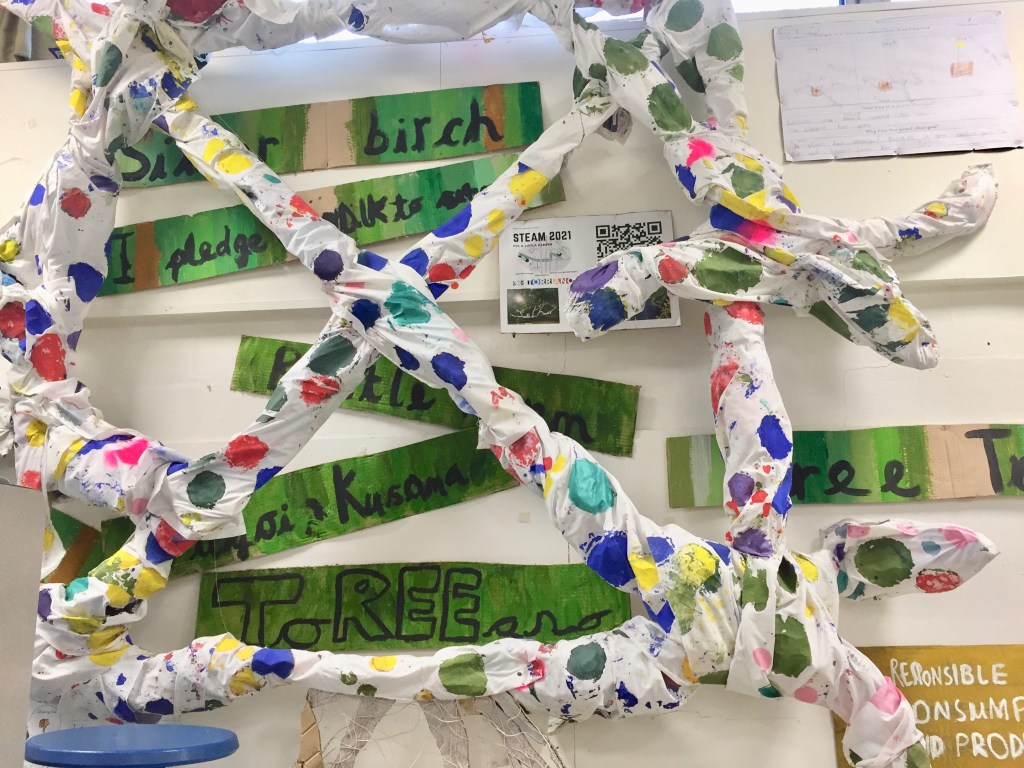
summer time and the researching is…

Although universities are now on holidays, most researchers use some of their holidays for getting on with work they can’t do during the term. Just like school teachers. We have been spending some of our summer working on various RAPS survey results.

Our ITE study is now more than half way through. We have completed the first part of the work where we look at the arts in teacher education programmes provided by universities and Teach First.  We’ve started on surveying and interviewing school ITE providers too. The holidays are a very good time for us to write the first draft of the report of the first part of the study. However, we won’t be reporting that separately here, as we will release all of the ITE results together early next year. 

The arts rich school study is also now well underway. Nearly eighty primary schools have agreed to participate! We are very excited about this number, and who they are. The RAPS project will be the first to get a systematic overview of such a big group of outstanding primary school arts programmes. All of the schools have completed a basic questionnaire about what they do and how it is organised. We have also invited the schools to send us a short film or powerpoint made by children which tells us about their arts programmes. We have established a youtube channel for these films and we will let you all know when the first tranche of children’s films are published.

The group of 80 schools will eventually become about 40 in the second stage of the research. We hope to visit all of the 40, pandemic willing. But of course we are thinking now about how we get from 80 to 40. It is important that we get a wide spread of schools – for instance we want to see schools located in different parts of the country, serving rural, city, suburban, regional and coastal communities, of different sizes, with different kinds of school populations. We also want to make sure that we have local authority as well as single and  multi-academy trusts. As well, we need to make sure that across the schools we cover all of the art forms. 

It is a tough job to make the selection and we are taking the job of selecting the “sample’ slowly and seriously. Analysing the questionnaire is part of that process of selection, but it is also an interesting set of information in its own right. Summer is a good time for us to make difficult decisions.

We will be telling you more about the 80 schools later this year. 

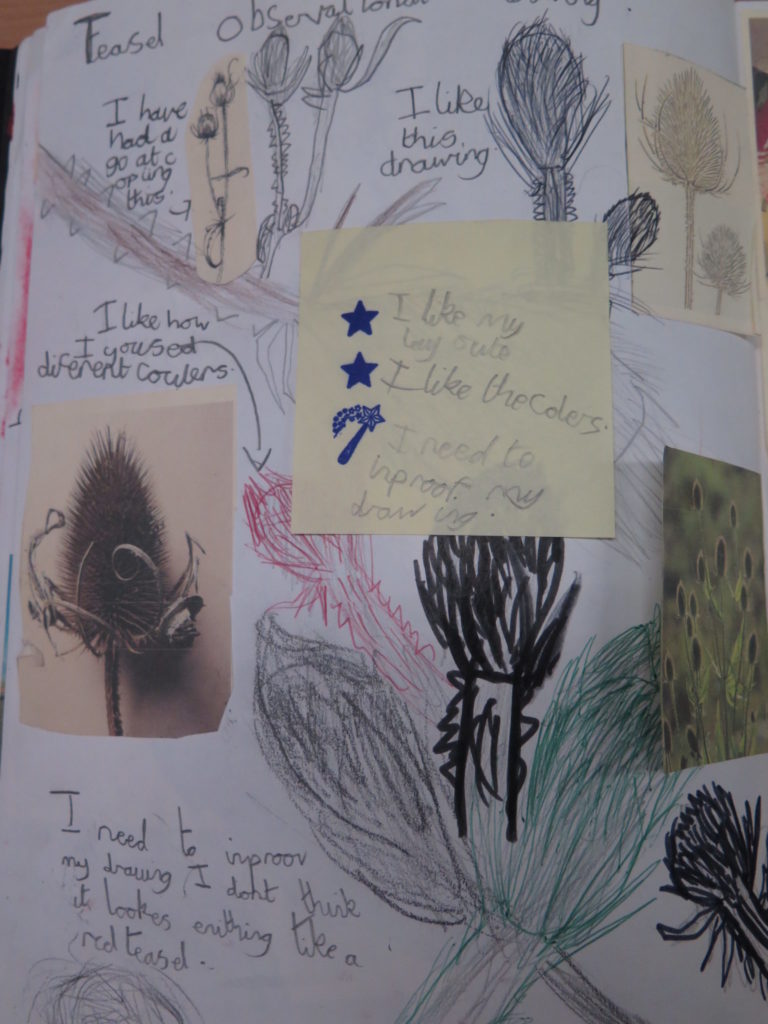
Image: Sketchbook from Gomersal Primary Art blog – thankyou. Yes, Gomersal is one of the 80 RAPS schools. We are very interested in the way that teachers and children use sketchbooks across the curriculum and across year levels.